

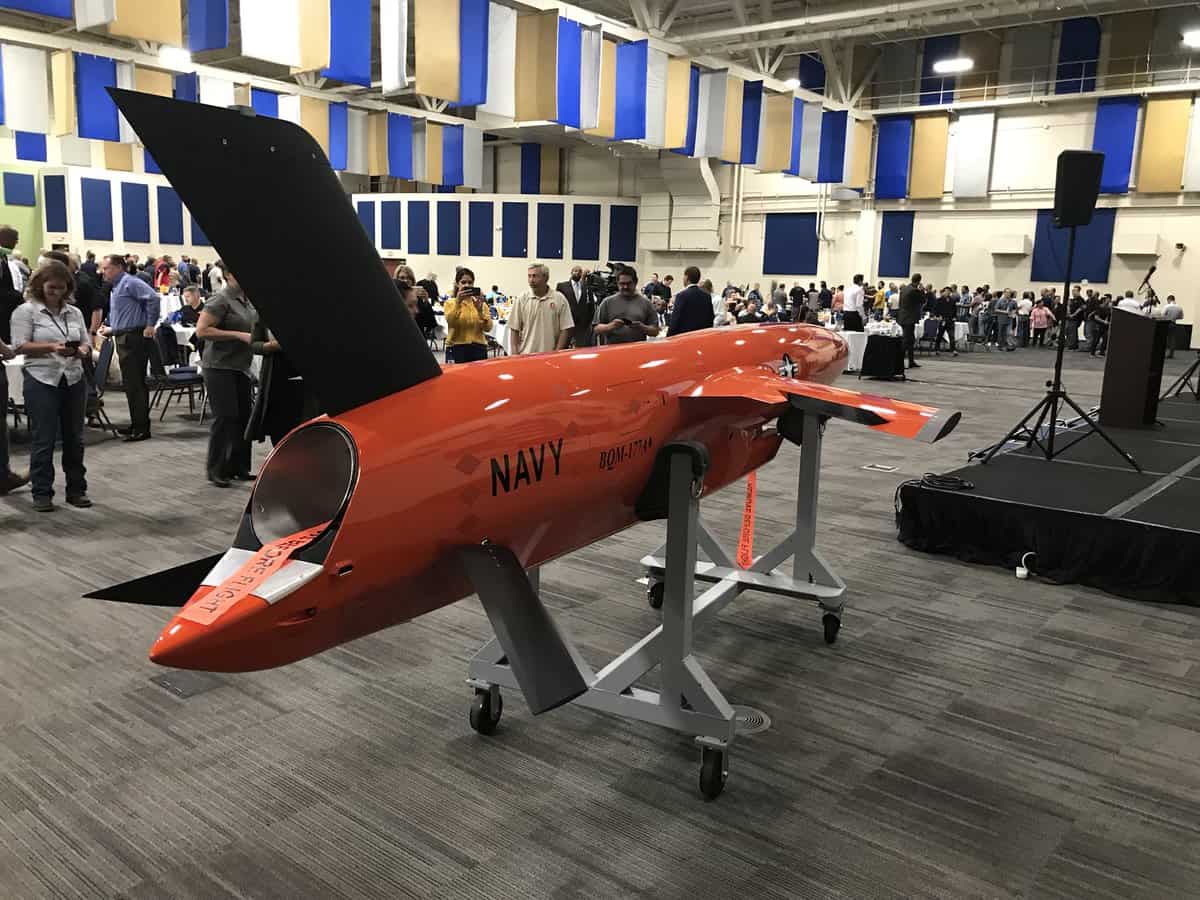
Kratos Defense & Security Solutions, has announced that the BQM-177A Subsonic Aerial Target (SSAT) has achieved Initial Operational Capability.
As reported by the U.S. Navy (NAVAIR website article) who stated, “On 27 February 2019 the US Navy’s next-generation Sub-Sonic Aerial Target (SSAT), the BQM-177A, reached its program milestone of Initial Operational Capability (IOC).
The milestone means that the BQM-177A can perform in operations the same way any other active combat system in Navy’s arsenal can.
The first site the BQM-177A will be operated from is Pt Mugu, California. The target is capable of speeds in excess of 0.9 Mach and a sea-skimming altitude as low as 10 feet which provides sea-skimming anti-ship cruise missile threat emulation for the US Navy.”
Steve Fendley, President of Kratos Unmanned Systems Division, said, “We are incredibly proud to support the US Navy and our warfighters by providing these high performance unmanned jet target aircraft and appreciate the team relationship we have enjoyed with our Navycustomer in developing and advancing the system to this critical milestone. We look forward to continuing to support the Navy for many years to come with the BQM-177A system and its abilities to replicate current and evolving threats.”
The BQM-177A is the US Navy’s next-generation Sub-Sonic Aerial Target (SSAT). While it provides formidable threat emulation for air-to-air engagements, the BQM-177A’s aerodynamic design and unmatched performance capabilities make it the world’s best choice for highly-dynamic, high-subsonic, sea-skimming anti-ship cruise missile threat emulation.
Capable of speeds in excess of 0.95 Mach and a sea-skimming altitude as low as 10 feet, the BQM-177A has no equal when it comes to delivering realistic anti-ship missile threat emulation.
This highly-versatile aerial target supports a variety of mission requirements by carrying a wide array of internal and external payloads including proximity scoring, Identification Friend or Foe (IFF), passive and active RF augmentation, electronic counter-measures, infrared (IR) augmentation (plume pods), chaff and flare dispensers, and towed targets.