

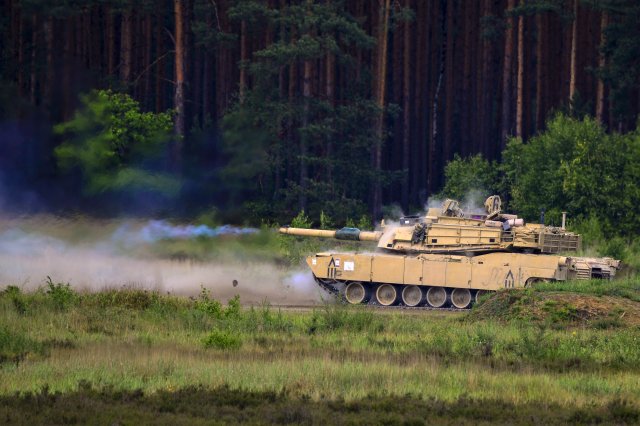
The U.S. Army has announced the conversion of two brigade combat teams that will contribute to Army efforts to build a more lethal force and is an investment to increase overmatch against country’s potential adversaries.
According to the statement, announced on 20 September by the U.S. Army, the 1st Brigade Combat Team of the 1st Armored Division (1/1 AD) stationed at Fort Bliss, Texas, will convert from a Stryker brigade combat team (SBCT) to an armored brigade combat team (ABCT); and the 2nd Brigade Combat Team of the 4th Infantry Division (2/4 ID) stationed at Fort Carson, Colorado, will convert from an infantry brigade combat team (IBCT) to an SBCT.
“Converting a brigade combat team from infantry to armor ensures the Army remains the world’s most lethal ground combat force, able to deploy, fight, and win against any adversary, anytime and anywhere,” Secretary of the Army Mark T. Esper said.
This effort also postures the Army to better meet combatant commander requirements under the 2018 National Defense Strategy.
“The Army leadership determined that we needed to covert two brigade combat teams to armor and Stryker in order to deter our near-peer adversaries or defeat them if required,” said Maj. Gen. Brian J. Mennes, director of force management.
Conversion of the 1st Brigade Combat Team, 1st Armored Division, and the 2nd Brigade Combat Team, 4th Infantry Division, will begin in the spring of 2019 and spring of 2020 respectively.
This will provide the nation a 16th ABCT bringing the total number BCTs in the Regular Army (RA) and Army National Guard (ARNG) to 58. There will be a total of 31 BCTs in the RA, to include 11 ABCTs, 13 IBCTs and seven SBCTs. The ARNG will have a total of 27 BCTs, to include five ABCTs, 20 IBCTs and two SBCTs, ensuring a more balanced distribution between its light and heavy fighting forces.