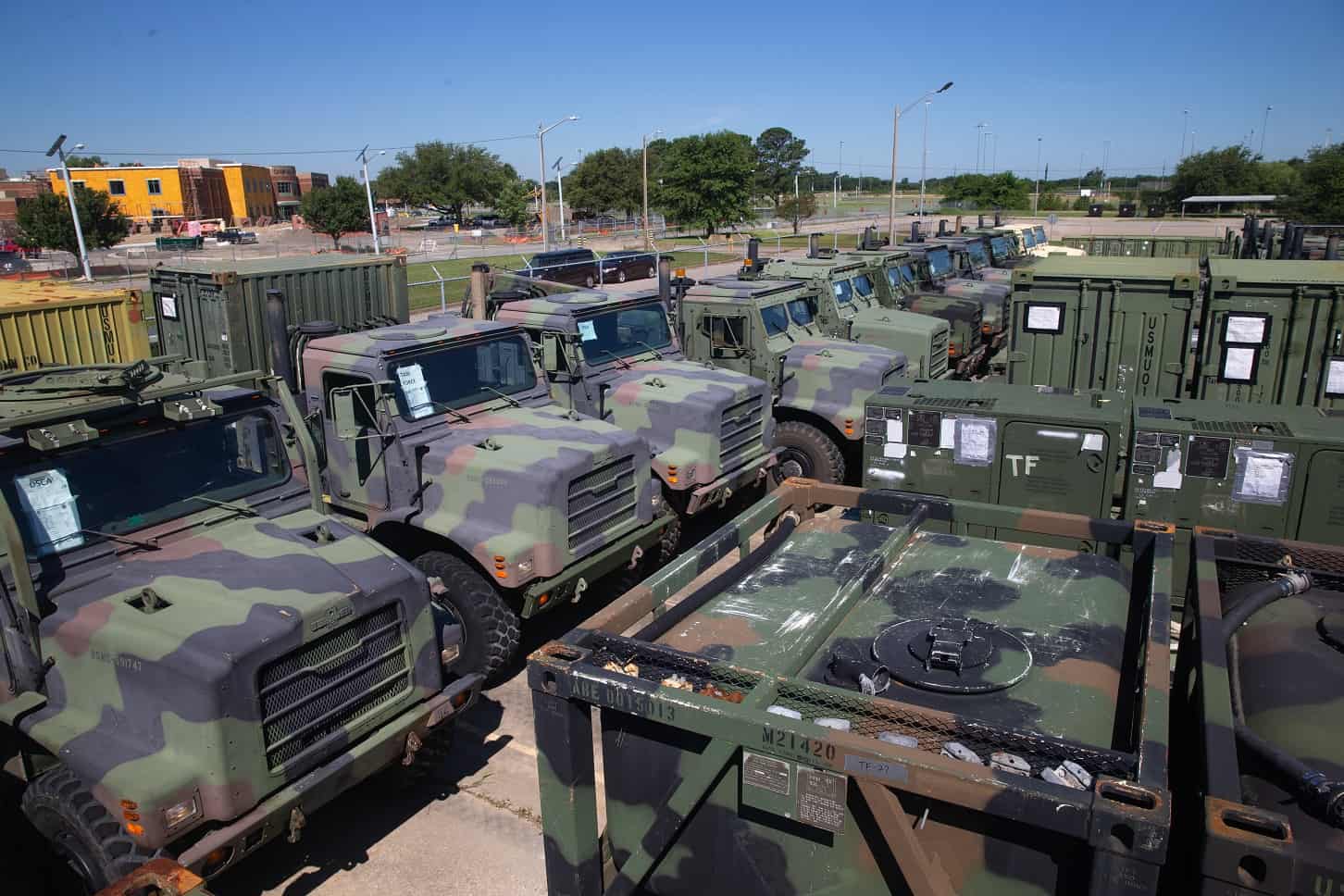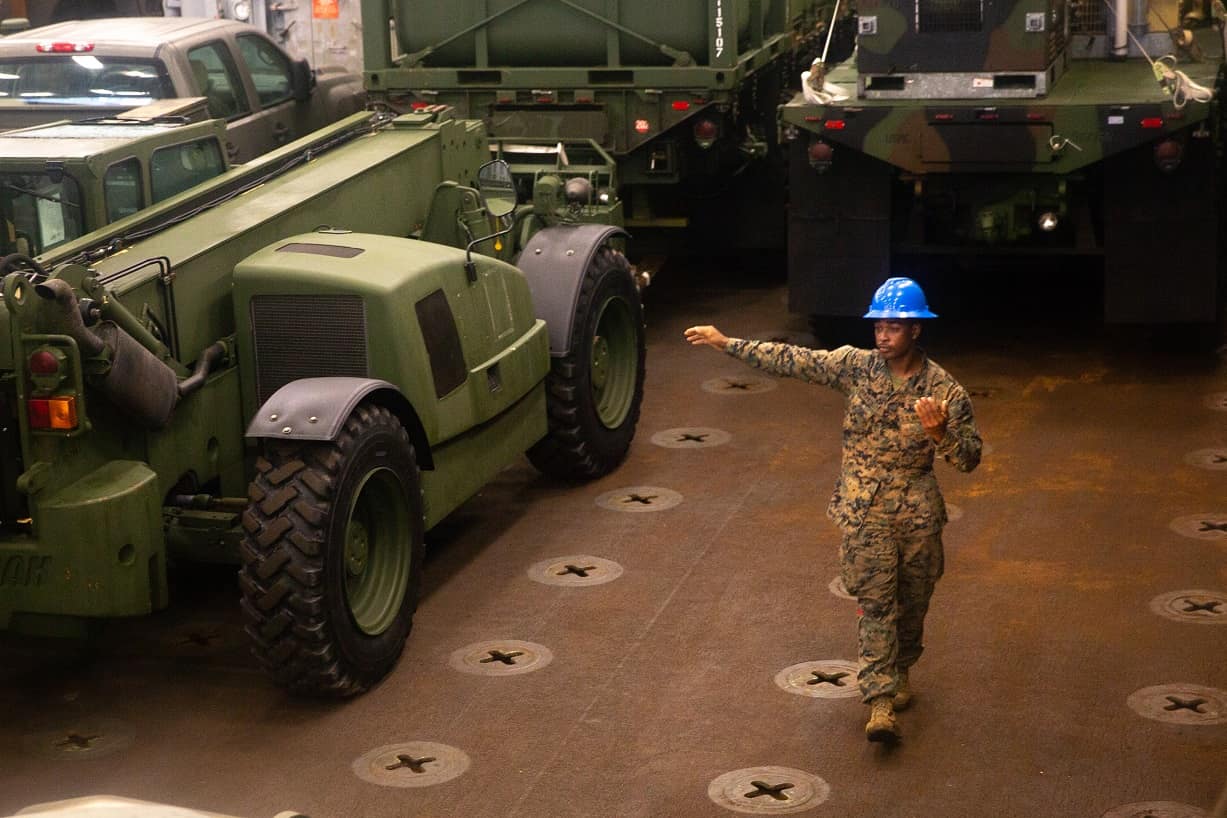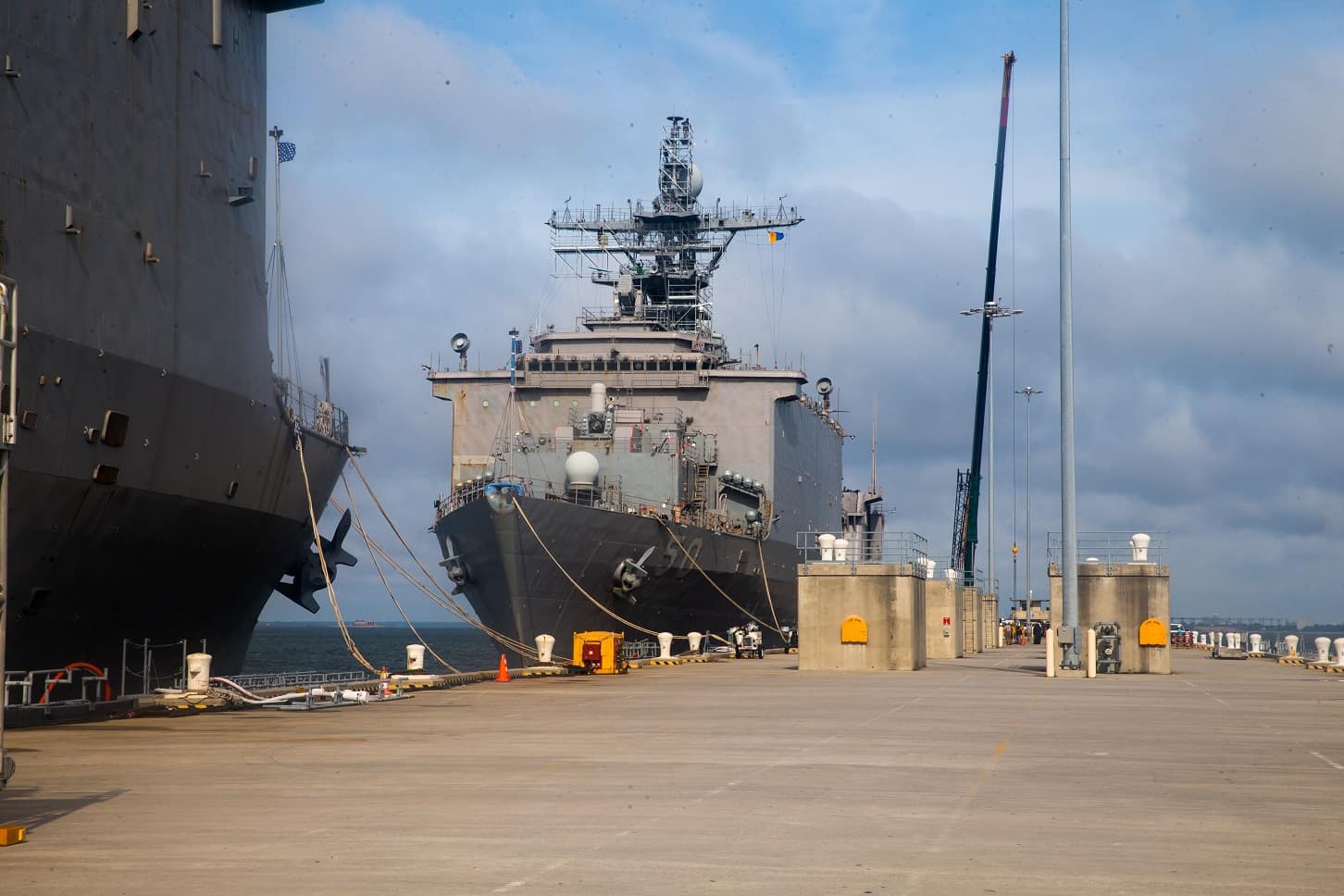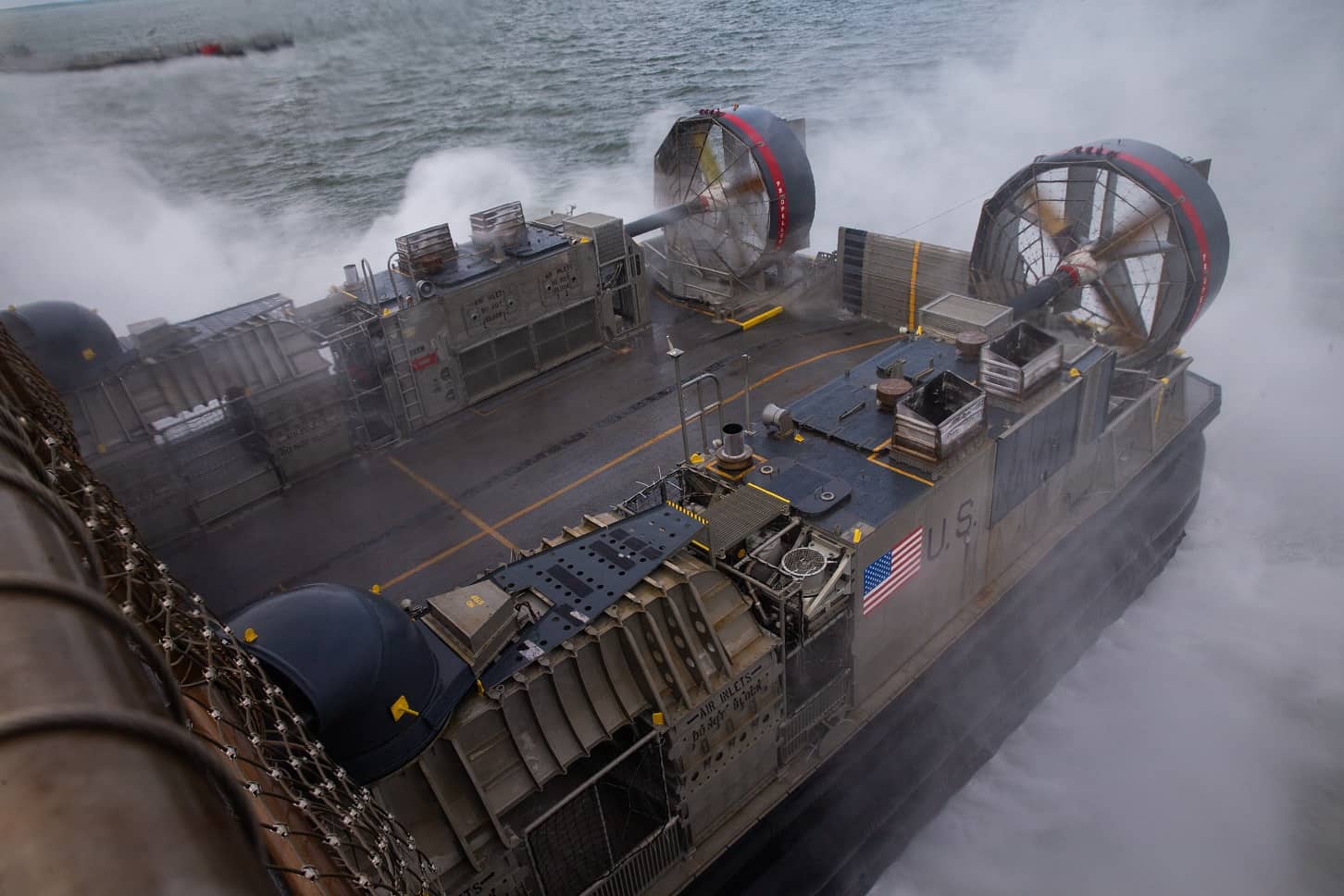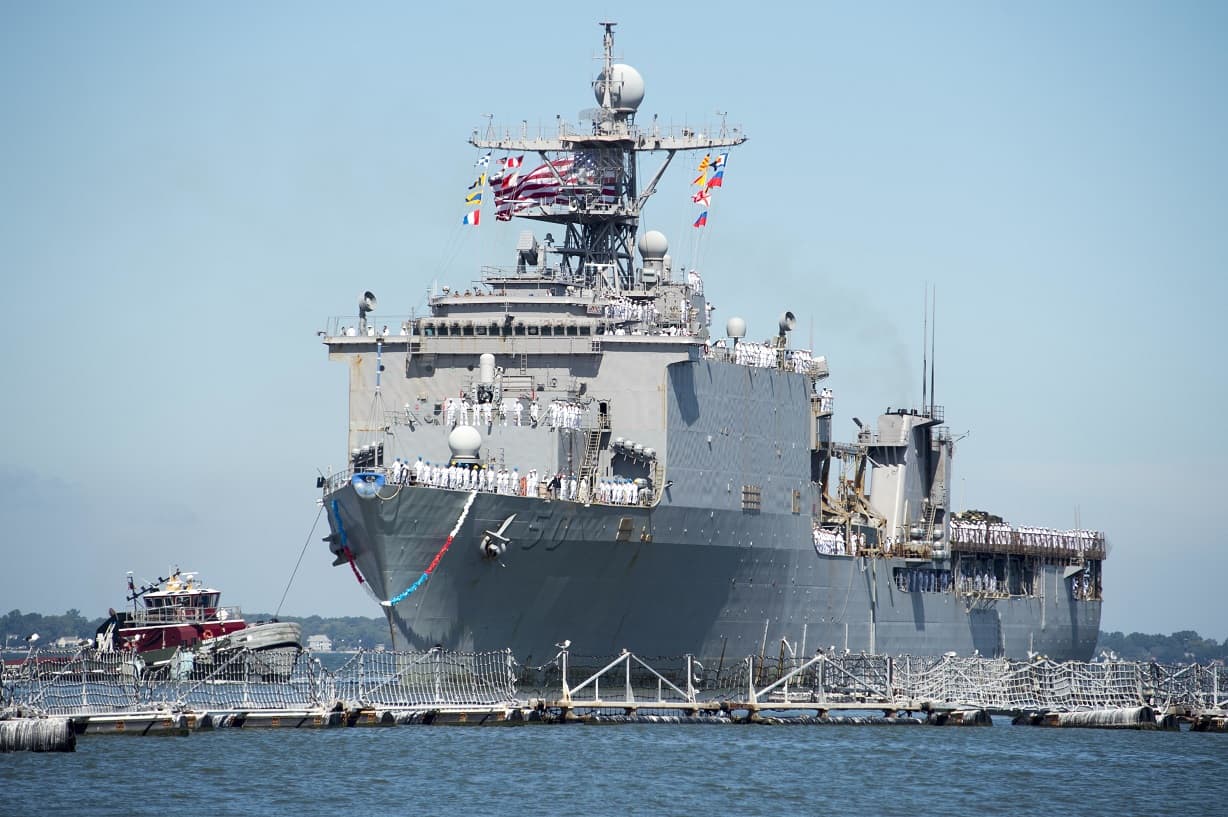
U.S. Navy’s amphibious dock landing ship USS Carter Hall (LSD 50) has demonstrated its emergency response capabilities by conducting amphibious operations to load and unload mobile equipment to train how to properly respond to a natural disaster and to provide humanitarian assistance, July 11.
According to Lt. Cmdr. Patrick Williams, USS Carter Hall (LSD 50) Public Affairs, this exercise is part of the Defense Support of Civil Authorities (DSCA) training event in the Norfolk area.
“These training evolutions are a great way to highlight the synergy between the Navy-Marine Corps teams and to validate the operational plans to properly prepare to help those in need after a natural disaster,” said Cmdr. Bruce Golden, Carter Hall’s commanding officer. “Amphibious ships bring a unique capability to quickly and efficiently bring gear and supplies ashore. These training evolutions enable the Carter Hall’s crew and partner units to practice communication and procedures to effectively work together to ensure the highest level of readiness is achieved before being tasked for a real world mission.”
Moored at Naval Station Norfolk, Carter Hall received two Landing Craft Air Cushions (LCAC) from Joint Expeditionary Base Little Creek. The LCACs, assigned to Assault Craft Unit Four, landed on the beach to load the mobile equipment needed to support the operation. Once fully loaded, the LCAC’s departed the beach to demonstrate the ability to unload and store the mobile equipment on the Carter Hall. This operation demonstrated how crucial supplies and equipment could be readied and prepared for delivery by U.S. Navy assets in the event of a natural disaster such as a hurricane.
The DSCA training prepares the various units to plan, prepare and execute operations to prepare to quickly respond when a natural disaster occurs.
USS Carter Hall (LSD 50) is a Harpers Ferry-class dock landing ship of the United States Navy. She is the second U.S. Navy ship to be named for Carter Hall, an estate near Winchester, Virginia, built in the 1790s.
Carter Hall’s keel was laid down on 11 November 1991 by the Avondale Shipyards at New Orleans, Louisiana.
U.S. Navy’s amphibious dock landing ship Carter Hall was launched October 2, 1993, and commissioned September 30, 1995. She made her maiden deployment to the Mediterranean on April 29, 1997.
The mission of the Landing Ship Dock (LSD) is to transport and launch amphibious craft, vehicles, crews and embarked personnel in an amphibious assault. An LSD can also render limited docking and repair service to small ships and craft, and act as the Primary Control Ship (PCS) during amphibious assaults.