

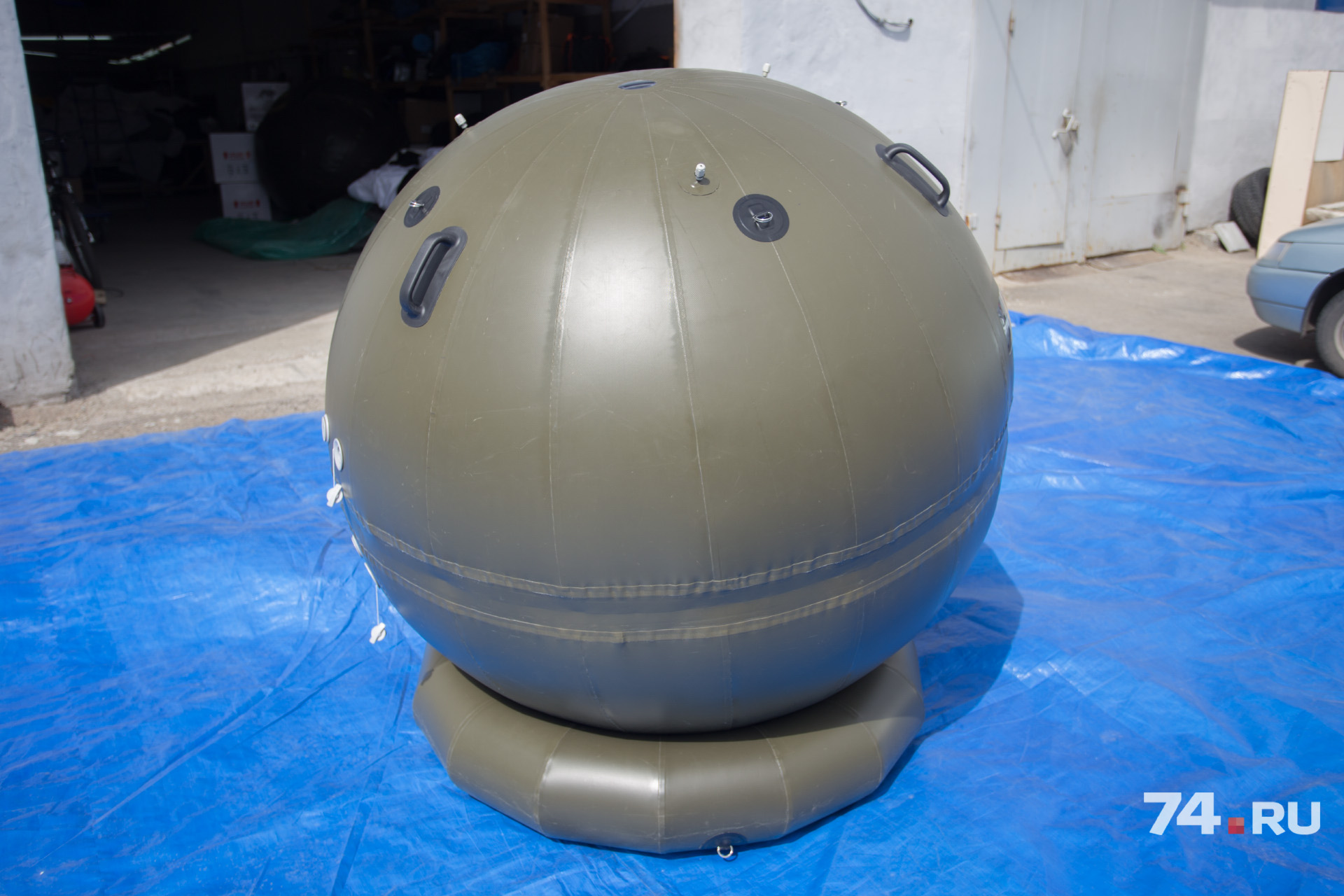
Director of the Russian company “NEBO” Artem Mazanov, during an interview, that they successfully developed the new inflatable antenna system.
According to a news report published on the 74.ru news website, Russia’s company from Chelyabinsk has developed the unique ultra-portable inflatable antenna system on the technologies used by the US military.
“We’ve been approached by the radio engineering institute in Rostov-on-Don and asked if we could develop the same antenna… I dealt with it personally at my own expense simply because it was interesting to me – I got this idea on fire. In fact, now there are such antennas only in the USA. And now we have,” – noted director of NEBO company.
The new Russian antenna system is a sealed ball made of durable material, the seams are glued together by special equipment. Together with all the equipment it weighs only a few tens of kilograms and can be used for mobile groups.
The new development almost completely copies the unique inflatable antenna system developed by US-based GATR Technologies (GATR), a subsidy of the Cubic Corporation. Just like Russian copy, the GATR antenna system is inflatable and deploy easily, enabling high-bandwidth satellite communications.
GATR’s antenna system is a unique ultra-portable design that can provide high-bandwidth communications for transmission of secure and non-secure data, voice, and video, all in a compact package. The design integrates a patented inflatable radome with a precision antenna, allowing all components to fit in a backpack weighing less than 23 kg.
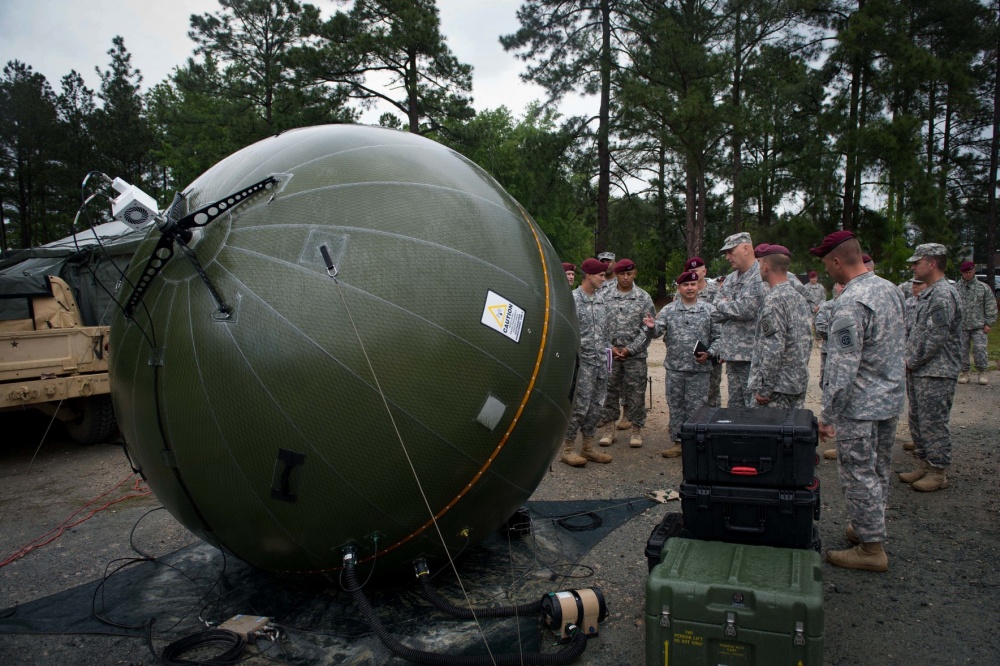
The antennas can be air dropped to a military unit or transported as commercial baggage, which is a competitive edge that supports the effectiveness of expeditionary missions.
Inflatable satellite antennas for US troops were demonstrated in 2014 when the US Army concluded a five-year contract with GATR Technologies to supply 36 such complexes for $ 440 million.
The Russian system almost completely inherits the design of the American original.