

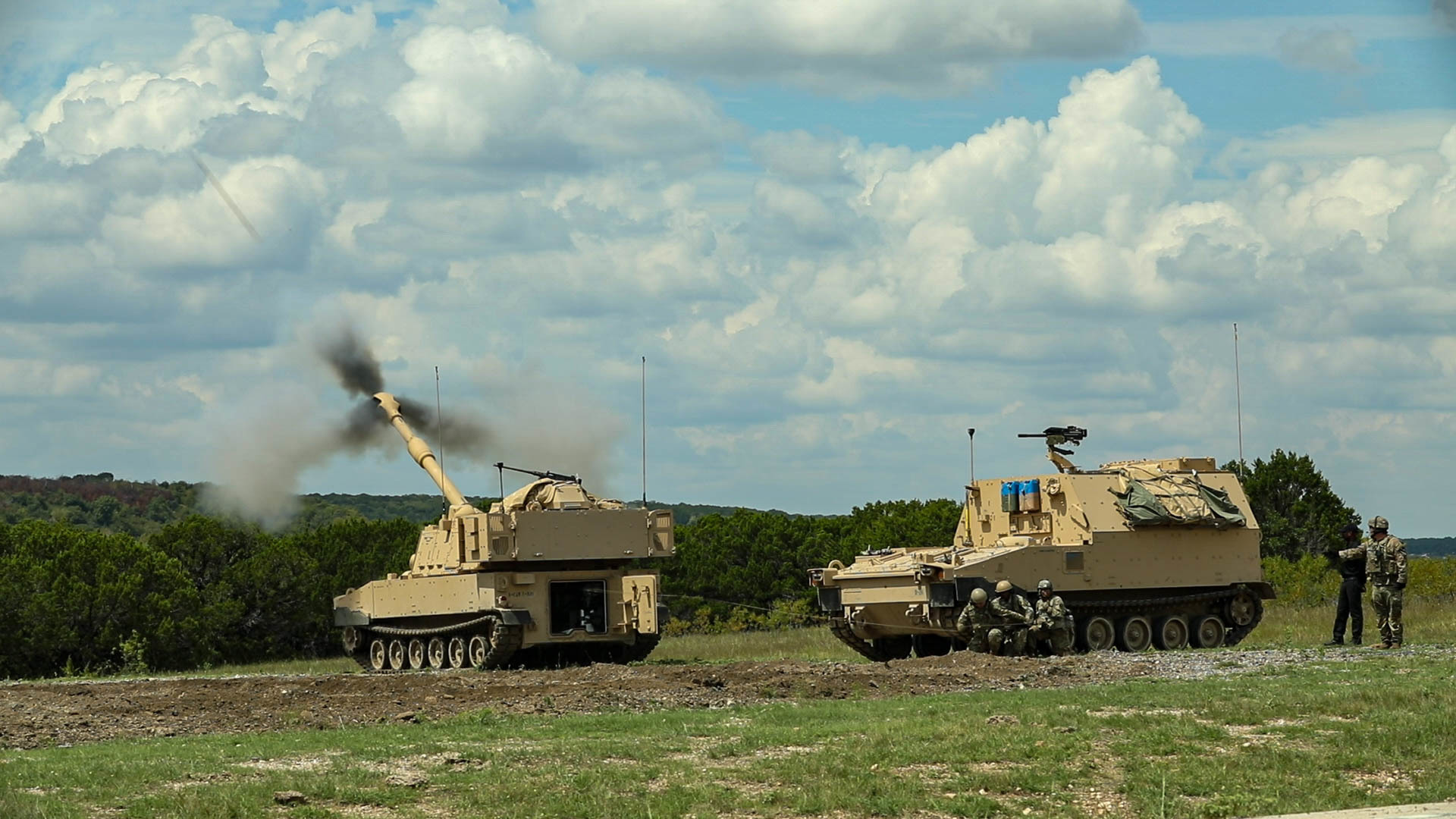
The U.S. Army has released a request for a proposal to add additional option years (FY21-FY23) to contract for the M109A7 Paladin artillery systems and M992A3 ammunition carriers.
The Army Contracting Command at Detroit Arsenal posted a notice on the U.S. government’s main contracting website, asking for information from contractors about their ability to produce material and components required in support of Paladin production.
According to a recently published request, Contracting Command to add three additional option:
- 40 vehicle sets, 3 Total Package Fielding (TPF) kits, 1 Lot support, anticipated option execution June 2021;
- 44 vehicle sets, 3 TPF kits, 1 Lot support, anticipated option execution March 2022;
- 43 vehicle sets, 3 TPF kits, 1 Lot support, anticipated option execution February 2023.
Also noted that in order to ensure there is no break in production, the Army plans to issue an Undefinitized Contract Action (UCA) modification in order to ensure that early order materials can be ordered in a timely fashion for the FY21 option.
In addition to the requested information, BAE Systems shall provide an estimated cost for the early order material required in support of this action for the FY21 option.
Notice also gives further details that the delivery schedule will continue at the existing rate of 8 vehicles monthly (4 vehicle sets), beginning the month after the last FY20 vehicle deliveries are concluded.
The M109A7 represents a significant upgrade to the current M109A6 Paladin, the premier artillery weapon system of the Army.
The advanced version of Paladin is more lethal now than ever. Many enhancements have been made to better enable the Troopers who operate them on the battlefield.
The M109A7 will solve long-term readiness and modernization needs of the M109 family of vehicles through a critical redesign and production plan that leverages the most advanced technology available today. This state-of-the-art “digital backbone” and power generation capability provides a more robust, survivable and responsive indirect fire support capability for U.S. Army Armored Brigade Combat Team Soldiers.