The U.S. Army needs more mobile firepower to counter Russia’s aggression in Europe and to achieve parity with Iskander ballistic missiles in the Russian enclave of Kaliningrad.
Senior Russian officials have repeatedly stated about its “aggressive military posturing” and that Moscow would use Iskander and S-400 surface-to-air missiles from the exclave of Kaliningrad. For reference, Kaliningrad is a Russian enclave sandwiched between Poland and Lithuania.
In terms of capability, the Iskander system has a range of up to 440 miles and could reach Berlin, as well as two-thirds of Poland and Sweden.
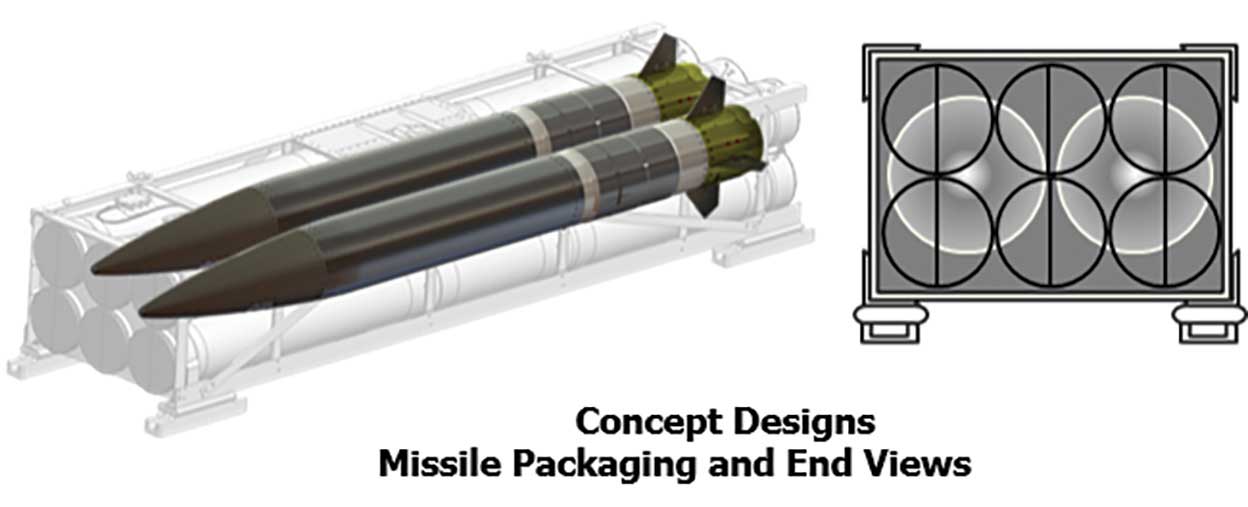
To counteract the possible threat in Eastern Europe and in the whole world, the US Army decided to develop the Precision Strike Missile (PrSM) program. The new PrSM (pronounced “prism”) will be a surface-to-surface, all weather, precision-strike guided missile fired from the M270A1 Multiple Launch Rocket System (MLRS) and the M142 High Mobility Artillery Rocket System (HIMARS).
The baseline missile, which will be developed and fielded to engage a wide variety of targets at ranges up to 310 miles, will emphasize imprecisely located area and point targets. Primary emphasis for follow-on spirals will be on increased range, lethality and engagement of time sensitive, moving, hardened and fleeting targets.
The PrSM programme will become the new alternatives of the Army Tactical Missile System (ATACMS). “Prism” will replace the existing aged inventory of non-Insensitive Munitions and Cluster Munition policy compliant ATACMS.
According to Army’s officials, the PrSM will destroy/neutralize/suppress targets at ranges from 250-plus miles using missile-delivered indirect precision fires. PrSM provides field artillery units with long range and deep strike capability while supporting brigade, division, corps, Army, theater, joint/coalition forces and Marine Air-Ground Task Forces in full, limited or expeditionary operations.
“We are a fires-based Army,” said Army Secretary Mark T. Esper about new weapon programs while testifying before the House Appropriations Committee’s defense subcommittee on Capitol Hill. “In order to gain freedom of maneuver, you have to have fires and movement.”
Plans are to develop a long-range hypersonic weapon, extended range cannon artillery, long-range cannon and precision strike missile, also known as Prism.
“All of those programs in combination, both the acquisition piece of it and the fires piece of it, will reestablish U.S. dominance in fires” Milley said.
The development of a new high-precision guided missile is being conducted with the participation of two US defense contractors, Raytheon and Lockheed Martin.
It is assumed that prototype demonstration flight tests to be held later in the year with an early operational capability as soon as 2023.