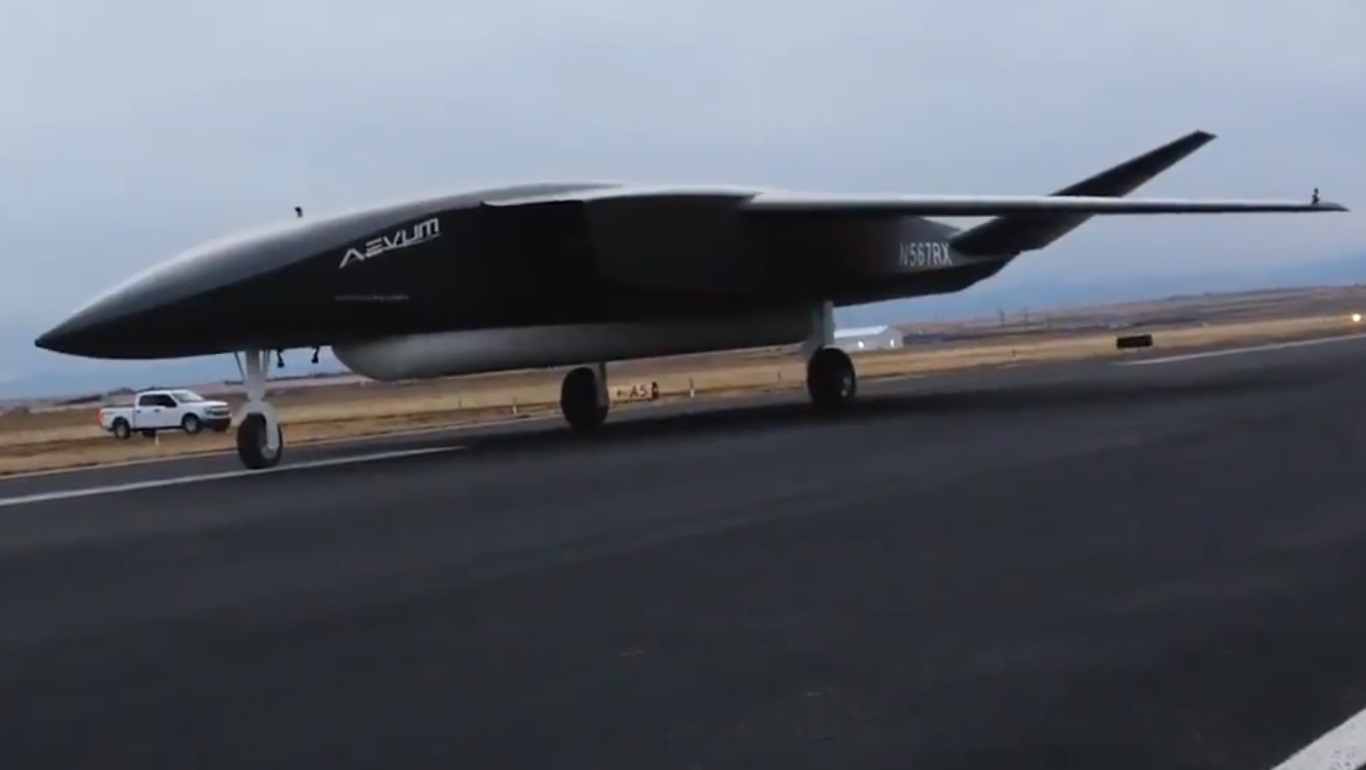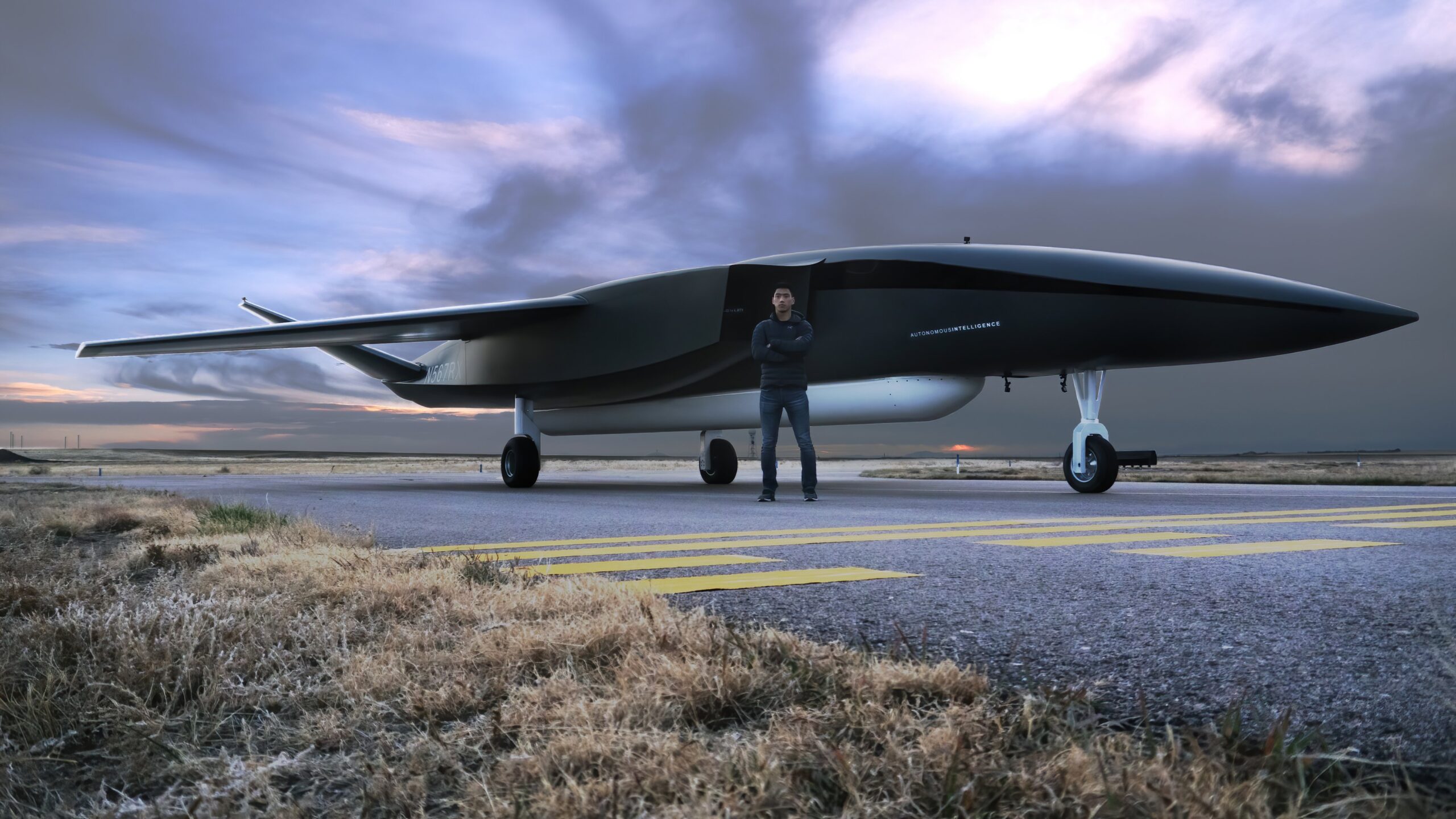
Small satellite launch startup Aevum has unveiled the Ravn X unmanned aircraft system that designed to launch small payloads to orbit.
In a press release presented by the Aevum, CEO Jay Skylus said that the newest Ravn X unmanned system can take off from a runway and deliver payloads to space using only jet fuel.
The Ravn X is a symbiosis between big drone aircraft and a rocket-launching platform designed to take payloads of different weights and sizes into orbit.
The new drone, which is effectively the first stage of a rocket, wil provide lower the cost of spaceflight and promising fast-response service enabled by an autonomous aircraft that can take off from any mile-long runway.
As noted by the company, 55,000-pound aircraft is 80 feet long with a 60-foot wingspan. While in flight it will release a two-stage rocket that can launch 100 kilograms to 500 kilograms of payload to low orbits. Skylus said Ravn X will be ready for operations within the next 18 months after it clears regulatory hurdles.
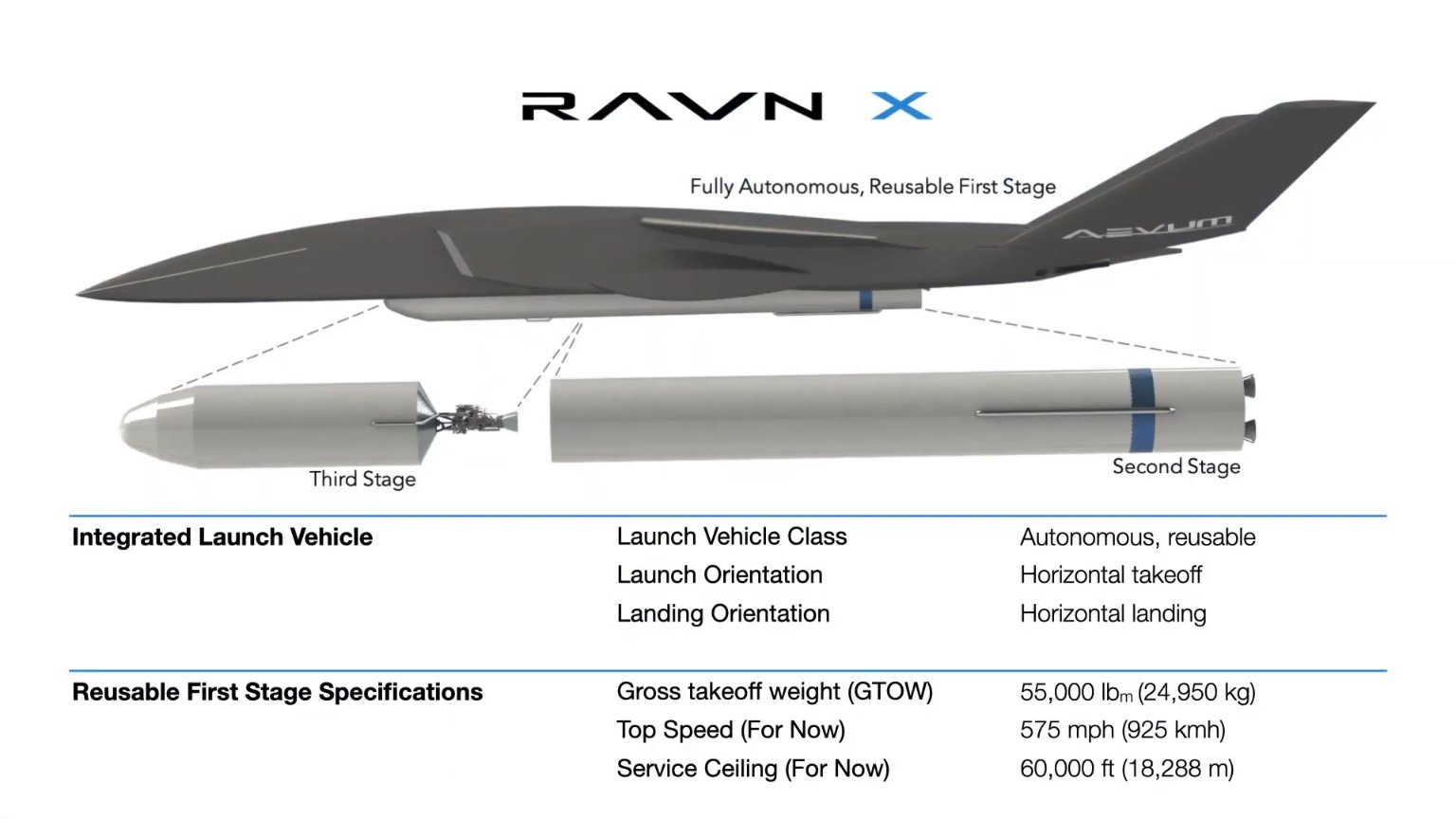
Jay Skylus also noted that Aevum distinguishes Ravn X from air launch methods, such as Northrop Grumman’s Pegasus or Virgin Orbit’s LauncherOne, as the vehicle is not dropping the rocket but rather accelerating it up through the atmosphere.
On top of that, Aevum says new project is already profitable and generating revenue, with its first launch for the U.S. Space Force’s ASLON-45 mission in late 2021.
Earlier in November 2019, ATLAS Space Operations, Inc., and Aevum, Inc., publicly announced their partnership and collaboration on The Agile Small Launch Operational Normalizer (ASLON)-45 space lift mission.
The partnership expands on the existing collaboration between ATLAS and Aevum with the $4.9 million ASLON-45 mission, which provides orbital launch services to the Department of Defense (DOD) Space Test Program and other government agencies. By facilitating experimental satellites in low-Earth orbit, ATLAS and Aevum will help the DOD improve their real-time threat warnings.