

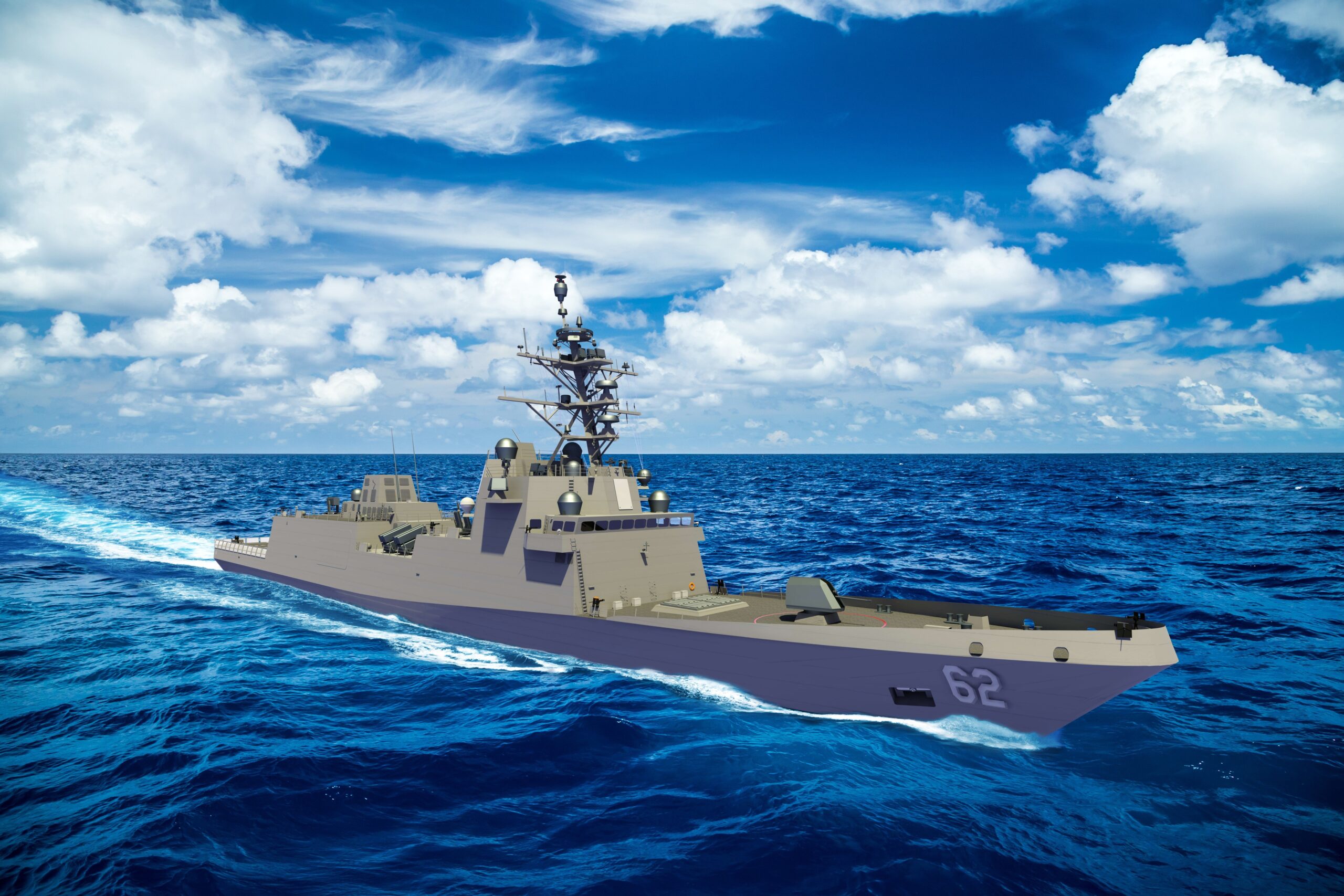
Defense electronic systems company Thales said Thursday that it has successfully delivered the first CAPTAS-4 variable-depth sonar transmitter to the U.S. Navy’s Constellation Frigate Program (FFG-62).
According to a press release from Thales, the advanced sonar system was handed over to the U.S. Navy ahead of schedule, showcasing the company’s commitment to excellence and its role as a trusted partner in naval operations worldwide. Known for its reliability and performance, the CAPTAS-4 stands as the industry leader in underwater variable-depth active systems.
AAC, the prime contractor, achieved this milestone delivery on October 12, 2023, surpassing contractual expectations despite aggressive time constraints. Thales’ renowned sonar technology was selected by Fincantieri Marinette Marine in collaboration with the U.S. Navy to outfit its new frigates, marking a significant advancement in naval defense capabilities.
The CAPTAS-4, the most powerful variant in the CAPTAS family, offers unparalleled anti-submarine warfare capabilities. Tested extensively under various operational conditions by navies worldwide, including the French, British, and Italian fleets, its technical maturity and exceptional performance have earned global recognition.
Thales’ expertise in underwater warfare spans over five decades, making it the leading exporter of sonar systems globally. The CAPTAS family, characterized by low-frequency variable-immersion sonars, is tailored specifically for anti-submarine operations, with the CAPTAS-4 representing the pinnacle of this technology.
Notably, French multi-mission frigates equipped with the CAPTAS-4 system have received prestigious accolades, including the Hook’Em Award, for outstanding performance in anti-submarine warfare during coalition exercises. Thales’ commitment to excellence and its cutting-edge sonar systems have been instrumental in enhancing naval capabilities, enabling the detection, localization, and tracking of increasingly stealthy underwater threats.