

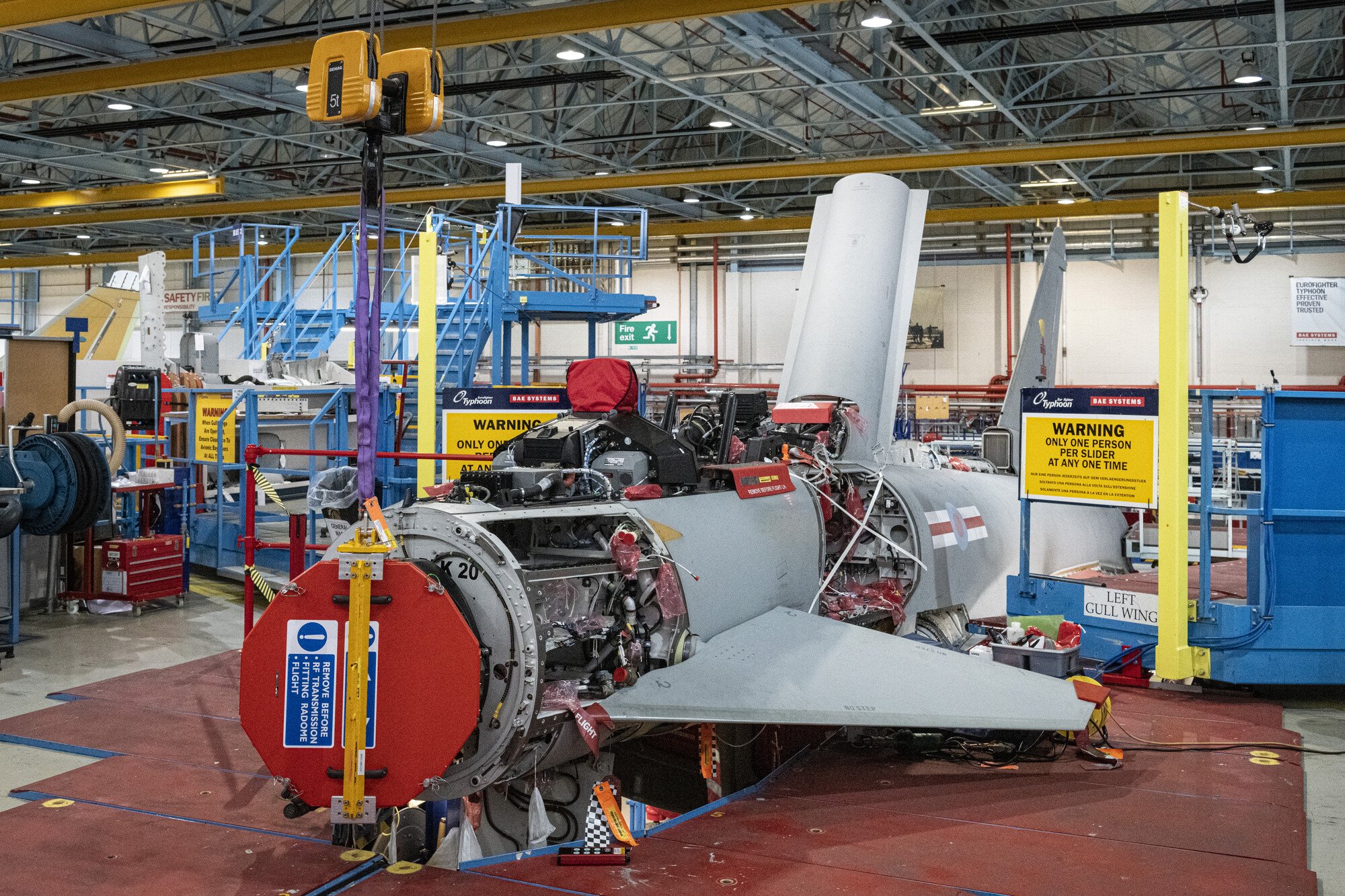
A Typhoon fighter jet has been equipped with the European Common Radar System (ECRS) Mark 2 Radar, representing one of the world’s most advanced radar technologies.
This development, part of a £2.35 billion ($2.9 billion) investment in upgrading the Typhoon, introduces a unique multi-functional array (MFA) that enables the aircraft to simultaneously detect, identify, and track multiple targets in the air and on the ground, while also performing electronic warfare tasks.
The ECRS Mark 2 Radar, developed by Leonardo UK, has undergone ground-based testing at BAE Systems’ site in Warton, Lancashire. The prototype radar has now been integrated onto a UK Typhoon test and evaluation aircraft (BS116) by BAE Systems, setting the stage for initial flight trials.
Lyndon Hoyle, Typhoon Delivery Team Head, emphasized the collaborative effort with the Royal Air Force (RAF) and industry partners to harness cutting-edge technology for the UK Armed Forces. The advancement is part of a broader enhancement program that sustains approximately 1,300 high-quality engineering jobs across the UK over the next decade.
Group Captain Matt D’Aubyn, Assistant Head Control of the Air / Typhoon Programme Director, described the integration of the prototype radar as a positive step in the continuous evolution of Typhoon’s control of the air capabilities, preserving its technological advantage and sovereign freedom of action.
The prototype radar will undergo further testing and ground runs at Warton before embarking on initial flight trials later this year. Andy Holden, Radar Delivery Director at BAE Systems’ Air sector, highlighted the significance of equipping the aircraft with this cutting-edge radar, moving a step closer to delivering new capabilities that ensure Typhoon’s role as the backbone of combat air defense for decades to come.