

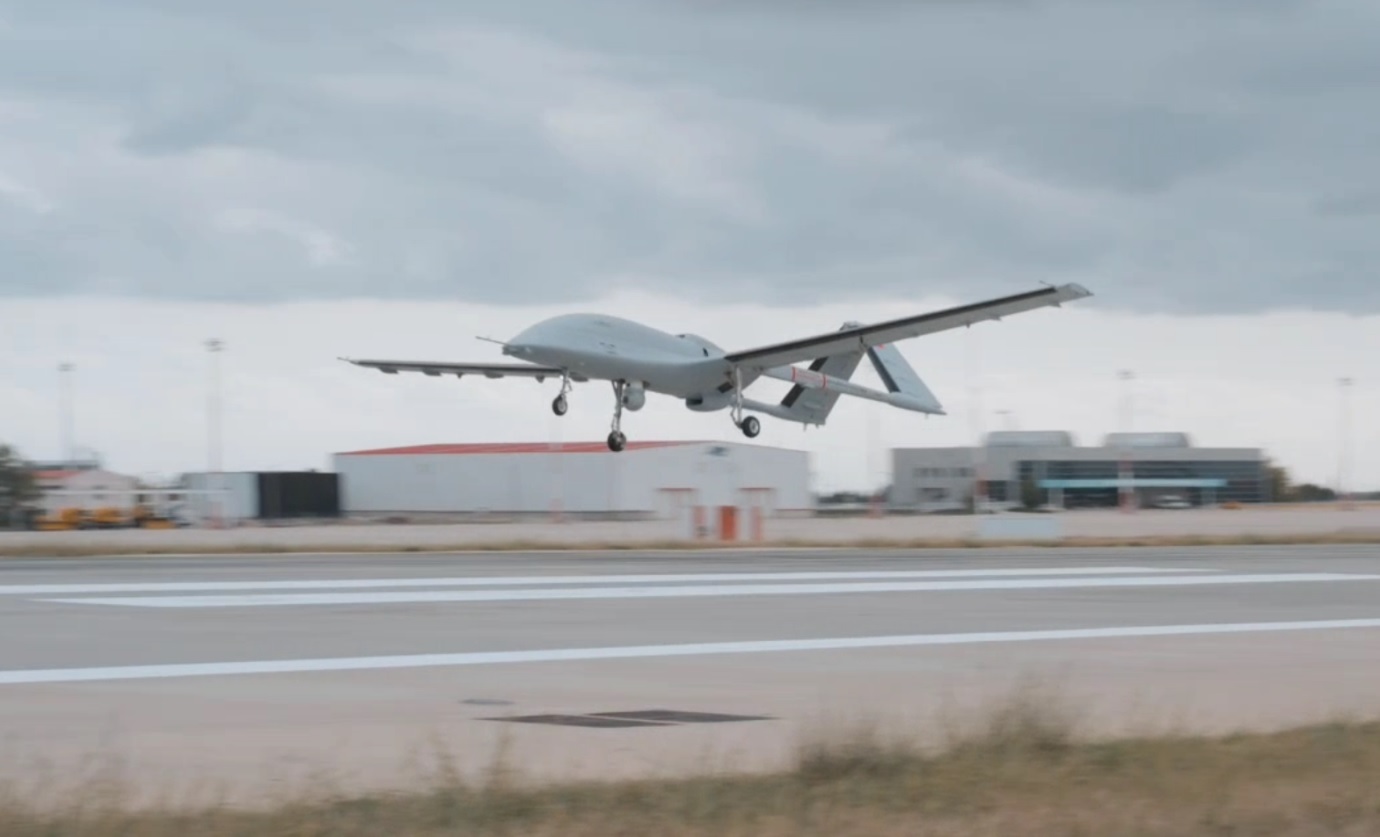
On Friday, Turkey’s leading drone maker announced that the naval variant of the famous Bayraktar TB2 has achieved a significant milestone by successfully completing its takeoff and landing tests.
According to a Facebook post by Baykar, this achievement marks a major step forward in the readiness and capabilities of the new Bayraktar TB3 short-runway-capable version.
The completion of these crucial tests demonstrates that the TB3 is now fully prepared for takeoff.
The TB3 is a naval evolution of the combat-proven TB2 drone, designed specifically with the ability to take off and land on aircraft carriers and amphibious assault ships with short runways.
Kanatlanmaya hazırız! #BayraktarTB3 teker kesme testini başarıyla tamamladı. ✈️⚓️🚀
We’re ready for takeoff! #BayraktarTB3 succesfully completed its Takeoff & Land test. ✈️⚓️🚀 pic.twitter.com/nm34qOURJD
— BAYKAR (@BaykarTech) October 20, 2023
Turkey’s cutting-edge TB3 drone to join the aviation wing of the universal landing ship Anadolu, effectively transforming it into the first-ever drone carrier. The TB3, along with the Kızılelma drone, will take on the crucial roles of reconnaissance, enemy engagement, and air defense.
The Anadolu, which will soon accommodate these formidable drones, represents a groundbreaking step in naval aviation. This innovative integration will extend the vessel’s capabilities to include uncrewed reconnaissance and offensive and defensive operations.
It’s worth noting that the Kızılelma jet-powered drone has already commenced active flight testing on December 3, 2022.
While the Bayraktar TB3 may resemble the Bayraktar TB2 in some aspects, it distinguishes itself with a broader range of capabilities and larger dimensions. With a wingspan of 14 meters and a length of 8.35 meters, the TB3 offers more extensive operational capabilities than its predecessor.
The maximum takeoff weight of the TB3 is 1,450 kilograms, with a payload capacity of 280 kilograms, representing a significant increase compared to the TB2’s 750 kilograms and 130 kilograms, respectively. Additionally, the TB3 employs a different engine, the 172-horsepower PD170 from Turkey’s TEI, replacing the 100-horsepower Rotax 912.
This advancement in drone technology and naval integration marks a crucial development in Turkey’s defense capabilities and underscores its commitment to bolstering its presence in the realm of unmanned aerial systems. The Bayraktar TB3 is set to play a pivotal role in transforming naval operations and extending Turkey’s capabilities in the maritime domain.