

- The US launched strikes on more than 80 targets in Iran after attacks on three tankers in the Strait of Hormuz, and President Trump declared the ceasefire "over" at the NATO summit in Ankara.
- Iran's Revolutionary Guard Corps said it targeted US military sites in Bahrain and Kuwait in response, triggering air raid sirens in both countries.
A ceasefire that ended a war three weeks ago collapsed within hours on Tuesday, after gunfire and explosions started flying between the United States and Iran again, and President Donald Trump stood in front of reporters at a NATO summit and simply declared it dead.
The immediate spark was a string of attacks on commercial oil tankers passing through the Strait of Hormuz, the narrow waterway between Iran and the Arabian Peninsula that carries roughly a fifth of the world’s oil supply, attacks that hit at least three ships, including vessels from Qatar and Saudi Arabia, over the course of Monday and Tuesday.
The U.S. military responded by launching what it called a powerful retaliatory strike campaign, hitting more than 80 targets inside Iran overnight Tuesday, according to U.S. Central Command, in what one American official described as a punishing response to what Washington considered a direct violation of the truce the two countries had signed weeks earlier. Iran has not directly claimed responsibility for any of the three tanker attacks that triggered the American strikes, leaving a gap in the public record over exactly who fired on the ships and why, even as the consequences of those attacks have already reshaped the region’s security situation within a single day.
Iran’s response came quickly. The country’s Islamic Revolutionary Guard Corps announced it had targeted American military sites in Bahrain and Kuwait, two Gulf nations that host U.S. forces but were not directly involved in the tanker attacks or the American strikes that followed, and air raid sirens sounded in both countries as the exchange unfolded. That expansion of the fighting beyond Iran and the strait itself, into countries that had largely stayed out of direct combat since the war’s early months, marks one of the more alarming escalations since the conflict first paused.
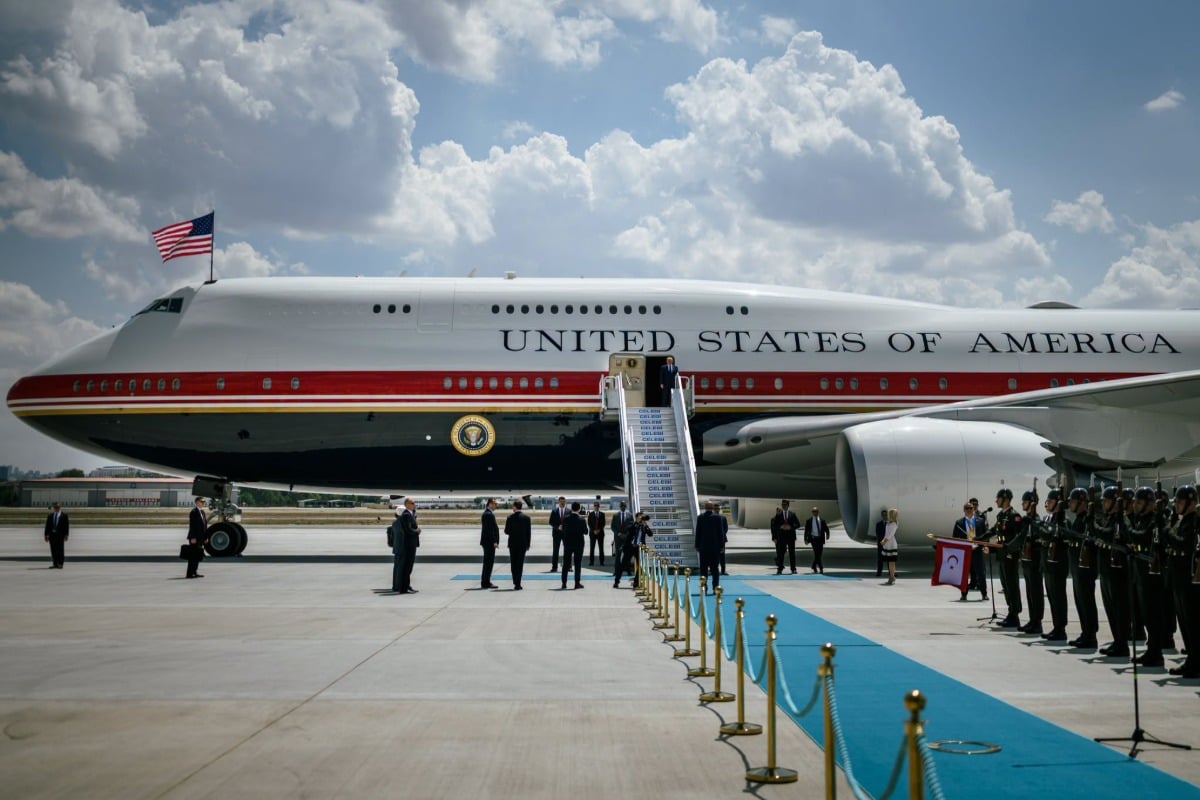
Trump used blunt language to describe where things now stand, speaking to reporters at the NATO summit in Ankara, Türkiye, where world leaders had gathered for a defense-focused meeting that instead found itself overshadowed by the reignited conflict a few hundred miles to the south.
“I don’t want to deal with them anymore, they’re scum,” Trump said.
“They’re sick people, they’re led by sick people… As far as I’m concerned, it’s over,” Trump said.
Trump did leave a narrow opening for diplomacy even as he declared the broader agreement finished, saying negotiators from both sides could keep talking if they wanted to, though he added that he believes they are “wasting their time.” That comment leaves genuine ambiguity about what “over” actually means in practice, since Trump appeared to be describing the political framework and his own patience with Tehran as finished, while stopping short of explicitly ordering an end to the technical negotiating channel that has existed between the two countries since the ceasefire took effect.
Understanding how the two sides got here requires looking back at an agreement that was never fully settled even when it was signed. The ceasefire that Trump and Iranian President Masoud Pezeshkian agreed to on June 17 came in the form of a 14-point memorandum of understanding, a formal but non-binding diplomatic document meant to extend an earlier truce and set out a roadmap toward permanently ending the war between the United States, Israel, and Iran. That war itself began on February 28, 2026, when American and Israeli forces launched joint airstrikes against Iran that killed the country’s Supreme Leader, Ali Khamenei, along with other senior officials, an assassination that triggered months of missile and drone exchanges across the region and a lengthy closure of the Strait of Hormuz that disrupted global oil shipping. Iran only just finished burying Khamenei, with funeral processions running through July 4 to July 9 across multiple Iranian cities, and mourners were still marching through Tehran carrying signs calling for revenge against Trump and Israeli Prime Minister Benjamin Netanyahu in the days immediately before this week’s fighting broke out again.
NATO’s response to the renewed fighting split along predictable lines of alliance loyalty and regional caution. NATO Secretary General Mark Rutte, standing at the same Ankara summit, called the American strikes “absolutely necessary” and accused Iran of “basically violating the ceasefire,” offering the alliance’s clearest public endorsement yet of the U.S. military response. Iran’s parliamentary speaker, Mohammad Bagher Ghalibaf, rejected that framing entirely and said it was the United States that had breached the truce first, a direct contradiction that leaves the basic question of who violated the agreement unresolved in the public record and dependent entirely on which government’s account an observer chooses to believe.
What remains genuinely uncertain is whether Trump’s declaration that the memorandum is “over” represents a formal, lasting collapse of the diplomatic framework or another chapter in a ceasefire that has already survived several rounds of violations, retaliatory strikes, and heated rhetoric since it was first signed in April and then extended in June. The agreement has proven fragile before and been patched back together before, and nothing in Tuesday’s exchange of fire guarantees this rupture will be any different, even as the tone from both Washington and Tehran on Wednesday sounded more final than anything either side has said publicly since the war’s earliest days.