

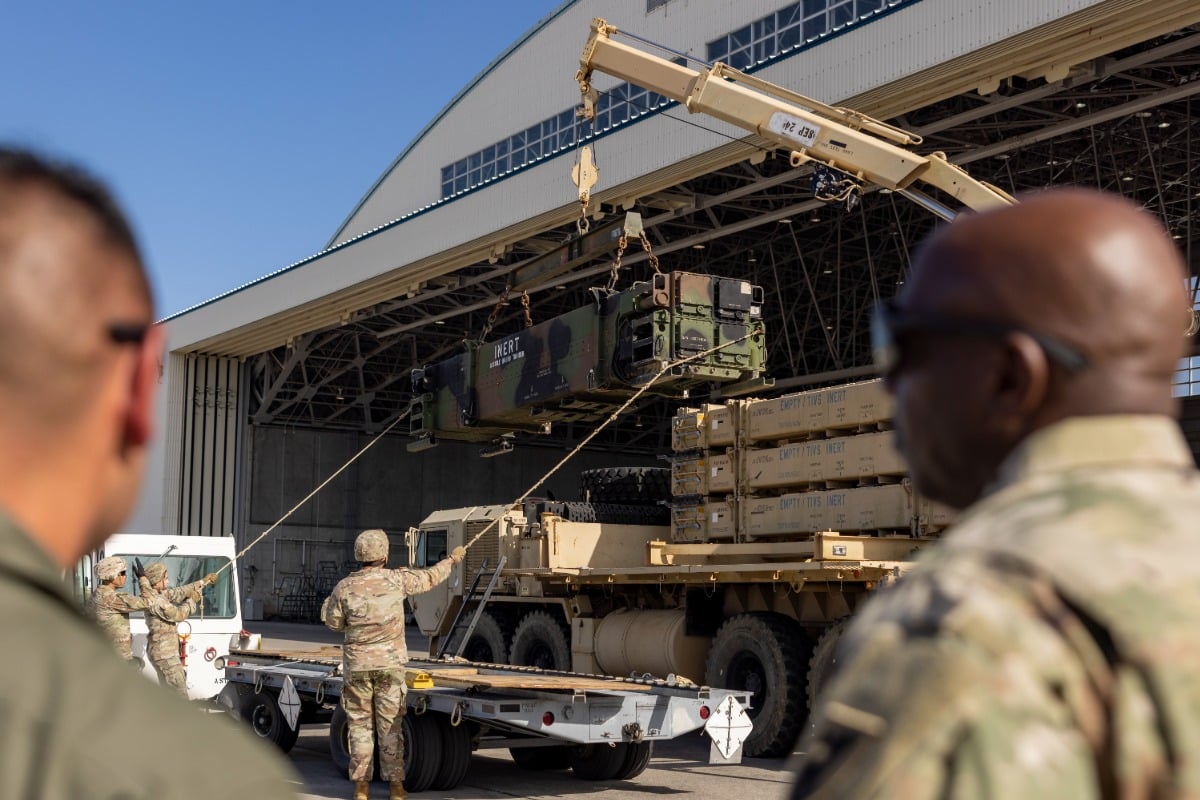
- The United States, Germany, the Netherlands, Poland, and Sweden signed an agreement on July 7 to explore a PAC-3 missile maintenance facility in Europe.
- The agreement was signed at the NATO Summit Defense Industry Forum in Ankara, Türkiye, alongside Lockheed Martin.
The United States, Germany, the Netherlands, Poland, and Sweden signed a joint government-to-government agreement at the NATO Summit Defense Industry Forum in Ankara, Türkiye, on July 7 to explore building a dedicated PAC-3 missile maintenance facility somewhere in Europe, a move Lockheed Martin says would give NATO its first in-region repair and sustainment hub for one of the alliance’s most in-demand air defense interceptors.
The proposed facility would mean European militaries no longer have to ship worn or damaged PAC-3 missiles back across the Atlantic for servicing, cutting the turnaround time needed to get an interceptor back into a Patriot launcher and ready to fire.
The PAC-3, short for Patriot Advanced Capability-3, is a hit-to-kill interceptor missile that destroys incoming threats by physically colliding with them at extremely high speed rather than exploding nearby and relying on shrapnel, a design built specifically to defeat tactical ballistic missiles, cruise missiles, and increasingly maneuverable aircraft. It fires from the Patriot air defense system, one of the most widely fielded missile defense platforms in the Western world, and the newest variant covered by this agreement, the PAC-3 Missile Segment Enhancement, or MSE, adds a larger dual-pulse rocket motor and bigger fins that extend both the missile’s range and altitude reach compared to the earlier PAC-3 Cost Reduction Initiative, or CRI, interceptor that the proposed facility would also support.
“Industrial cooperation strengthens the transatlantic defense industrial base and contributes to economic progress and shared security,” said Jay Pitman, president, Lockheed Martin International. “For more than 75 years, Lockheed Martin has demonstrated our commitment to being a strategic partner for the defense and security of Europe. Today, we are accelerating our work with NATO allies and industry partners to expand integrated air and missile defense capacity, strengthen regional sustainment networks and support the rising global demand for these capabilities.”
Building a maintenance facility inside Europe rather than relying solely on American depots addresses a problem that has become increasingly visible as more NATO members adopt the PAC-3 family. Seventeen countries now operate PAC-3 interceptors worldwide, and Poland, Germany, the Netherlands, and Sweden are among a growing cluster of European nations that have built their national air defense architecture directly around the missile, meaning any damaged or expended interceptor currently has to travel back to facilities in the United States for the kind of specialized repair work that keeps the missile’s guidance systems and rocket motor certified for combat use. A dedicated European facility would shorten that logistics chain considerably, letting allied nations service and return missiles to service faster during exactly the kind of sustained, high-tempo conflict that has already drawn heavily on Patriot interceptor stockpiles across the continent.
That drawdown has been substantial enough to strain global supply. Demand for PAC-3 interceptors has surged over the past two years as Ukraine’s Patriot batteries have relied on the missile to intercept Russian ballistic missiles including the Iskander, and reporting has indicated NATO allies are currently sitting on a backlog of thousands of Patriot interceptor orders, a queue that industry estimates suggest could take years to clear even at expanded production rates. The pressure intensified further earlier this year when the United States drew heavily on its own PAC-3 stockpiles during a brief but intense confrontation with Iran, with American forces reportedly expending hundreds of interceptors in a matter of days and prompting Washington to lean harder on allied production and maintenance capacity to keep pace with battlefield consumption.
Lockheed Martin has responded to that demand with a series of major production expansions over the past year. In January, the company established a framework agreement with the U.S. Department of War to nearly triple annual PAC-3 MSE production, moving from roughly 600 missiles per year toward a target of 2,000 annually over the coming years, an expansion the company says will be supported by new tooling, expanded test equipment, and a supplier network exceeding 13,000 companies. Then in April, the U.S. government awarded Lockheed Martin a $4.7 billion contract specifically to accelerate PAC-3 MSE production this year, a deal the company says is intended to ensure allied nations have the interceptors they need without waiting years for deliveries to catch up with demand. Together, those two moves represent one of the largest sustained production ramps in the missile’s three-decade history, and the newly announced European maintenance facility effectively extends that same urgency from the factory floor to the sustainment side of the supply chain, ensuring missiles already in allied hands stay mission-ready rather than sitting in a queue awaiting depot-level repair overseas.
The announcement describes the facility as “proposed” throughout, and Lockheed Martin’s statement frames the agreement as the start of a cooperative planning process rather than a finalized construction commitment, leaving open questions about timeline and cost that will likely take further negotiation among the five participating governments to resolve.