

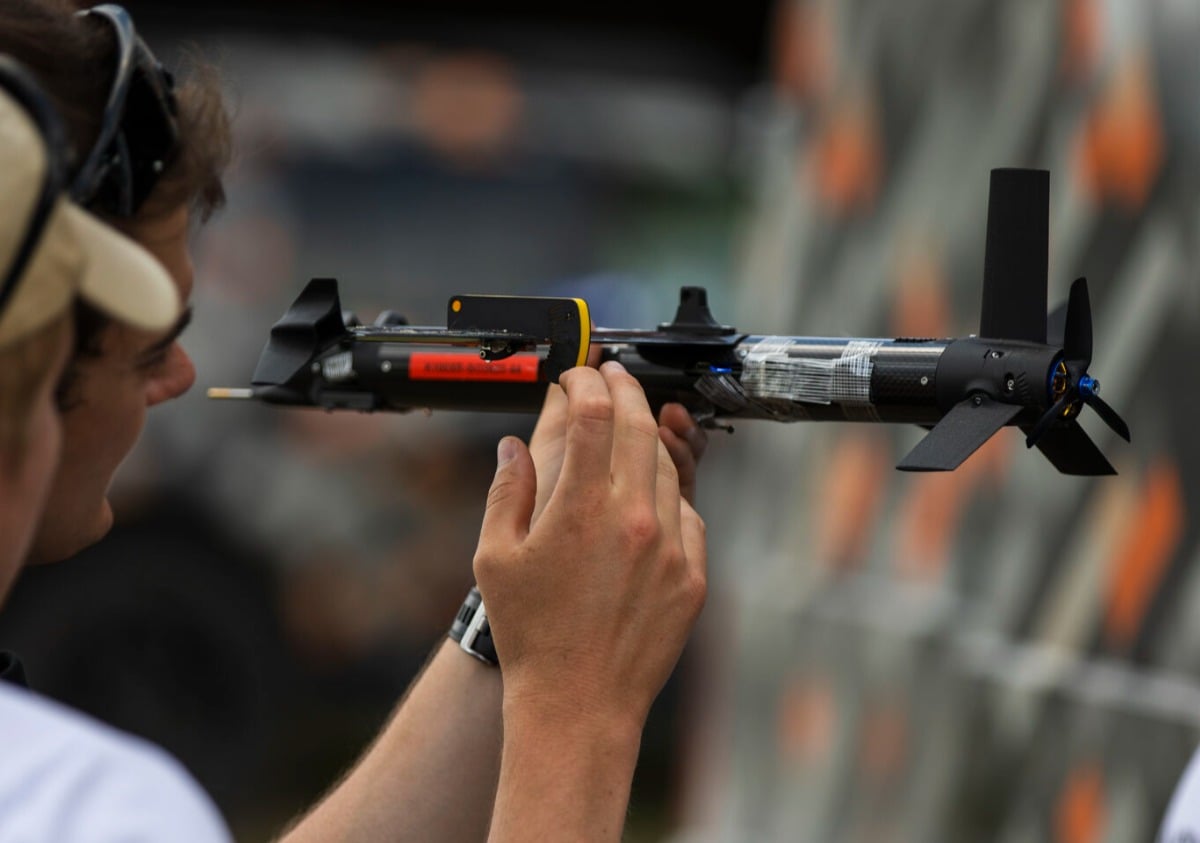
- Nordic Air Defence publicly demonstrated its K100XR interceptor drone live for the first time during a Demo Day event.
- The Swedish company has partnered with Volvo Defense and Polish firms WB Group and Tantalit on counter-drone integration.
A Swedish aerospace startup has let journalists watch its foot-long, carbon-fiber interceptor drone chase down and destroy a target aircraft in real time, the first live public demonstration of a system the company hopes will help defend against the wave of cheap attack drones reshaping modern warfare.
Nordic Air Defence held what it called a Demo Day event where media observed a live engagement of the K100XR, the Stockholm-based company’s flagship counter-drone interceptor, watching the system detect and destroy target drones while also touring the command site where operators work and meeting the engineering team behind the technology. The event marked the first time Nordic Air Defence has publicly shown the K100XR performing a live interception rather than describing its capabilities through press materials, technical briefings, or promotional renderings, even though the interceptor itself has already drawn significant attention from defense industry outlets and NATO officials over the past year.
The K100XR itself is a remarkably small weapon for the job it is meant to do, measuring roughly a foot long, built largely from carbon fiber, and weighing about one pound, yet capable of exceeding 220 miles per hour (354 km/h) using a propeller-driven design rather than a rocket motor. It can loiter over an area for at least 20 minutes waiting for a target, engage threats at altitudes around 3,300 feet (1,006 meters) and ranges beyond 3 kilometers (1.9 miles), and relies on embedded artificial intelligence to detect, classify, and track a hostile drone autonomously, a capability the company describes as fire-and-forget operation because it requires no continuous input from a human operator once launched. An integrated thermal infrared seeker lets the interceptor operate at night or through cloud cover, and the system can switch into a fully autonomous, radio-silent mode when electronic jamming makes normal ground control unreliable, a feature specifically built to counter the kind of signal-disrupting warfare that has become routine on modern battlefields.
Nordic Air Defence has positioned the K100XR primarily against Shahed-type one-way attack drones, the Iranian-designed loitering munitions that Russia has mass-produced and launched against Ukraine by the thousands, along with smaller and medium reconnaissance drones such as Russia’s Orlan. Company officials told media in November 2025 that winter flight testing would precede operational trials in Ukraine specifically against Shahed-type platforms, a plan that would put the interceptor directly into the same combat environment that has already destroyed thousands of far more expensive pieces of military hardware.
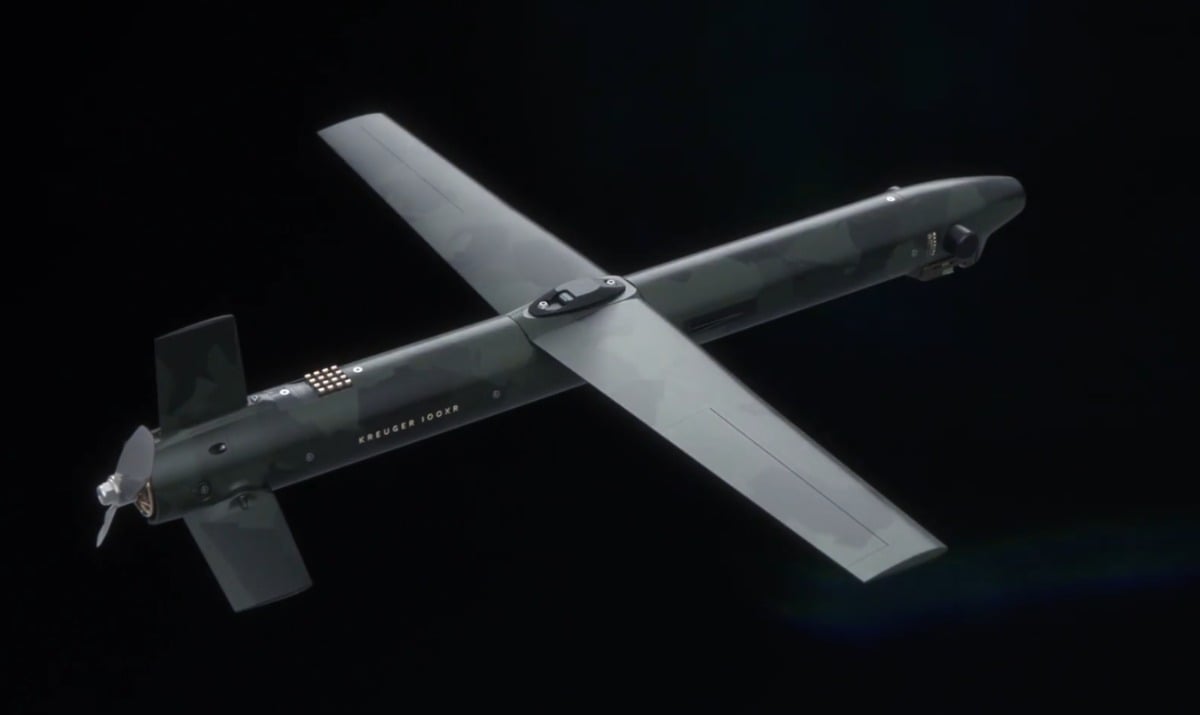
The pitch driving that plan rests heavily on cost, since Nordic Air Defence prices each K100XR at a few thousand dollars and has publicly compared that figure to the roughly $480,000 cost of a single shoulder-fired Stinger missile, arguing that three of its interceptors could cost less than one Stinger while offering a far more sustainable way to counter drones that themselves often cost less than $1,000 to build.
That economic argument matters because open-source tracking and NATO assessments indicate drones now account for roughly two-thirds of Russia’s battlefield equipment losses in Ukraine, including tanks, infantry fighting vehicles, artillery, and even sophisticated air defense systems, a toll that has convinced militaries across Europe that expensive, limited-magazine missile interceptors cannot scale to match the sheer volume of cheap drones now flooding modern battlefields. Founded in March 2024 and operating with roughly 23 staff after raising about $4.4 million in funding, Nordic Air Defence has moved quickly from prototype to partnership, announcing a collaboration with Volvo Defense in September 2025 to integrate the K100XR into a vehicle-mounted protection pod called VIPRO, designed to let military trucks and troop carriers defend themselves against the same drone threats that have made heavy vehicles increasingly vulnerable throughout the war.
The company expanded further into Central Europe in March 2026, signing a letter of intent with Polish defense companies WB Group and Tantalit to integrate the K100XR into Poland’s existing counter-drone network and explore local assembly inside the country, a deal announced during an active Swedish state visit to Poland and framed around Poland’s own drone incursion problem, since roughly 20 Russian drones entered Polish airspace during a single set of strikes on Ukraine in early September 2025. That expansion fits into a broader European push toward what NATO and EU officials have described as a potential drone wall along the alliance’s eastern flank, an initiative EU foreign policy chief Kaja Kallas has said should become fully operational by the end of 2027, even though many of the technical and organizational details for exactly how such a system would function remain unsettled.
Nordic Air Defence framed this week’s demonstration as a turning point for the company rather than simply a marketing event.
“The war in Ukraine has shown how drones are reshaping the battlefield and creating new demands on air defence. The K100XR is designed to meet that challenge by combining high speed, advanced manoeuvrability, autonomy and a low cost per kill. Demo Day marked an important milestone for Nordic Air Defence. With Sweden as our base and a growing international footprint, we continue to build a European defence technology company focused on innovation, resilience and operational impact,” Nordic Air Defence said.