

- Poland's Ministry of National Defense confirmed it transferred PAC-3 interceptor missiles for Patriot air defense systems to Ukraine, Defence24 reported.
- The decision followed requests from NATO's Secretary General, U.S. European Command, and NATO's Supreme Allied Commander Europe, agreed jointly among Patriot-operating nations.
Poland’s defense ministry has officially confirmed something that had already leaked out through a heated domestic political scandal: Warsaw sent Patriot interceptor missiles to Ukraine, Polish outlet Defence24 reported, citing a special press conference where officials laid out declassified details of years of military aid to Kyiv.
Deputy Prime Minister and Defense Minister Władysław Kosiniak-Kamysz used the press conference to announce the start of what he described as a systematic process of declassifying decisions related to military support for Ukraine, according to Defence24, while stressing that the information released so far is only partial and additional details may follow in future disclosures. The declassified material breaks Poland’s assistance into two distinct periods, the donations made in 2022 and 2023 under the previous government, and a separate batch of equipment and ammunition sent from 2024 onward under Prime Minister Donald Tusk’s administration, though the ministry did not disclose exact quantities for any of the equipment listed in either period.
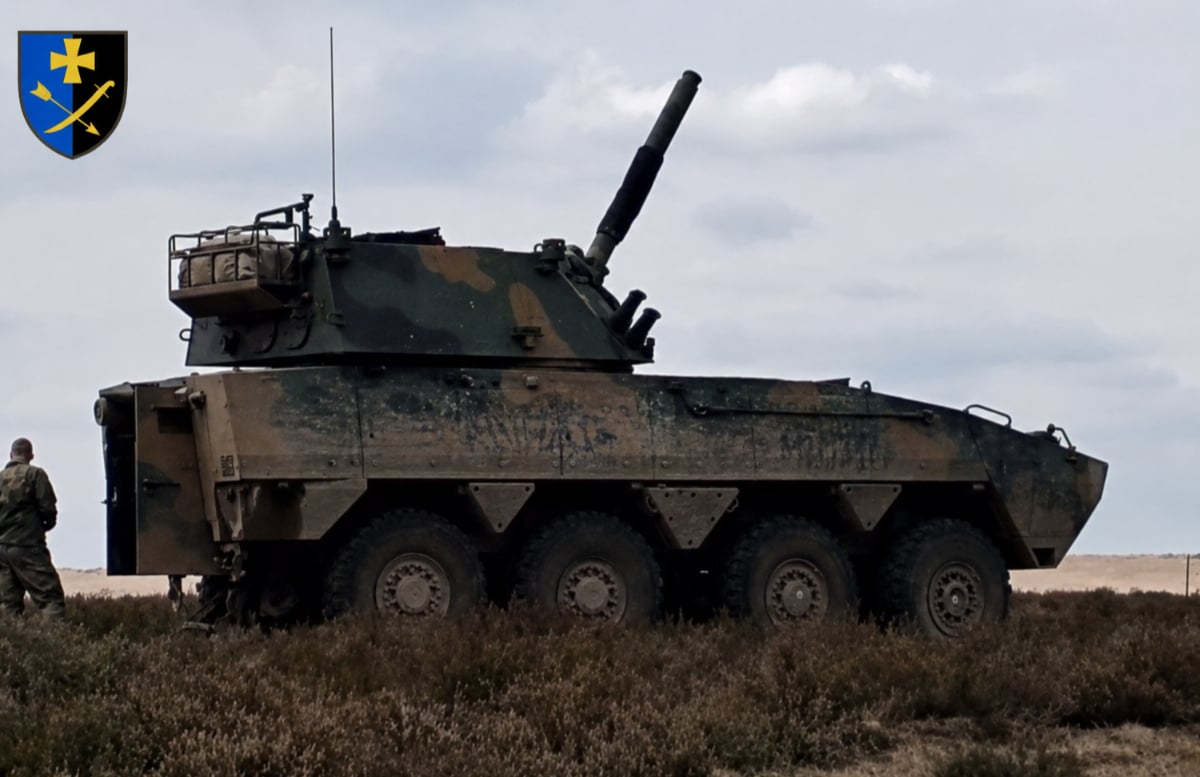
The 2022-2023 tranche reads like an inventory of Poland’s Cold War and early post-Soviet arsenal being handed over piece by piece. It includes T-72, PT-91, and Leopard 2A4 tanks, Rosomak wheeled armored personnel carriers alongside BRDM reconnaissance vehicles and BWP-1 infantry fighting vehicles, and a substantial artillery contribution featuring Krab self-propelled howitzers, 2S1 Gozdzik self-propelled guns, BM-21 Grad multiple rocket launchers, and both 120mm and 60mm mortars. Poland also sent Warmate loitering munitions and FlyEye reconnaissance drones, MiG-29 fighter jets, and Mi-24 attack helicopters, along with older Soviet-designed air defense equipment including the WEGA S-200 system, known in NATO terminology as the SA-5, NEWA S-125SC launchers, or SA-3, and ZSU-23-4 Szylka and ZSU-23-2 anti-aircraft gun systems. Rounding out the package were OSA short-range air defense systems with their missiles, ammunition for the KUB air defense system, tank, artillery, and mortar rounds, GROT, PKM, AKMS, and SWD firearms, and individual soldier equipment. The ministry estimated the total value of that first wave at roughly 14.9 billion zloty, or approximately $3.97 billion, according to the declassified figures Defence24 reported.
The second tranche, covering aid delivered since 2024, looks markedly different and far more sensitive, both technologically and politically. It includes PAC-3 missiles for the Patriot air defense system, ScanEagle reconnaissance drones, various types of rocket munitions, aerial bombs, anti-tank guided missiles, grenade launcher rounds, equipment and spare parts for aviation, armored vehicles, and Newa air defense systems, along with additional tank, artillery, and mortar ammunition and individual soldier gear. The ministry put the estimated value of this second package at about 1.55 billion zloty, or roughly $413 million, a fraction of the earlier tranche but concentrated in far more advanced and harder-to-replace equipment.
That PAC-3 line item is what turned a routine transparency announcement into national news. The PAC-3 is a hit-to-kill interceptor missile built by Lockheed Martin for the Patriot air defense system, designed to physically collide with an incoming ballistic missile rather than simply detonating near it, and it represents one of the most advanced and heavily demanded air defense munitions in the Western arsenal. Poland’s defense ministry confirmed, according to Defence24, that Poland is one of six NATO countries currently operating the Patriot system with PAC-3 missiles, a list that also includes the United States, Germany, the Netherlands, Romania, and Japan among global operators of the interceptor family. The ministry said the decision to transfer PAC-3 missiles came at the request of NATO’s Secretary General, the U.S. European Command, and NATO’s Supreme Allied Commander Europe, following consultations among the group of nations that operate the Patriot system, and that the donation itself was agreed jointly among that group rather than decided by Poland alone.
Poland’s government has been careful to frame the transfer as one that does not weaken the country’s own defenses. According to the declassified assessment Defence24 cited, the quantity of missiles transferred falls within a safe margin of Poland’s defensive capabilities, and both NATO’s Supreme Allied Commander Europe and the Polish General Staff concluded that the transfer does not negatively affect Poland’s own air defense capacity. That assurance matters given Poland’s geography, sitting on NATO’s eastern flank with a long border touching Russia’s Kaliningrad exclave, Belarus, and Ukraine, a position that has made Warsaw one of the alliance’s most exposed members and one of the most reliant on Patriot coverage to guard against Russian Iskander ballistic missiles based just across its border.
The declassification came only after the transfer became a subject of intense political dispute inside Poland. Opposition figures, led by Confederation party co-leader Krzysztof Bosak, alleged that the government had quietly sent the PAC-3 interceptors to Ukraine in March without informing parliament or the public, a claim that gained additional traction when a senior advisor to Polish President Karol Nawrocki said it was highly likely the transfer had taken place. Kosiniak-Kamysz responded by ordering the declassification of Poland’s full record of Ukraine-related military donations dating back to 2022, saying on social media platform X that Poland is operating under wartime conditions near its border and that any action working against the country’s national interest puts the security of Polish citizens at risk, while separately instructing Poland’s counterintelligence service to investigate how details of the transfer became public in the first place.
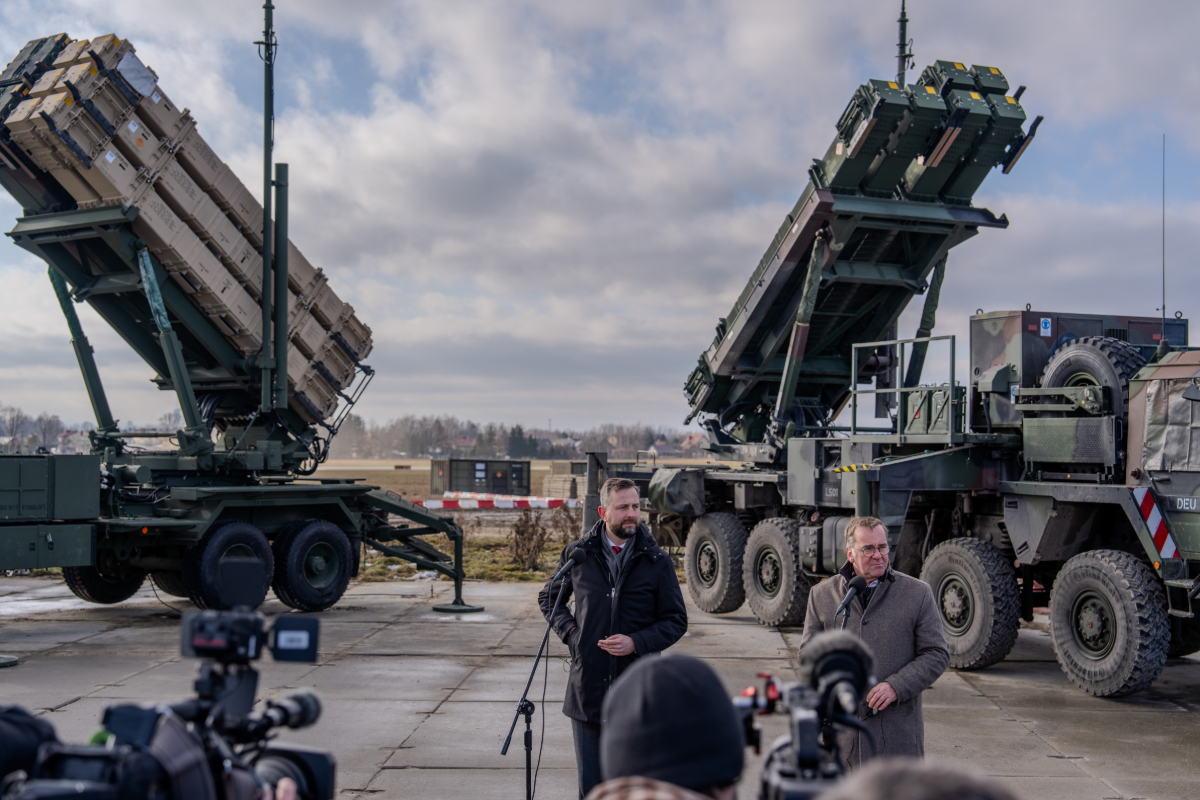
The episode also lands amid a broader supply squeeze on Patriot interceptors worldwide, one that has made every PAC-3 transfer politically fraught regardless of which country is doing the transferring. Global demand for the missiles surged after the United States drew heavily on its own Patriot stockpiles during its confrontation with Iran earlier this year, with American forces reportedly expending several hundred interceptors in just days of engagement, prompting Lockheed Martin to sign a $4.7 billion deal with the Pentagon to nearly triple annual PAC-3 production from 650 to 2,000 missiles by 2033. Even with that expansion underway, industry estimates place NATO’s current backlog of Patriot interceptor orders at roughly 4,300 missiles, a queue equivalent to about seven years of production at last year’s manufacturing pace, meaning every ally that hands over PAC-3 stock to Ukraine is effectively choosing to wait longer for its own replacements.