

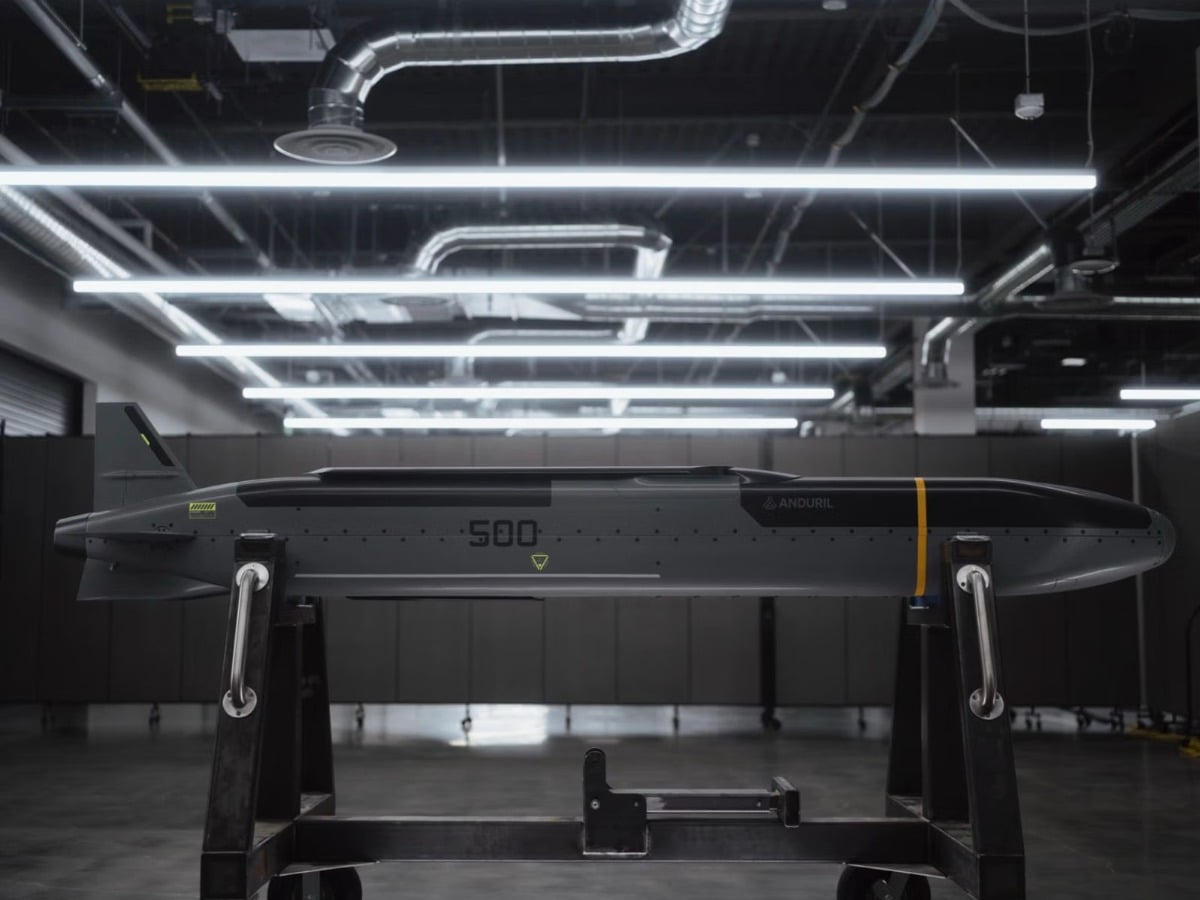
- WZL Nr 2 in Bydgoszcz signed an agreement to assemble and produce Anduril's Barracuda-500M cruise missile in Poland.
- The deal follows PGZ and Anduril's October 27, 2025 memorandum of understanding on autonomous air systems.
A Polish aircraft repair plant that has spent decades overhauling aging Soviet-era jets is about to start building brand-new American cruise missiles instead.
Wojskowe Zakłady Lotnicze Nr 2, a Bydgoszcz-based facility that operates under Poland’s state-owned defense conglomerate Polska Grupa Zbrojeniowa, known as PGZ, signed an agreement paving the way for the assembly and production in Poland of Anduril Industries’ Barracuda-500M, an autonomous, long-range cruise missile the American company has designed specifically for cheap, high-volume manufacturing rather than the exquisite, expensive precision weapons that have traditionally filled Western arsenals.
The Barracuda-500M belongs to a family of turbojet-powered cruise missiles Anduril unveiled in September 2024, built around the philosophy that modern militaries need weapons they can afford to produce and fire by the thousands rather than by the dozen. The largest variant in the family, the Barracuda-500, carries a warhead of more than 45 kilograms (99 pounds) out to a range exceeding 926 kilometers (575 miles), and the design can launch from a remarkably wide range of platforms, including multirole fighters like the F-16, F-35, F-15, and F/A-18, as well as bombers, helicopters, and cargo aircraft such as the C-17 and C-130, the latter capable of deploying the missile through a palletized launch system called Rapid Dragon that lets a transport plane drop multiple cruise missiles from its rear cargo ramp rather than requiring a dedicated combat aircraft to carry them.
That flexibility reflects Anduril’s broader design philosophy for the entire Barracuda family, which the company says shares more than 90 percent of its components across the 100, 250, and 500 variants, letting all three be built on the same production lines by the same technicians rather than requiring separate manufacturing setups for each size. Anduril has said this approach makes the Barracuda roughly 30 percent cheaper and 50 percent faster to produce than comparable existing cruise missiles, an economic argument that matters enormously to European militaries watching how quickly Russia has been able to replace its own missile stockpiles despite sustained losses in Ukraine, and it matters just as much to the United States, where the Department of War signed a framework agreement with Anduril in May 2026 committing the company to deliver a minimum of 1,000 Surface-Launched Barracuda-500M missiles per year for three years under the Pentagon’s Low-Cost Containerized Missiles program, with first deliveries expected in the first half of 2027.
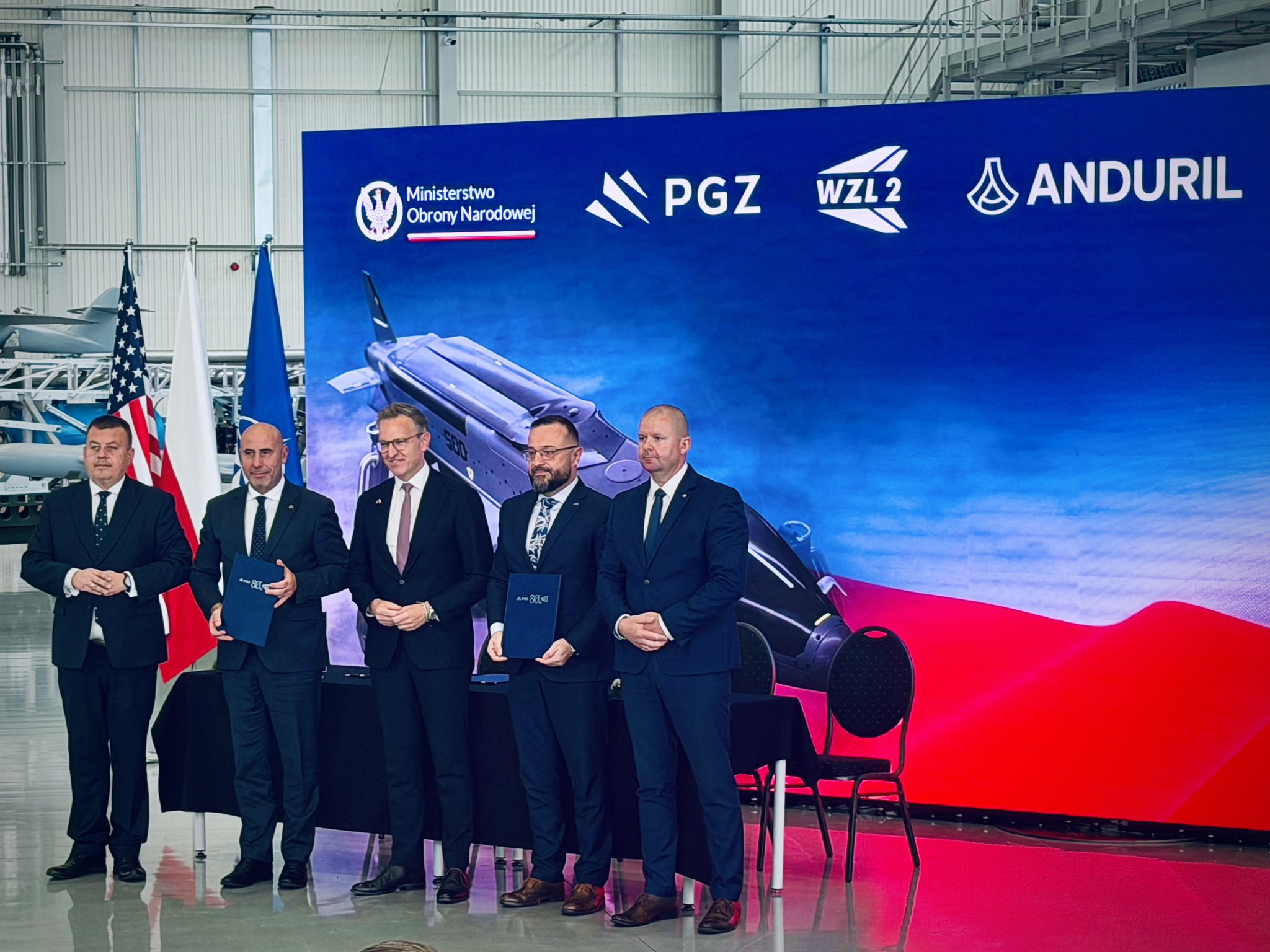
This week’s agreement represents a concrete manufacturing step following a broader strategic partnership PGZ and Anduril first announced on October 27, 2025, when the two companies signed a memorandum of understanding covering joint development of autonomous air systems for the Polish Armed Forces, including a Polish-specific variant of the Barracuda-500M built with components sourced from suppliers across the PGZ enterprise.
Handing this production role specifically to Wojskowe Zakłady Lotnicze Nr 2 marks a significant expansion for a facility whose institutional identity has historically centered on maintenance and overhaul work rather than new weapons manufacturing, servicing Poland’s aging fleet of Soviet-designed aircraft and helicopters for decades as the country’s air force gradually transitioned toward Western equipment. Converting a plant built around repairing existing airframes into one capable of assembling new autonomous cruise missiles requires substantial new tooling, workforce training, and quality assurance processes, and PGZ has previously acknowledged that key technical specifications for the Polish-built Barracuda-500M variant remained undetermined as recently as November 2025, meaning this week’s agreement likely represents an important step toward finalizing exactly what the Bydgoszcz-built missile will look like rather than the conclusion of that process.
Poland’s willingness to move quickly on domestic missile production reflects the country’s position as NATO’s most exposed member state on the alliance’s eastern flank, sharing a border with both Russia’s Kaliningrad exclave and Belarus while sitting directly along the logistics corridor that would matter most in any conflict scenario involving Russia. Warsaw has already committed to spending roughly 5 percent of its gross domestic product on defense, among the highest proportions of any NATO member, and has simultaneously pursued South Korean tanks and artillery, American HIMARS rocket systems, and F-35 fighters alongside domestic programs like the Borsuk infantry fighting vehicle, building a rearmament portfolio that treats sovereign missile production as one piece of a much larger buildup rather than a standalone initiative.