

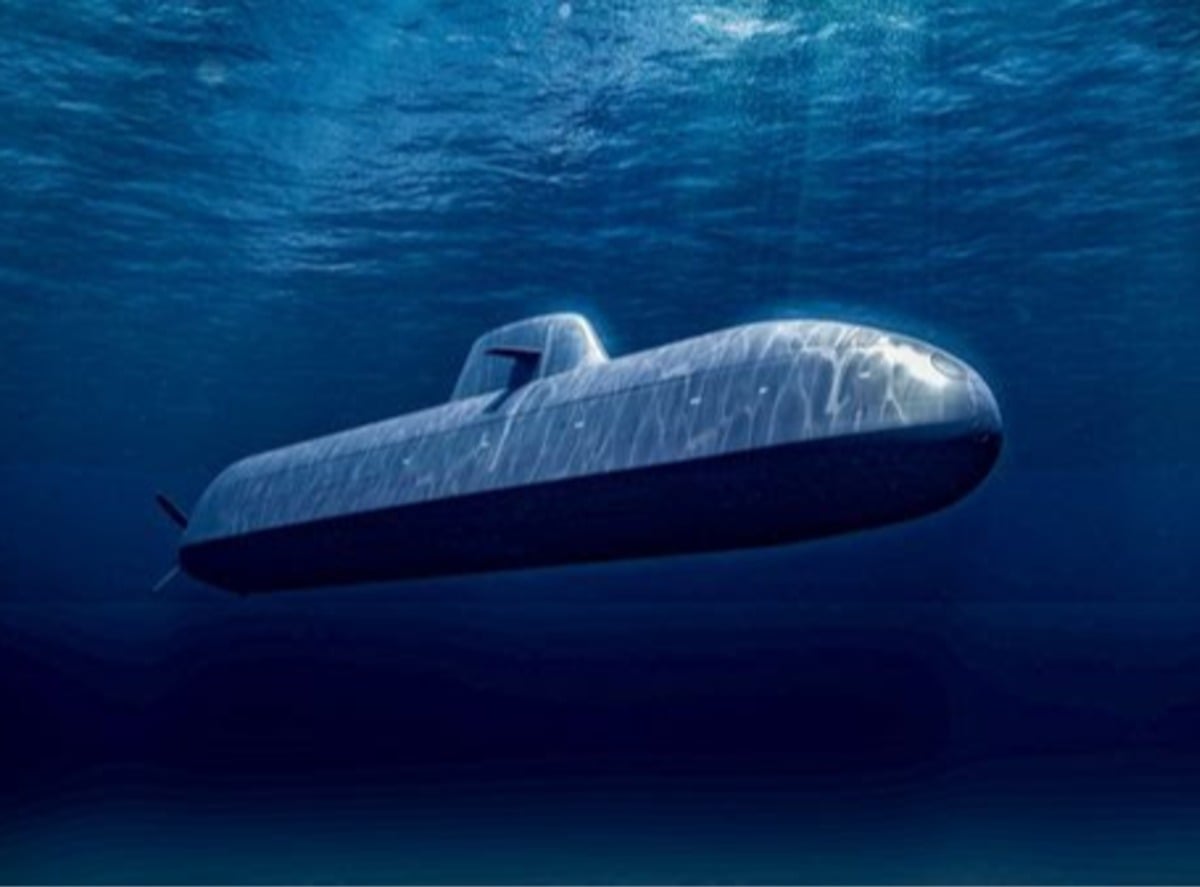
- Prime Minister Mark Carney announced at Canadian Forces Base Halifax that Germany's Thyssenkrupp Marine Systems is the preferred supplier for up to 12 new submarines.
- Canada aims to finalize the contract by the end of 2027, with the first four Type 212CD submarines delivered by 2034.
Canada’s navy currently has four submarines and, on a good day, exactly one of them can put to sea. That is the reality Prime Minister Mark Carney used to justify what his government is now calling the largest defense purchase in Canadian history: a submarine fleet of up to 12 vessels built by Germany’s Thyssenkrupp Marine Systems, announced Monday at Canadian Forces Base Halifax as the preferred outcome of a procurement competition that has dragged on for years while Canada’s aging fleet slipped closer to obsolescence.
The submarines set to replace them, TKMS’s Type 212CD, are diesel-electric boats built around an unusual design goal: staying invisible. The 212CD uses air-independent propulsion powered by hydrogen fuel cells paired with lithium-ion batteries, letting it run for extended periods without surfacing or snorkeling to recharge, a major advantage over older diesel submarines that must periodically expose themselves to the surface to draw in air. Displacing roughly 2,500 tons, the design also uses a faceted, angular hull, sometimes described as a “diamond” shape, engineered specifically to scatter and deflect enemy sonar pulses rather than reflect them back to a hunting ship. Combined with what the Canadian government describes as ultra-low acoustic and magnetic signatures, the result is a submarine built to be one of the hardest in the world to detect, a capability that matters enormously for a country tasked with patrolling three oceans and an Arctic region that is warming nearly three times faster than the rest of the planet.
As sea ice retreats, previously inaccessible shipping lanes and resource zones are opening across Canada’s north, and Ottawa has grown increasingly concerned that rival powers will treat the thinning ice as an invitation rather than a barrier. Submarines able to operate under the ice pack for extended patrols give Canada a persistent underwater presence in the region that surface ships and aircraft cannot match, since a submarine can loiter and listen without announcing its position the way a ship’s radar signature or an aircraft’s engine noise inevitably does.
The Victoria-class submarines these boats are meant to replace were never actually built for Canada in the first place. The Royal Canadian Navy bought all four secondhand from the United Kingdom’s Royal Navy in 1998, inheriting vessels that had originally entered British service in the 1990s and had already logged years of hard use before Canada ever took possession. Age and years of maintenance troubles have caught up with the fleet since, leaving the navy able to keep only one of the four boats seaworthy at any given time, according to the government’s own account of the current fleet status, a gap that has quietly limited Canada’s underwater surveillance capability for years while successive governments debated how and when to replace it.
“In a more dangerous and divided world, Canada must be prepared to defend our interests, protect our citizens, build our economy, and secure our future,” Carney said. “To that end, we are making the largest defence procurement in our nation’s history with speed, ambition, and discipline. Canada’s next submarine fleet will secure our coastlines and waters, and their construction will have enormous, lasting benefits for Canadian industries and workers. Together with our German and Norwegian Allies, we will build at speed and scale to expand our strategic capabilities and create greater strategic autonomy. We will build this fleet to build Canada strong.”
The path to Monday’s announcement ran through a formal, multi-stage competition rather than a quick handshake deal. Canada issued a request for information to industry between September 2024 and February 2025, narrowed the field to two qualified bidders on August 26, 2025, TKMS and South Korea’s Hanwha Ocean, issued detailed proposal instructions that November, received final submissions in March 2026, and closed out a bid clarification process on April 29, 2026, before Carney made the call. That process determined the 212CD would go up against Hanwha’s KSS-III design, a submarine already in active production for South Korea’s own navy, and independent reporting has pegged the value of the winning bid at roughly $24 billion to $30 billion (CAD) for the submarines themselves, with total lifecycle costs, including three decades of operations, maintenance, and upgrades, potentially reaching far higher over the life of the program.
Canada’s announcement explicitly keeps the South Korean shipbuilder as a fallback option, meaning that if contract talks with TKMS collapse, Ottawa retains the right to pivot to Hanwha’s KSS-III and restart negotiations from there. That reserve arrangement gives Canada leverage during what are likely to be complex negotiations over price, technology transfer, and delivery schedules, all of which must be finalized no later than the end of 2027 under the terms of Monday’s announcement, with the first four submarines expected in Canadian hands by 2034, ahead of the government’s own original schedule.
Choosing TKMS also means choosing to join an existing alliance rather than build a new one, since the Type 212CD is a joint German-Norwegian program already in production, and Canada’s participation would extend that partnership into a three-nation fleet built around shared parts, shared training pipelines, and interoperable crews. Defence Minister David McGuinty framed the decision around the operational gap it closes for the navy itself.
“Today’s decision will provide the Royal Canadian Navy a critical capability, ensuring we can defend and secure Canada’s vast coastline,” McGuinty said. “From coast to coast to coast, this historic investment in the Canadian Armed Forces will bring strong economic benefits and jobs across the country.”
Industry Minister Mélanie Joly, meanwhile, emphasized the economic side of the deal, which Ottawa has structured to require substantial domestic industrial participation under what the government calls its Industrial and Technological Benefits Policy.
“This historic submarine procurement represents more than an investment in Canada’s security, it is an investment in Canadians,” Joly said. “By leveraging the Industrial and Technological Benefits Policy, we are creating good-paying jobs, strengthening domestic supply chains, supporting Canadian businesses and innovators, and delivering long-term economic benefits across the country.”
Secretary of State for Defence Procurement Stephen Fuhr, whose office ran the actual evaluation process, pointed to the speed of the competition itself as evidence that Canada’s often-criticized procurement system is capable of moving faster than its reputation suggests.
“Today’s announcement demonstrates that Canada can move at the speed of relevance,” Fuhr said. “Completing a competitive process of this scale in roughly eight months, while maintaining a rigorous and fair evaluation, is an important milestone in modernising defence procurement. It reflects an understanding that national security and economic security go hand in hand. Finally, this process identified two highly credible solutions. By naming both a preferred supplier and a reserve supplier, we’ve strengthened the resilience of this program and positioned Canada to deliver this critical capability faster and with greater confidence.”
The submarine decision lands alongside a broader shift in how Canada is approaching defense spending generally, with Ottawa announcing it has reached 2 percent of GDP in defense spending for the first time since the Cold War ended, a threshold NATO has pressed all its members to meet for years. Whether the TKMS negotiations hold together over the next 18 months, and whether Ottawa ultimately commits to the full run of 12 submarines it says it wants, will say a great deal about whether Monday’s announcement in Halifax marks a genuine turning point in Canadian defense policy or simply the latest chapter in a procurement saga that has already spanned most of a decade.