


- British Army personnel conducted 18 days of field testing of the Altra ISR and HX-2 reconnaissance-strike drone systems in Kenya.
- The systems were operated independently by soldiers from 2 SCOTS during repeated tactical mission scenarios.
British Army forces have conducted extended field testing of the Altra ISR and HX-2 reconnaissance-strike drone systems in Kenya, operating the platforms repeatedly in realistic tactical scenarios without direct support from the developer.
The activity took place over an 18-day period as part of Exercise HARAKA STORM and was supported by the 4th Infantry Brigade (4X).
The update was shared by Callum Cameron of Helsing, who worked alongside British forces during the deployment.
In a public statement, he said it had been “immensely rewarding to see British Army soldiers operating the Altra ISR and HX-2 recce-strike system independent of Helsing. Not for a demo, but again and again across tactical scenarios.” He credited Brigadier Oli Dobson and the 4X team for enabling the opportunity to test the systems at scale.
According to Cameron, 4X staff undertook extensive planning to secure the required flight and safety permissions. He noted that the Military Aviation Authority “worked with all sides from the off to unlock permissions, while maintaining a pragmatic safety envelope,” enabling repeated live trials. The exercise was supported by the British Army Training Unit Kenya (BATUK), with terrain and weather conditions described as a realistic match for expeditionary operations.
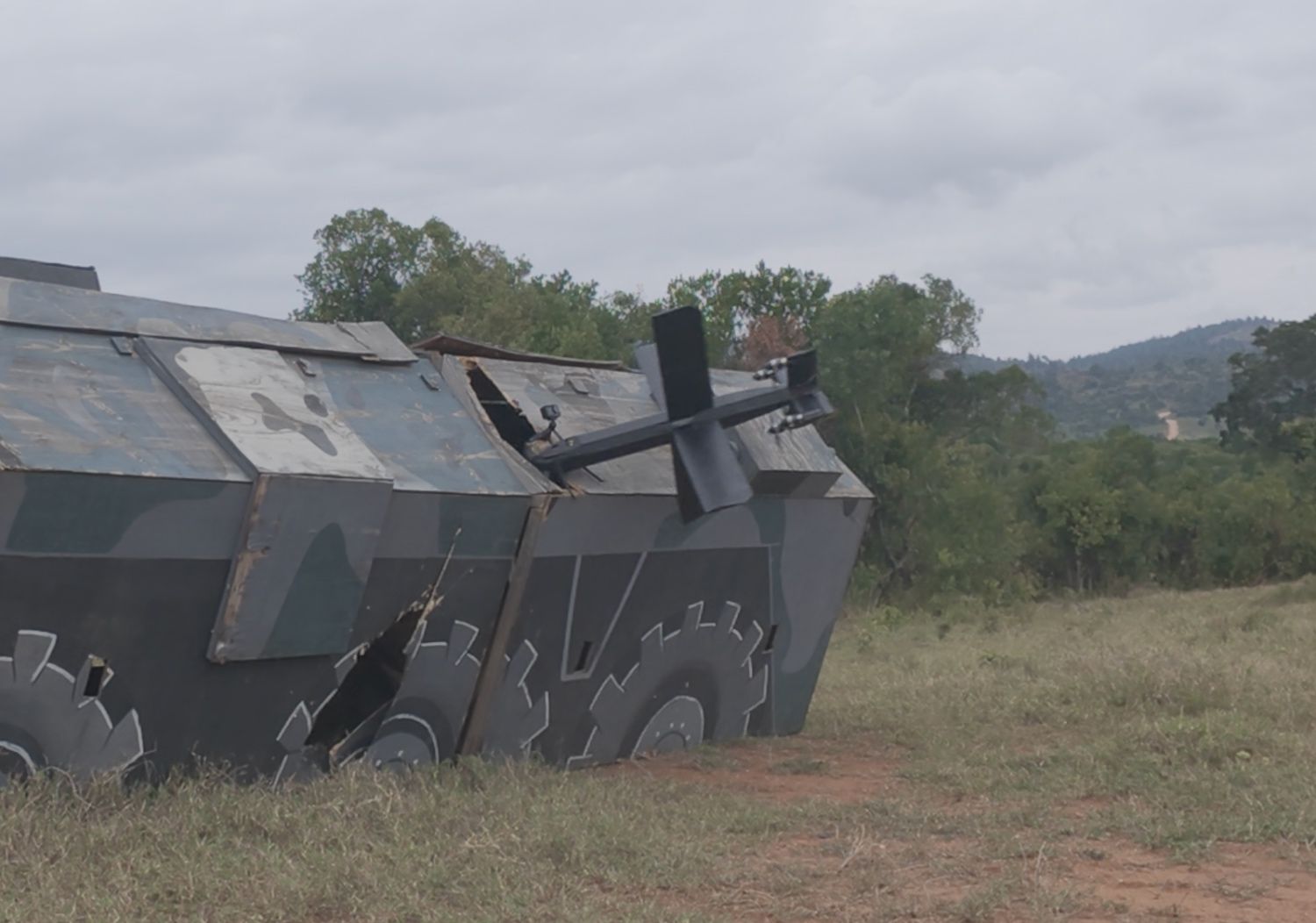
The HX-2 and Altra ISR platforms were employed in reconnaissance and precision strike roles. The systems were operated by personnel from 2 SCOTS, who took control after an initial familiarization period. Cameron said that after the first day, the soldiers “conducted all but one of the 15 HX-2 strike missions.” He added that engineers observing the tests were impressed by the ease of use, noting that the operator feedback standard has shifted to, “it’s even Pipes and Drums proof,” referring to soldiers from non-technical backgrounds being able to employ the system effectively.
Images shared from the exercise show soldiers launching and recovering drones in field conditions, as well as direct strikes against armored mock-up targets.
Cameron highlighted the development effort undertaken by the Helsing team behind the system, stating, “These are the people who have enabled, through their hard work and dedication, the most ferocious of iteration cycles over the last six months. They have tested the AI, the software, and the hardware to its limits. Iterated. Then tested again.”
The systems were repeatedly employed in what was described as an operationally aligned setting rather than a controlled demonstration environment. The training also involved the 4X Medium Range Effector team, which provided scenario support to create realistic target engagement problems.
The ability for regular infantry to locate and engage armored or fortified targets without calling in artillery or air support reflects a broader shift in land warfare. The approach mirrors lessons drawn from Ukraine, where small, distributed drone teams have shaped battlefield outcomes.