

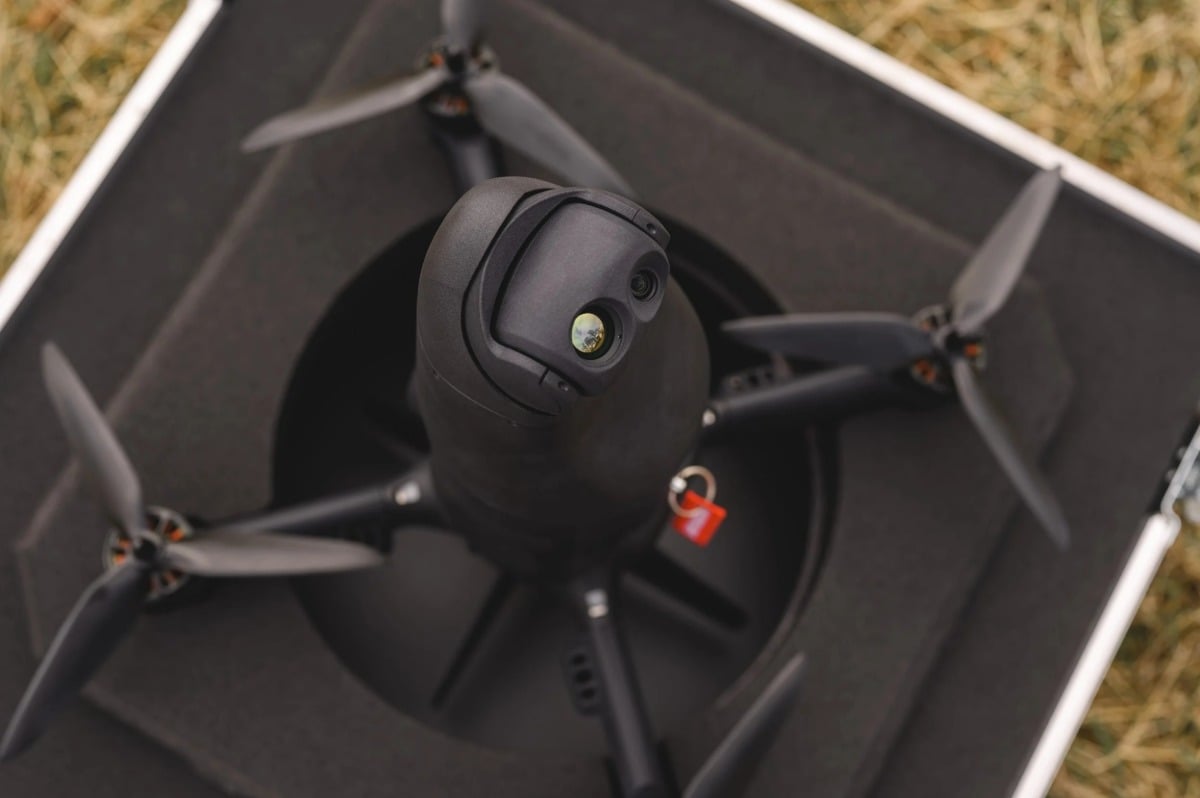
- Latvia's Autonomous Systems Competence Centre and Origin Robotics hosted the first BLAZE User Club meeting in Latvia with current user nations and observer countries.
- Latvia, Estonia, and Belgium began receiving BLAZE interceptor drones in January 2026; Origin Robotics confirmed additional allied nations are currently procuring the system.
A Latvian-built interceptor drone that has already been purchased by three NATO nations just got its own international user community, as the countries operating the system gathered in Latvia to swap battlefield lessons and push the manufacturer to improve the weapon based on what they have learned since fielding it. Latvia’s Autonomous Systems Competence Centre and Origin Robotics, the Riga-based defense technology company behind the system, hosted the first BLAZE User Club meeting at a military training area in Latvia, bringing together the countries that have already procured the system alongside observer nations watching closely before making their own procurement decisions.
The BLAZE system that brought these nations together is a radar-guided autonomous interceptor drone, a weapon designed specifically to hunt and destroy other drones and loitering munitions, the slow-flying explosive-laden aircraft that have proven so lethal in Ukraine and the Middle East. Unlike traditional air defense systems that fire missiles worth tens of thousands of dollars to destroy cheap commercial drones worth a few hundred, BLAZE uses a drone to kill a drone, keeping the cost of interception closer to the cost of the threat. According to the manufacturer, BLAZE is a man-portable, rapidly deployable interceptor designed to defeat fast-moving aerial threats, including loitering munitions and hostile UAVs.
The system takes radar data directly and feeds it to an onboard autopilot, allowing BLAZE to fly autonomously toward an incoming target before acquiring, tracking, and completing the intercept, with a human operator maintaining supervisory control over the final engagement decision.
Latvia was the first to announce its order for Origin’s interceptor systems in early October 2025, followed by Belgium’s Ministry of Defence, which publicly announced a $59 million allocation for counter-drone systems in November, with Estonia ordering shortly thereafter. All three nations began receiving their first batches of the system in January 2026, making them the first countries in Europe to field a fully autonomous, warhead-equipped drone interceptor.
Origin Robotics has since secured a multi-year framework agreement with the Latvian Armed Forces for the continued supply of BLAZE systems, with the first contract under that framework approved by Latvia’s Cabinet of Ministers on April 21, 2026, financed through the European Union’s Security Action Fund. That EU funding mechanism reflects BLAZE’s status as a fully European-origin system, designed, developed, and manufactured entirely in Latvia.
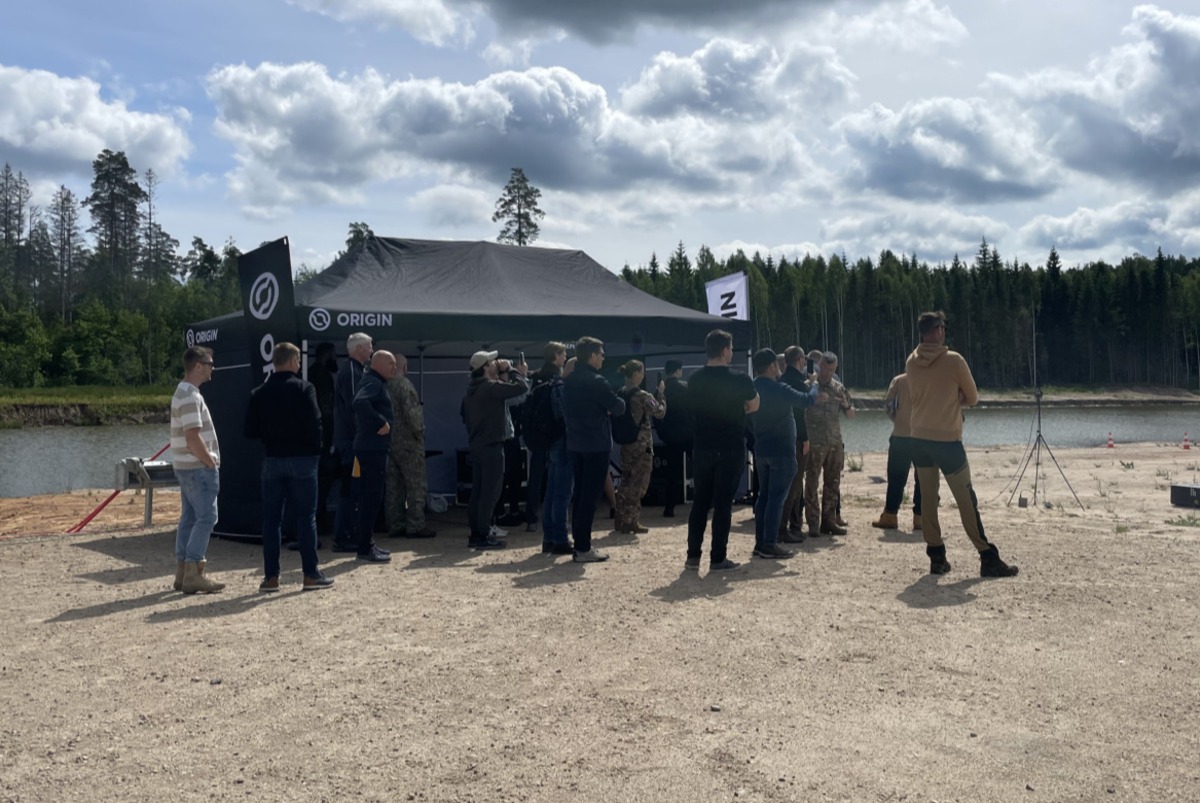
The User Club meeting served several purposes simultaneously. At its core, it was a structured feedback session between the nations using BLAZE in the field and the engineering team building it, creating a direct channel for operational experience to influence the development roadmap rather than leaving that process to the manufacturer’s assumptions. Origin Robotics presented planned capability upgrades and system improvements at the event, with many of those improvements already committed for delivery to existing users through firmware updates rather than hardware replacements. That distinction matters significantly for defense procurement: a system that evolves through software updates allows a country to buy once and improve continuously, rather than facing the choice between fielding an aging capability or funding an entirely new procurement cycle.
Agris Kipurs, CEO of Origin Robotics, described the logic behind the user community structure directly. “The purpose of the BLAZE User Club is to build a direct feedback loop between the nations using the system and the engineering team developing it,” Kipurs said. “This helps us ensure that future development is shaped by real operational needs, not assumptions, and that BLAZE continues to evolve as one of the most capable and tactically relevant interceptor drone systems on the market.”
The attendance of observer nations at the meeting, countries that have not yet purchased BLAZE but sent representatives to watch and listen, signals that the procurement pipeline behind the system is growing. Origin Robotics confirmed that several additional allied nations are currently procuring BLAZE, with further announcements expected, though it declined to name the countries involved. The presence of observers at a user community event is a standard precursor to procurement: potential customers want to hear from operators rather than salespeople, and the User Club format provides exactly that access.
The strategic backdrop for all of this is the proliferation of small, cheap, lethal drones across every significant conflict of the past several years. Across Europe, NATO countries have reported a growing number of unauthorized drone flights near borders, military sites, and critical infrastructure, reflecting the wider spread of low-cost unmanned systems linked to regional security tensions. These incidents have accelerated NATO’s so-called drone wall initiative, a coordinated push to build surveillance and counter-drone capability continuously along the alliance’s eastern flank from the Baltic Sea to the Black Sea. Latvia, Estonia, and the Baltic region more broadly sit directly on that flank, facing Russian territory and airspace across borders that Russian forces have demonstrated both the willingness and the capability to probe with unmanned systems.
BLAZE is also the first NATO-codified autonomous interceptor drone equipped with a STANAG-compliant warhead module, meaning it has cleared the standards that allow NATO member states to integrate it into joint operations without compatibility concerns. That certification distinction matters as the alliance works to ensure that counter-drone systems acquired by different members can operate together in the same battle space. A Latvian BLAZE battery and a Belgian one, operating in the same theater, need to be able to share targeting data, deconflict engagement zones, and communicate over common protocols without requiring custom integration work. The STANAG compliance makes that possible.
The first BLAZE User Club meeting is a small event in the architecture of NATO defense procurement, but the model it represents is not. Building an international community of users around a specific system, sharing operational lessons rapidly, and feeding that experience back into continuous development cycles is exactly how the most successful defense platforms have evolved over decades. Whether BLAZE becomes one of those platforms depends on how well the system performs in the hands of the countries now fielding it, and on whether the feedback loop the User Club was designed to create actually produces a weapon that improves faster than the threats it is designed to defeat.