


- XTEND says its XOS operating system enables human-guided autonomy for small air and ground robots in GNSS-denied and electronic warfare environments.
- The company presents RECON, STRIKE, and SHIELD mission packages built around AI pilots that execute tasks while humans set intent and remain in control.
XTEND, an Israeli robotics firm, says it is pushing a new model for battlefield robotics in which human supervisors set intent while AI-driven “pilots” execute dangerous tasks — a design the company argues will allow small air and ground robots to operate in GNSS-denied, electronic warfare environments and scale from squad-level missions to larger maritime and airborne launch concepts.
Co-founder Matteo Shapira described a clear operating philosophy: give humans the strategic intent and let task-level artificial intelligence run the execution. “XTEND builds human-guided AI robotics centered on XOS, our command-and-control operating system that can control multiple platforms concurrently,” he said. The company divides its capability into three mission families — RECON, STRIKE, and SHIELD — all designed to keep the human in the loop while letting small robots take on dangerous work.
That architecture reflects a growing demand among modern tactical forces for systems that survive contested communications and navigation environments. As Shapira noted, the “common thread is task-level AI at the edge—with a human in control—so small air and ground robots do the dangerous work while operators remain at safe standoff.” In practice, XTEND says this means AI pilots can home, identify and track targets, and coordinate teams of robotic platforms without requiring continuous manual control.
XTEND positions its XOS stack as hardware-agnostic. “One OS, many platforms,” Shapira said, adding that the system “integrates radars, payloads, and third-party C2/C4ISR (including Lockheed Martin C2), and works in GNSS/RF-contested terrain.” That interoperability, if validated in service, would allow commanders to combine drones, rovers, and sensors under a single mission plan — a convenience for units already managing complex sensor networks.
The company identifies several near-term priorities for soldier and tactical units: attritable, man-portable systems resilient to electronic warfare; indoor autonomy and GNSS-denied navigation; multi-robot teaming under one operator; and open interfaces to existing command systems. “Units want capability that deploys fast, learns quickly, and scales from room-clearance to border corridors—without long training curves,” Shapira said. These priorities align with recent battlefield trends where ultra-small drones and loitering effects have been used in dense urban terrain, explaining why XTEND includes FPV and small-vehicle autonomy in both its roadmap and immediate offerings.
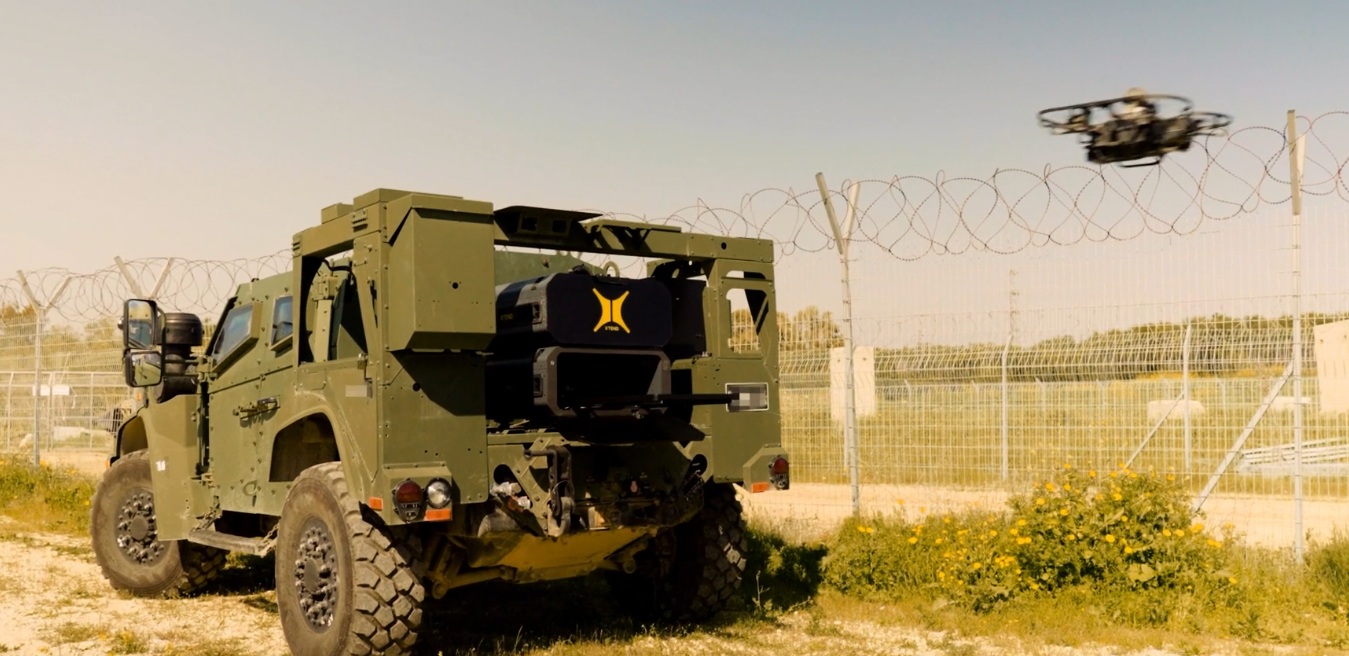
FPV drones, often used by infantry or special forces, are viewed by XTEND as one element within a wider mission system. “FPV is a tool in the kit. XOS treats FPV drones as task vehicles within a larger mission: we add AI assists, safety rails, and comms resilience so they team with ISR drones, rovers, or loitering platforms,” Shapira explained. Some FPV use cases, he said, are short-term responses to evolving tactics, while others are part of a long-term plan for AI-assisted FPV employment.
For kinetic and EOD roles, the company emphasizes modularity and adherence to operational policy. “Our approach is modular: small air vehicles for indoor ISR … can accept mission-specific payloads where policy allows, including breach/entry aids or limited effects. For EOD we work with partners and emphasize safety, ROE, and operator control.” The architecture, he said, enables commanders to compose ISR, breaching, and precision effects under a single operational plan using XOS.
Taken together, XTEND’s concept presents a practical offer to armed forces and security services: mission-focused autonomy that reduces operator workload, withstands jamming and denial, and can be locally produced through what the firm calls a sovereign production model.
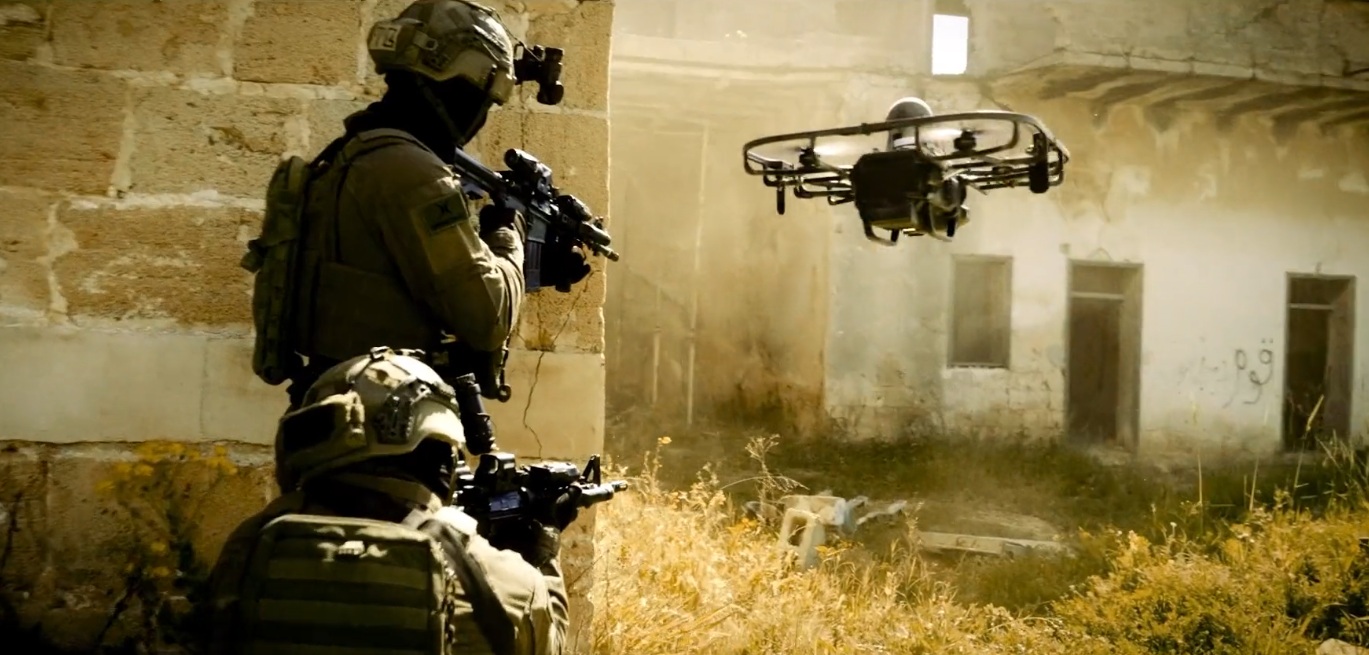
XTEND offers its capabilities in three commercial packages: RECON for ISR in complex or indoor environments; STRIKE for precision effects and breaching with modular payloads; and SHIELD for counter-UAS and force protection. A recurring theme is XOS, the control layer designed to orchestrate mixed teams of platforms and integrate with external command networks.
Shapira outlined three core differentiators. First, “human-guided autonomy: AI Pilots execute the bulk of tasks—homing, target ID/track, coordinated teaming—while humans set intent and stay in the loop.” Second, “One OS, many platforms,” which, he said, reduces integration demands for customers. Third, a “sovereign scale” model—XFAB—that builds, tests, and sustains systems locally, speeding delivery and hardening supply chains.
XTEND’s main customers include military and special operations forces in the U.S. and allied nations, with growing interest from law enforcement and border security agencies. The same XOS stack, the company says, can scale from small units to larger formations and can be configured for maritime or airborne deployment.

Looking ahead, XTEND envisions an “app” layer for robotic task skills — AI task modules delivered through XOS and AI Pilots — operating across multiple platforms and partner systems. “Think teams of small robots launched from helicopters or ships, operating deep in contested areas with dual-comms (fiber + hardened RF) and human supervision from remote,” Shapira said. The goal, he added, is “projecting precision effects and saving lives — faster than the adversary can adapt.”
Defence Blog has tracked the growing use of small, attritable robotic systems as militaries seek scalable, deniable tools at the tactical edge. While XTEND’s claims will be tested through field evaluations, its emphasis on human-in-the-loop autonomy, modular integration, and local sustainment mirrors a broader trend among Western militaries preparing for contested warfare.