

- The U.S. State Department approved a possible $80.1 million sale of 350 Switchblade 300 Block 20 loitering munitions to Greece.
- The deal also includes 35 fire control systems and Switchblade 600 anti-armor variants, with AeroVironment as the principal contractor.
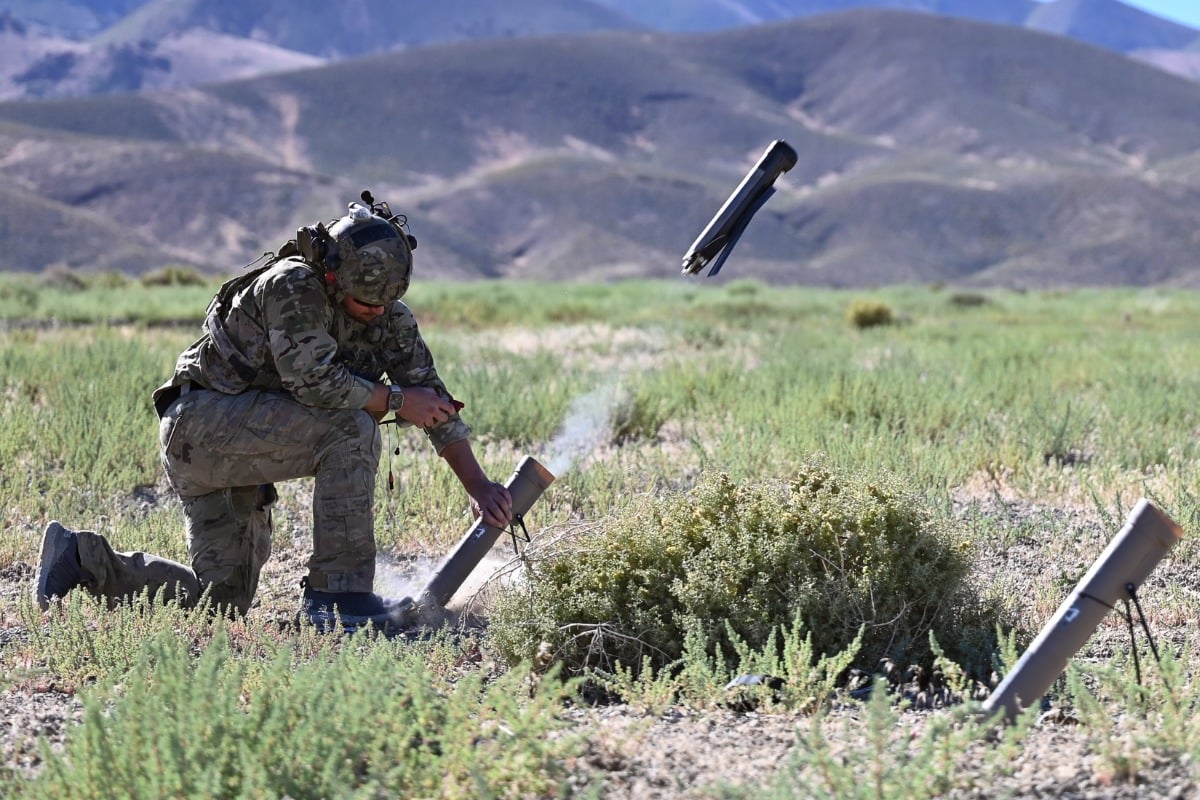
The U.S. State Department approved a possible sale to Greece of Switchblade 300 Block 20 systems, a portable loitering munition built by AeroVironment (AV) that a single soldier can carry, launch from a tube in under two minutes, and fly toward a target before the drone itself explodes, destroying both the target and the aircraft in a single strike.
A loitering munition occupies a strange middle ground between a drone and a missile, capable of hovering over an area and searching for a target the way a reconnaissance drone would, then diving in to detonate once the operator confirms what they’re looking at, a combination that has made this category of weapon one of the defining tools of modern infantry combat since Russia’s invasion of Ukraine turned cheap, precise strike weapons into a battlefield necessity. The Switchblade 300 weighs just 3.6 kilograms (about 8 pounds), reaches speeds up to 161 kilometers per hour (100 miles per hour), and can stay airborne for more than 20 minutes searching for a target before committing to an attack, all while a high-resolution camera feeds video back to the operator in real time.
Greece requested 350 of the systems along with 35 matching fire control units, the tablet-based hardware operators use to plan missions and confirm targets before launch, in a deal the State Department estimated at $80.1 million. The package also includes Switchblade 600 units, a larger anti-armor variant built around a Javelin missile warhead with roughly 80 kilometers (50 miles) of total range and more than 40 minutes of flight endurance, giving Greek forces a heavier option for destroying armored vehicles alongside the smaller 300 model better suited to personnel and light targets. AeroVironment, based in Simi Valley, California, will serve as the principal contractor, and the notification states the deal requires no additional American government or contractor personnel stationed in Greece to support the sale, a detail suggesting Greek forces already have enough familiarity with the broader system category to handle training and integration largely on their own.
The Switchblade’s reputation rests heavily on its combat record in Ukraine, where the United States has transferred more than 700 of the drones since the war began, according to Militarnyi, with Ukrainian forces using the weapon to strike Russian positions, vehicles, and personnel that would otherwise require far more expensive artillery or missile strikes to reach. That battlefield track record has driven a wave of similar orders from American allies, and the U.S. Army itself has continued expanding its own Switchblade inventory, with AeroVironment recently confirmed as receiving a $186 million delivery order under a broader five-year framework agreement with the Army worth up to $990 million if every option is exercised, a scale of investment that reflects how central this once-niche weapon category has become to how the Pentagon now equips infantry units.
Athens has spent years locked in periodic tension with Türkiye over disputed maritime boundaries and airspace claims in the Aegean Sea, and Greek defense planners have steadily modernized their military with an eye toward exactly the kind of precise, relatively low-cost strike capability a loitering munition provides, giving ground forces a way to hit specific targets without waiting on air support or committing far more expensive munitions to smaller engagements. The State Department’s notification framed the sale in standard diplomatic language, describing Greece as a NATO ally that continues to be a force for political and economic stability in Europe, while stating explicitly that the sale would not alter the basic military balance in the region, boilerplate language required for congressional review that nonetheless signals how closely Washington tracks any arms transfer involving a country with an active territorial dispute against another NATO member.
Congressional notification marks only the first procedural step toward an actual contract, not a finalized purchase, and Greece could still adjust quantities or delay the deal before any Switchblade systems actually reach Greek soldiers. Members of Congress have a review period during which they can object to the sale before it proceeds, though foreign military sales to established NATO allies like Greece rarely face serious opposition on Capitol Hill. What the request does confirm is that Greece, like a growing list of American allies watching the war in Ukraine unfold in real time, has concluded that the age of infantry units waiting on artillery or airstrikes to hit a single, precise target is giving way to something considerably smaller, cheaper, and already sitting in a soldier’s backpack.