

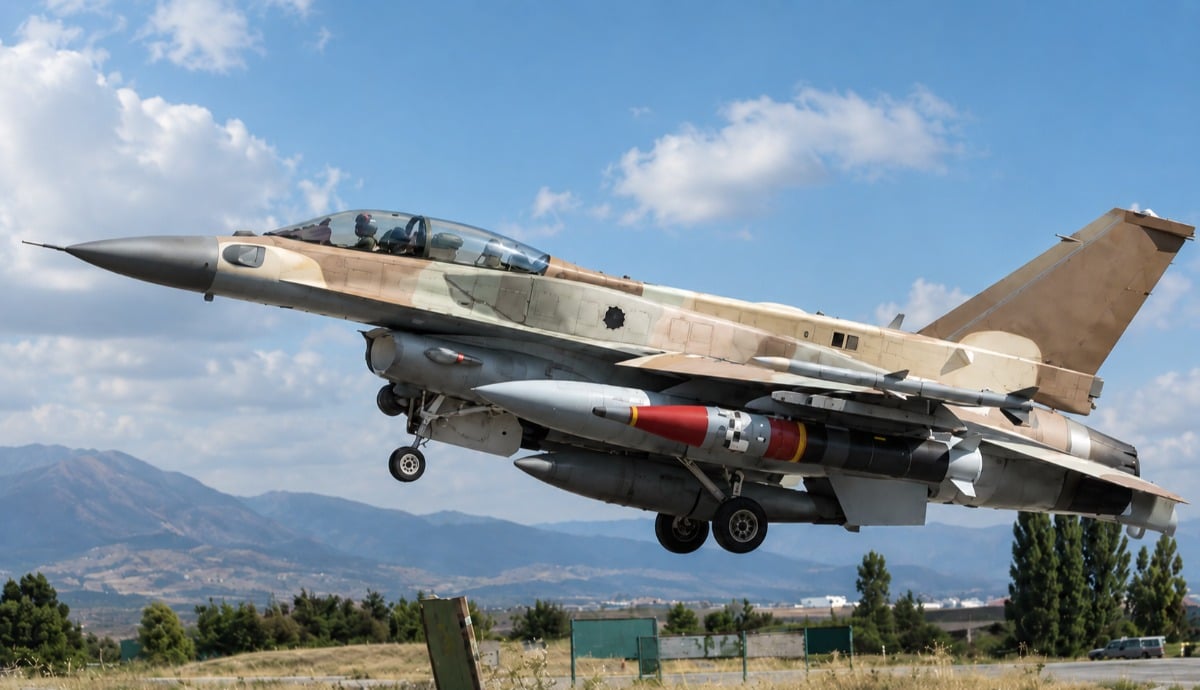
- Rafael will showcase combat-proven systems including Iron Beam, ICE BREAKER, and SPYDER at Farnborough Airshow 2026 in the United Kingdom.
- Rafael delivered the first operational Iron Beam laser air defense system to Israel's military on December 28, 2025.
Israel’s largest defense contractor is bringing a laser cannon that shoots down rockets with light, a missile precise enough to hit hardened underground bunkers, and a record-breaking $2.3 billion European air defense deal to one of the world’s biggest aviation trade shows this week.
Rafael Advanced Defense Systems announced it will showcase a wide portfolio of combat-tested weapons at the Farnborough International Airshow 2026, framing the appearance around a simple pitch to potential buyers: everything on display has already been used in real combat rather than existing only as a prototype on a factory floor.
The centerpiece of that pitch is Iron Beam, the world’s first operational laser-based air defense system, which Rafael and Israel’s Ministry of Defense formally handed over to the Israeli Air Force on December 28, 2025. Unlike traditional air defense systems that fire physical interceptor missiles costing tens of thousands of dollars apiece, Iron Beam destroys incoming rockets, mortars, and drones using a concentrated beam of light, engaging targets at a fraction of the cost of a kinetic interceptor while eliminating the need to keep restocking expensive missile inventories after every engagement. Rafael Chairman Yuval Steinitz called the handover the start of a new era in air defense at the time, and Israeli officials have since integrated the system into Iron Dome’s existing battle management network, letting commanders choose in real time whether to intercept an incoming threat with a missile or the laser depending on the target type and conditions on the ground.
Rafael is pairing that laser breakthrough with a newer addition to its directed-energy lineup called Iron Beam 450, first shown publicly at the DSEI defense exhibition in London last year, alongside Iron Beam-M and a smaller system called LITE BEAM, giving customers a range of laser options scaled for fixed installations, mobile units, and smaller forward-deployed positions rather than a single one-size-fits-all product.
On the missile side, Rafael’s newest offering is ICE BREAKER, a fifth-generation cruise missile the company says can strike targets up to 300 kilometers (186 miles) away in any weather condition. The missile combines a low radar cross-section with terrain-following navigation, letting it hug the ground to avoid detection, and an AI-based scene-matching guidance system that compares what its onboard sensors see against stored imagery to confirm it is tracking the correct target, all while keeping a human operator in the loop on the final engagement decision. Rafael built ICE BREAKER to launch from aircraft, ships, or ground platforms, an approach that lets a single missile design serve multiple branches of a military rather than forcing each service to maintain its own separate munitions supply chain.
The company’s SPICE 250 guided bomb kit, already combat-proven in active operations, uses automatic target recognition technology that lets a single aircraft engage multiple targets in one flight without needing GPS guidance or a laser designator pointed at the target, a capability increasingly valuable as adversaries deploy jamming systems specifically built to blind GPS-dependent weapons. Rafael’s longer-range ROCKS missile, built to penetrate hardened and deeply buried targets, will get new launch platform announcements at Farnborough, though the company has not yet disclosed those specifics.
Rafael’s LITENING 5 targeting pod, meanwhile, has quietly become one of the most widely fielded pieces of hardware in Western air forces, flying on more than 25 aircraft types across 28 different air forces and supporting hundreds of successful drone intercepts across multiple active war zones. Germany’s Bundestag recently authorized the purchase of 90 LITENING 5 pods for the Luftwaffe’s Eurofighter Typhoon fleet, including the pod’s real-time data-sharing capability, a decision Rafael cited as further proof of the system’s role within NATO air operations.
Rafael’s air defense portfolio extends well beyond lasers and cruise missiles. Iron Dome remains the world’s most combat-tested air defense system, having intercepted thousands of rockets, cruise missiles, and drones across multiple conflicts, while David’s Sling covers the medium-to-long-range ballistic and cruise missile threat layer above it. The SPYDER family of short-to-medium-range mobile air defense systems recently landed Rafael’s largest contract in company history, a roughly $2.3 billion deal with Romania covering launchers, interceptors, radar systems, and extensive local industrial cooperation, positioning Bucharest to field an integrated air defense network capable of intercepting aircraft, helicopters, drones, and precision-guided weapons along NATO’s exposed southeastern flank near the Black Sea. Tying all of these systems together is MiCAD, Rafael’s battle management command and control software, which the company says gives commanders a single, open-architecture interface for coordinating sensors and weapons across an entire layered air defense network rather than juggling separate control systems for each individual piece of hardware.
Rafael’s newest focus area targets a threat that barely existed as a serious military concern a decade ago. As cheap, mass-produced drones have become one of the most persistent dangers facing militaries and infrastructure operators worldwide, Rafael has built out a dedicated counter-drone product line consisting of three systems, Sky Dart, Hunter Eagle, and Ghost Hunter, first unveiled together at DSEI 2025, designed to give armed forces affordable, physical kill options that complement the company’s existing jamming and laser-based counter-drone technology rather than replacing them outright.
Yoav Tourgeman, Rafael’s CEO and President, framed the entire Farnborough showcase as evidence that the defense market has fundamentally changed what it expects from suppliers.
“The security environment has changed fundamentally, and so have the expectations placed on defense suppliers. The threshold has shifted. Proven performance and reliable delivery are now the baseline requirements, not differentiators,” Tourgeman said. “Rafael’s portfolio at Farnborough reflects exactly that. These are not concepts or prototypes. They are combat-validated systems, refined through operational experience in the most demanding environments any defense technology has faced, backed by an industrial ecosystem built to deliver at pace. That combination of proven performance and delivery confidence is what Rafael brings to its partners, and it is what defines our relevance in this market.”