

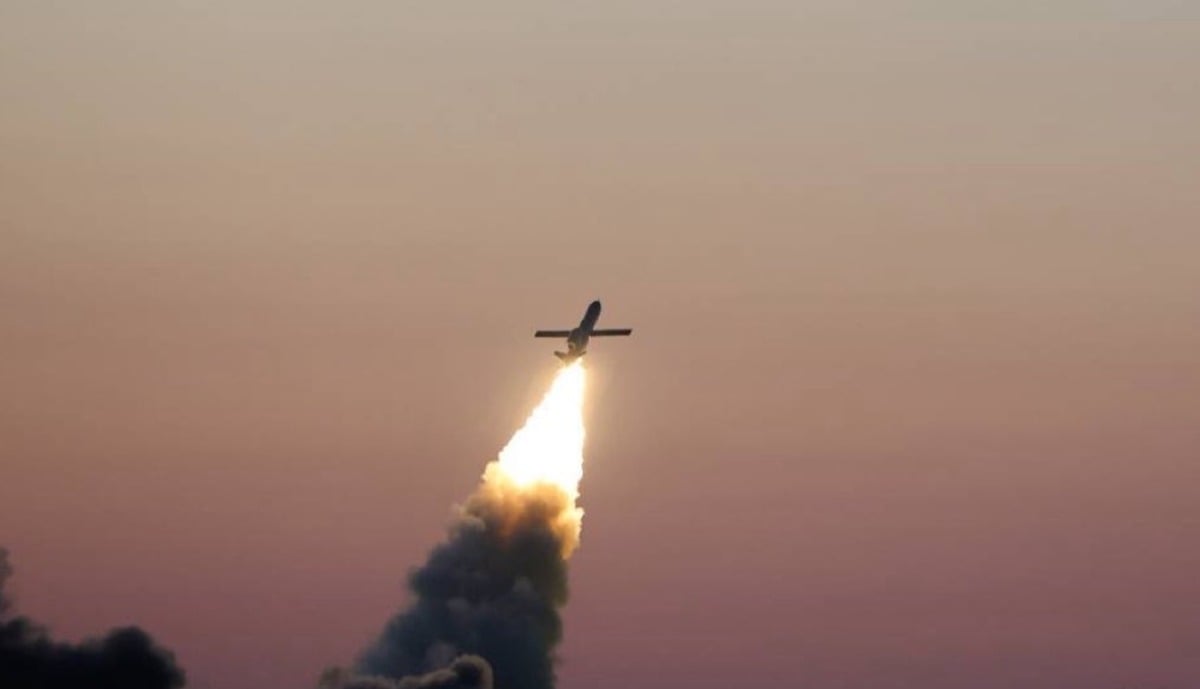
- Futura reported that Ukraine's FP-5 Flamingo cruise missile uses the open-source ArduPilot autopilot system, examined at Eurosatory in June 2026.
- Fire Point CEO Iryna Terekh publicly defended the open-source choice after facing skepticism from within Ukraine's defense community.
Ukraine’s most powerful long-range strike weapon, a six-ton cruise missile capable of hitting targets 3,000 kilometers (1,865 miles) away, runs on the same free, publicly available flight software that hobbyists use to fly camera drones.
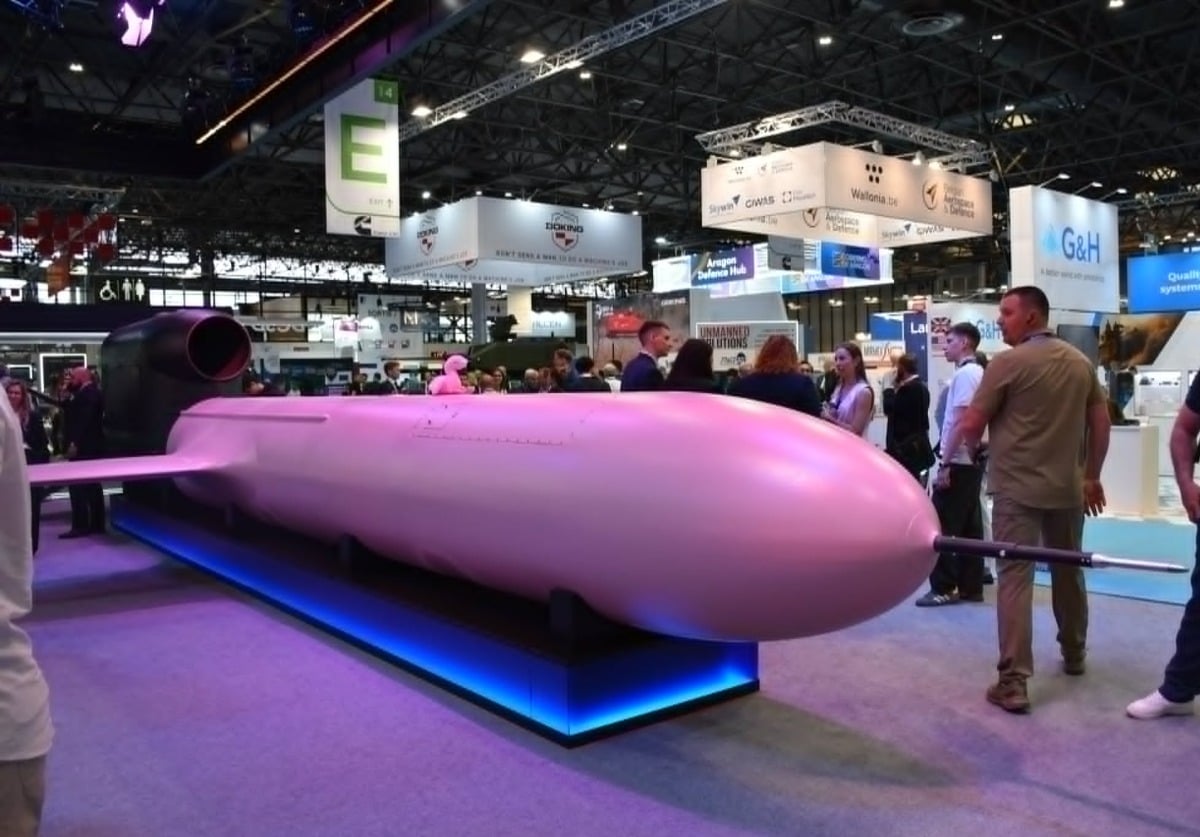
French science outlet Futura reported that its journalists identified ArduPilot, an open-source autopilot system widely used across the unmanned aircraft community, powering the FP-5 Flamingo cruise missile when they examined the weapon up close at the Eurosatory defense exhibition in Paris in June 2026. ArduPilot handles the missile’s automatic flight control, route planning, course holding, sensor management, and mission execution monitoring, according to Futura’s reporting, meaning the same kind of software a teenager might install on a homemade quadcopter is guiding a weapon Ukraine has used to strike targets more than 1,500 kilometers (930 miles) inside Russia.
The Flamingo, built by Ukrainian defense company Fire Point and first revealed in August 2025, measures roughly 12 to 14 meters (39 to 46 feet) long with a 7-meter (23-foot) wingspan, carries a 1,150-kilogram (2,535-pound) warhead, and cruises at 650 to 700 kilometers per hour (404 to 435 mph) with a top speed of 950 kilometers per hour (590 mph), powered by a repurposed civilian jet engine originally designed for passenger aircraft rather than a purpose-built military powerplant. Its navigation system combines GPS and GLONASS satellite positioning with inertial guidance, and when jamming knocks out the satellite signal, the missile falls back on dead reckoning, continuously calculating its position from speed, heading, acceleration, and elapsed flight time rather than losing its way, a resilience feature that matters enormously given how aggressively Russian electronic warfare units try to jam satellite navigation across the front.
That same open-source flight software has already proven itself in one of the war’s most audacious operations. Ukrainian outlet Defense Express reported that the drones used in Operation Spiderweb, the June 2025 strike that damaged multiple Russian strategic bomber aircraft parked deep inside Russia, also ran on ArduPilot, evidence the platform performs reliably even in high-stakes missions where failure carries enormous strategic cost. Fire Point’s decision to build the Flamingo around the same freely available software rather than developing proprietary flight control systems from scratch reflects a broader pattern in Ukrainian wartime defense production, where companies with roots outside traditional military contracting, Fire Point itself was founded by a group of friends with backgrounds in construction, game design, and architecture rather than defense engineering, have leaned heavily on adapted commercial and open-source technology to field capable weapons faster than conventional procurement timelines would ever allow.
The revelation prompted visible skepticism within Ukraine’s defense community once it became public, with Taras Chmut, head of the Come Back Alive charitable foundation and founder of the Ukrainian Military Center, better known as the Militarnyi outlet, questioning why a weapon of the Flamingo’s strategic importance would rely on the same software base available to any hobbyist. Chmut has spent years positioning himself as one of Ukraine’s most prominent military analysts and volunteer fundraisers, with Come Back Alive having channeled well over $1 billion toward Ukraine’s defense forces since the foundation’s founding, giving his public doubts about the Flamingo’s software real weight within Ukrainian defense circles rather than the kind of casual criticism a company might simply ignore. Fire Point CEO Iryna Terekh responded directly on social media, laying out in detail why her company considers open-source architecture an asset rather than a liability for a weapon meant to keep working under wartime pressure.
“Open source gives you three things that cannot be bought for any amount of money. Speed. There is no vendor lock-in, no going through licensing negotiations, no dependence on someone else’s roadmap. Engineers take the solution and adapt it today. Independence. Every proprietary license is a point of failure in the supply chain. Sanctions, politics, a supplier’s bankruptcy: anything can stop production. Open source code belongs to you forever, and at the same time belongs to no one. Collective intelligence. Thousands of engineers around the world have already solved the problems and done the debugging you are only just about to encounter. Scaling on open source means leaning on the shoulders of the community rather than fighting alone, which means enormous savings in time and money. So your irony is understandable, but we do seem to live in the same context, a military one. And, spoiler alert, our own guidance system for our ballistic missile is also built on open architecture,” Terekh said.
Terekh’s argument reflects a genuine strategic calculation rather than simply a defense of budget constraints. Proprietary military avionics systems typically require lengthy licensing negotiations, ongoing vendor support contracts, and dependence on a supplier that could face sanctions, bankruptcy, or political pressure that halts deliveries at the worst possible moment, risks that carry outsized weight for a country fighting an active war where production cannot afford to pause while lawyers finalize a licensing agreement. An open-source platform like ArduPilot, maintained by a global community of contributors rather than a single company, cannot be sanctioned out of existence or discontinued by a corporate decision made in a boardroom thousands of miles from the front, and any bugs or edge cases Fire Point’s engineers encounter have likely already been identified and fixed by someone else building an entirely different drone for an entirely different purpose.
Whether ArduPilot’s civilian pedigree ultimately proves as durable under sustained combat use as a purpose-built military system remains to be seen, since the Flamingo’s own combat record so far has been mixed, with Ukrainian and independent tracking indicating a meaningful share of the roughly three dozen missiles fired by mid-2026 either missed their targets or were intercepted by Russian air defenses before reaching them. What Terekh’s response does confirm is that Fire Point views that tradeoff as worth making, betting that the speed, independence, and accumulated wisdom of an open global engineering community outweigh whatever polish a proprietary system might offer, a bet that will keep being tested every time a Flamingo leaves its launcher aimed at a target hundreds of miles inside Russian territory.