

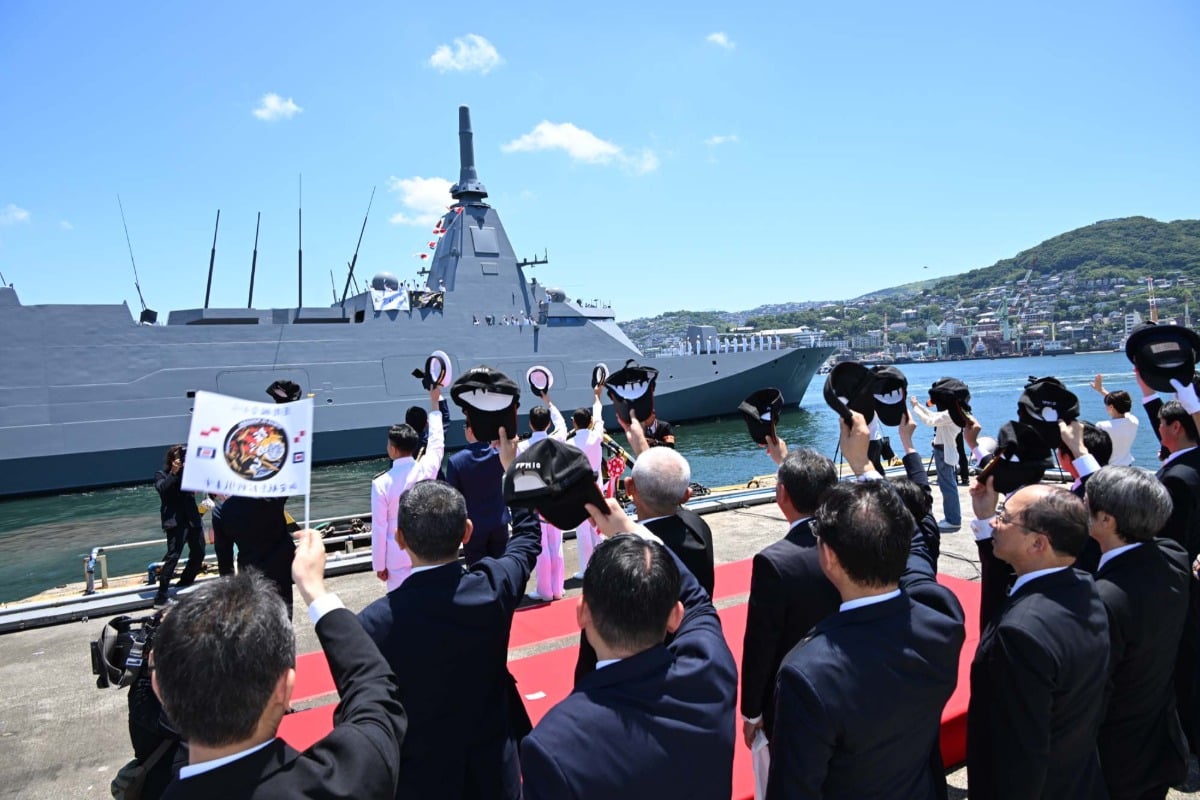
- Mitsubishi Heavy Industries delivered the frigate JS Nagara, the tenth Mogami-class vessel, to Japan's Ministry of Defense on June 29, 2026.
- Australia selected an upgraded Mogami design in August 2025 to build 11 frigates under its SEA 3000 program.
A warship that needs less than half the crew of Japan’s older destroyers has joined the fleet, and it represents the tenth proof that a country facing a shrinking population can still build a modern navy fast.
Mitsubishi Heavy Industries handed over the frigate JS Nagara to Japan’s Ministry of Defense on June 29, 2026, at a delivery and ensign presentation ceremony held at the company’s Nagasaki Shipyard, marking the tenth vessel in the Mogami-class program to enter service with the Japan Maritime Self-Defense Force. The ship takes its name from the Nagara River, which flows through Gifu Prefecture in central Japan, and will be assigned to the JMSDF’s 2nd Patrol and Defense Squadron at Kure Naval Base in Hiroshima Prefecture.
Parliamentary Vice-Minister of Defense Shinji Yoshida addressed the roughly 90 sailors who make up the ship’s crew during the ceremony, framing the vessel’s name as a wish for its service ahead.
“I pray that, like the Nagara River, this ship will become a vessel that supports our nation for a long time and with strength,” Yoshida said.
That crew figure, just 90 sailors, is the detail that makes the Mogami class stand out among modern warships, since a conventional JMSDF destroyer of comparable size typically requires roughly 200 personnel to operate. Japan built that reduction into the class deliberately, using extensive automation across the ship’s Combat Information Center and integrated digital systems to compensate for a demographic crisis that has left the JMSDF struggling to recruit and retain enough sailors to crew its fleet at traditional staffing levels. The ship itself measures 132.5 meters (435 feet) in length with a beam of 16.3 meters (53 feet) and displaces roughly 5,500 tons at full load, powered by a combined diesel and gas propulsion system pairing a single gas turbine with two diesel engines that lets it exceed speeds of 30 knots (35 mph) while maintaining the range needed for extended blue-water deployments.
Nagara carries a 16-cell Mk 41 Vertical Launch System installed during construction rather than added later, a missile-launching system capable of firing a range of surface-to-air and other guided munitions from sealed cells built into the ship’s deck, giving the frigate meaningfully more air defense capability than the earliest Mogami-class ships, which entered service without the system and are being retrofitted with it during later maintenance periods. The vessel also carries a five-inch (127mm) naval gun, a SeaRAM close-in weapon system designed to shoot down incoming missiles and aircraft at short range, anti-submarine warfare sensors, and mine countermeasures equipment, reflecting the class’s design as a multi-mission platform capable of switching roles rather than a specialist built for a single type of naval combat.
Construction of Nagara moved at a pace that stands out even by the standards of a program built for speed, with the ship’s keel laid on July 6, 2023, its hull launched on December 19, 2024, and delivery completed less than three years after work began. Mitsubishi Heavy Industries has kept ten Mogami-class hulls in production simultaneously at its Nagasaki facility since the program began construction in 2019 as a replacement for Japan’s aging Hayabusa-class missile boats and Abukuma-class destroyer escorts, and the shipyard’s ability to deliver roughly two frigates a year has turned what began as an experimental automation concept into a steady production rhythm that Japanese officials now point to as evidence the country can build warships at a tempo few other navies currently match.
Japan’s Ministry of Defense confirmed that two remaining ships in the baseline Mogami-class program, hulls eleven and twelve, are scheduled for delivery within the current Japanese fiscal year, which runs through March 2027, bringing the full 12-ship class to completion roughly eight years after construction began. Rather than stopping there, the ministry has already committed to a follow-on program of 12 additional, upgraded Mogami-class frigates, a larger variant with an extended hull, greater displacement, and a doubled 32-cell vertical launch capacity mounted at the bow to substantially increase the ship’s ability to defend against a saturation missile attack.
That upgraded design has already found its first export customer, since Australia selected the improved Mogami variant in August 2025 for its SEA 3000 General Purpose Frigate program, committing to acquire 11 ships with the first three built in Japan and the remaining eight constructed domestically in Western Australia, a deal that marks a significant milestone for Japan’s defense export industry given the country’s historically restrictive stance on selling military hardware abroad. New Zealand has since shortlisted the same upgraded Mogami design against Britain’s Type 31 frigate for its own future frigate program, with a decision expected by the end of 2027, while Taiwan and Indonesia have both expressed interest in the platform as well, according to reporting on the program’s export prospects.