

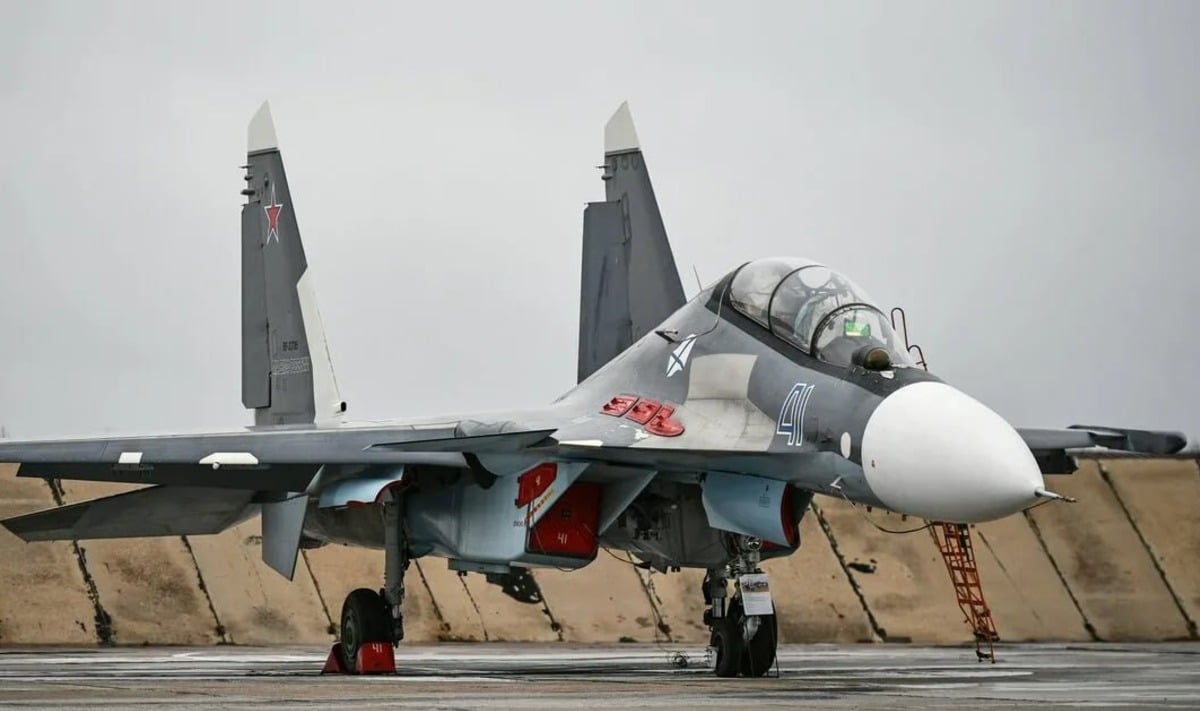
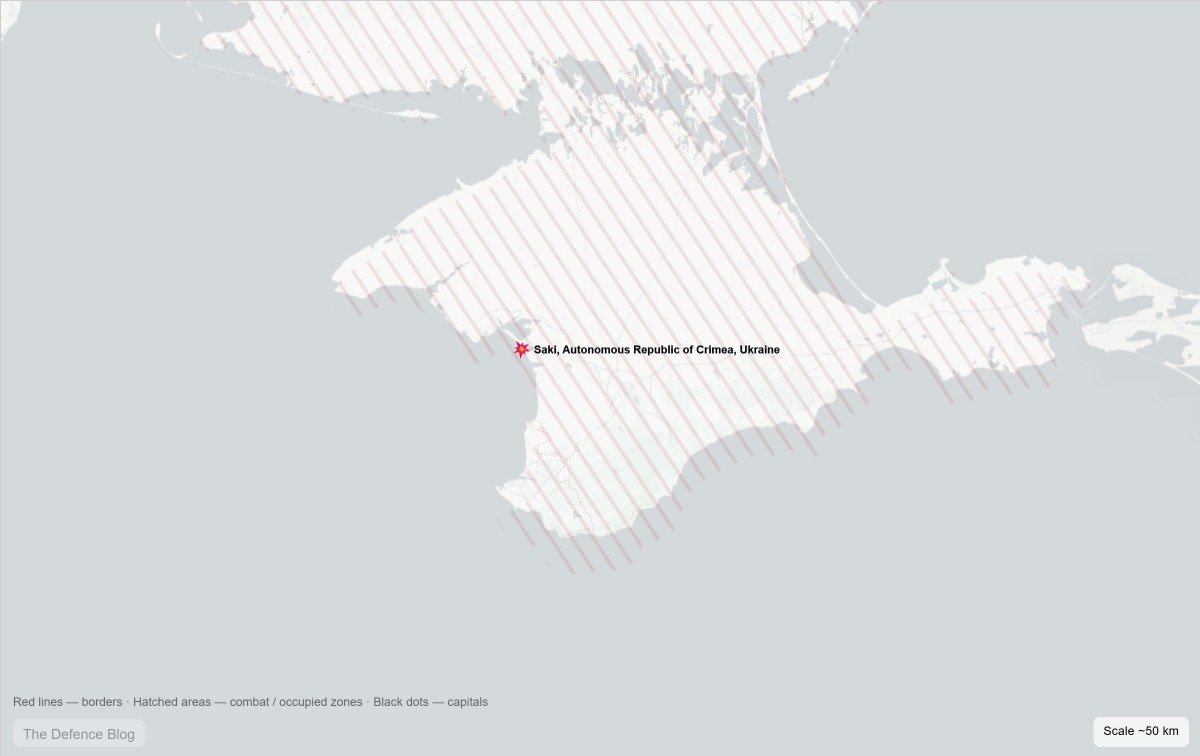
- The SBU struck seven hangars at Saky airfield and two at Hvardiiske airfield in occupied Crimea this week.
- At least seven Russian aircraft, including Su-30SM, Su-30, and Su-24 jets, were destroyed or damaged at Saky.
Seven Russian warplanes sat inside hardened aircraft shelters on occupied Crimean soil this week, and Ukraine’s security service says it turned most of them into wreckage before dawn.
Ukraine’s Security Service, known by its Ukrainian initials SBU, said its drones struck seven hangars at the Saky military airfield in western Crimea, destroying or damaging at least seven Russian aircraft that had been sheltering inside, including Su-30SM and Su-30 multirole fighters and Su-24 frontline bombers. The strike marked the second time this week the SBU has hit Saky specifically, a pace of repeated attacks on the same target that signals Ukraine is not simply hoping to get lucky with a single raid but methodically working through the base’s aircraft inventory hangar by hangar.
The same operation also struck two hangars at Hvardiiske, a separate military airfield near Simferopol in central Crimea, where SBU drones hit facilities storing Shahed-type attack drones and aviation equipment rather than manned aircraft. Both bases rank among the most important Russian air installations on the peninsula, and Ukraine’s security service described them as launch points for the tactical aircraft that regularly carry out missile and bomb strikes against Ukrainian territory while supporting Russian ground operations along the southern front, meaning every aircraft destroyed on the ground at either location is one less airframe available to fly those missions in the days ahead.
Saky carries particular symbolic weight in this war, since the airfield became internationally notorious in August 2022 when a series of explosions, widely attributed to Ukrainian sabotage even though Kyiv did not officially claim responsibility at the time, destroyed roughly nine Russian aircraft and marked one of the first clear signs that occupied Crimea was not the safe rear-area sanctuary Russian commanders had assumed it would be. That strike reshaped how both sides thought about the peninsula’s vulnerability, and the base has remained a recurring target ever since as Ukraine’s intelligence services have refined the drone technology and tactics needed to reach it consistently rather than relying on the kind of one-off sabotage operation that made headlines three years ago.
Su-30SM and Su-30 fighters, along with Su-24 bombers, represent core components of Russia’s tactical aviation presence in Crimea, aircraft built for missions ranging from air superiority to precision strikes against ground targets, and their concentration at Saky has made the base a consistent priority for Ukrainian strikes throughout the war. Storing this kind of aircraft inside hardened hangars rather than leaving them exposed on open tarmac is meant to protect against exactly this type of attack, but a hangar only protects an aircraft from strikes it can actually stop, and Ukraine’s growing arsenal of long-range strike drones has repeatedly proven capable of penetrating fortified Crimean infrastructure that Russian planners once considered reasonably secure.
SBU framed this week’s operation as part of a stated 40-day campaign of pressure against Russia that President Volodymyr Zelensky has directed the security service to carry out, a mission the agency’s Acting Head, Yevhen Khmara, tied directly to the broader goal of eroding Russian military capacity rather than any single symbolic strike. Khmara, a major general who previously led the SBU’s Alpha special operations unit before President Zelensky appointed him acting head of the agency in January 2026, has overseen a security service whose special operations centers have collectively destroyed billions of dollars in Russian military equipment since the start of the full-scale invasion, according to figures the agency itself has previously released.
“The SBU continues to carry out the tasks set by the President of Ukraine and is systematically degrading Russia’s military potential. Every one of our special operations means minus enemy aviation, logistics, warehouses, equipment, and infrastructure that support Russian aggression. We will continue to exert maximum pressure on the enemy both at the front and deep in the rear, depriving it of its ability to wage war against Ukraine,” Khmara said.
Each destroyed bomber or fighter represents not just a single lost airframe but a dent in the sortie rate Russian commanders can generate against Ukrainian cities and troop positions, since aircraft under repair or awaiting replacement cannot fly missions regardless of how the ground war is progressing elsewhere.