

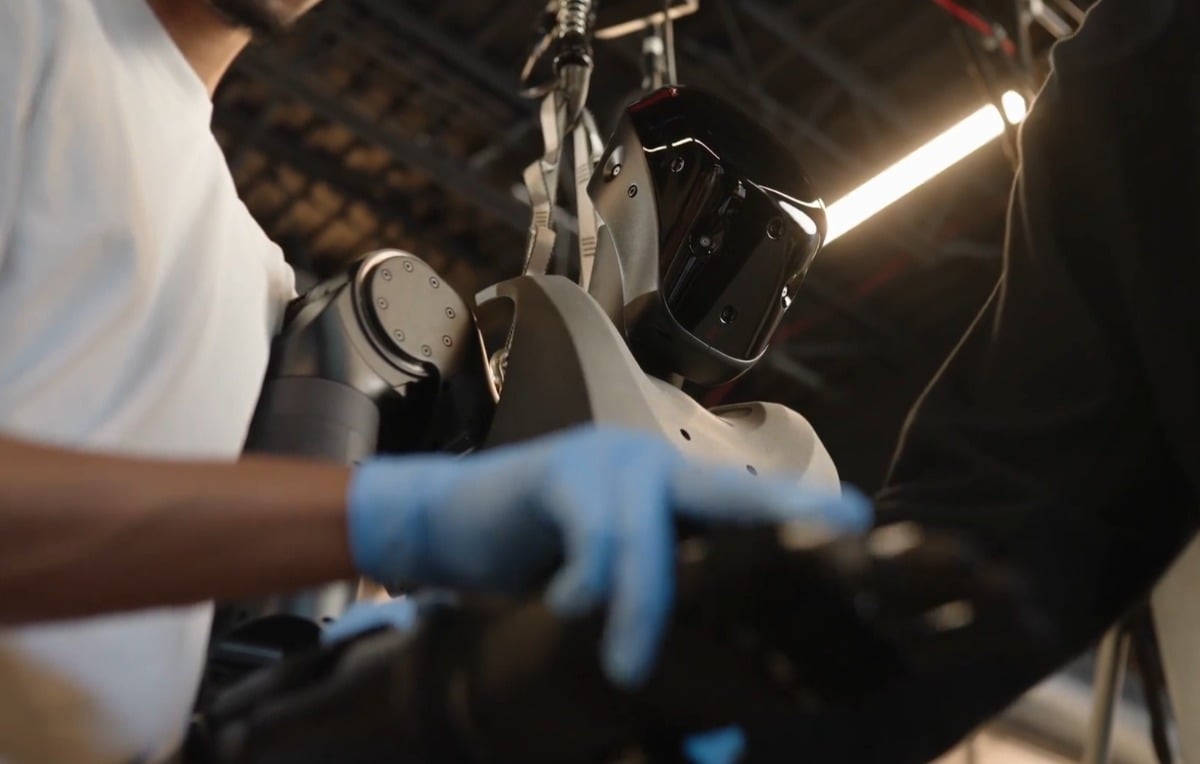
- Brave1 will hold a grant competition to develop humanoid robots for Ukraine’s Defense Forces, Militarnyi reported.
- Brave1 head Andriy Hrytseniuk announced the initiative during the Brave1 Advantage event on July 2, 2026.
Ukraine is preparing a grant competition to develop humanoid robots for its Defense Forces, opening a new experimental track in the country’s wartime effort to move soldiers away from the most dangerous parts of the battlefield.
The initiative was announced by Brave1 head Andriy Hrytseniuk during the Brave1 Advantage event, Ukrainian outlet Militarnyi reported. Brave1, Ukraine’s state-backed defense technology cluster, has become one of Kyiv’s main tools for turning battlefield needs into grant-backed projects for local engineers, drone makers and robotics teams. Its next target is more ambitious than another quadcopter or wheeled ground robot: machines shaped broadly like people, built for military tasks rather than civilian service work.
The goal is to accelerate robotization of the first line of contact and reduce risks for Ukrainian troops. That framing matters because Ukraine’s battlefield has become one of the world’s harshest proving grounds for unmanned systems. Drones now scout, strike, jam, relay communications and deliver supplies across a front where artillery, mines, electronic warfare and first-person-view attack drones make even short movements dangerous.
Hrytseniuk said Ukrainian developers will initially focus on simpler platforms before adding more complex functions over time. That approach reflects the reality that humanoid robots remain one of the hardest categories in robotics. A wheeled ground drone can carry cargo or explosives with relatively simple mobility, while a humanoid must balance, walk, recover from falls, manipulate objects and operate in cluttered spaces built for human bodies.
The appeal of humanoid robots lies in the fact that trenches, buildings, stairways, doorways, basements and vehicles are designed around people rather than tracked or wheeled machines. A robot with a human-like form could, in theory, move through spaces that defeat conventional unmanned ground vehicles. It could carry ammunition, retrieve supplies, inspect dangerous positions, handle tools, evacuate small loads or perform tasks in contaminated or exposed areas where commanders would rather avoid sending soldiers.
That promise remains far ahead of battlefield reality because today’s humanoid robots are still heavy, expensive, power-hungry and vulnerable to mud, shock, water, dust and rough handling. They can lose balance, break joints, drain batteries quickly and struggle with rubble or damaged surfaces. A humanoid may need around 20 electric motors or more to move its limbs and maintain posture, and failure in one key actuator can leave the whole machine useless.
Militarnyi noted that Ukraine previously received Phantom MK-1 humanoid robots from the U.S. startup Foundation for evaluation. Business Insider reported earlier this year that Foundation sent two Phantom robots to an undisclosed location in Ukraine for a closed pilot demonstration focused on logistics, including supply pickup tasks. The company’s leadership described the trial as a step toward future military applications, while also acknowledging that humanoid robots are not yet ready for front-line combat.
Ukraine’s interest also mirrors a wider global race in humanoid robotics, with the United States and China pushing hard to improve balance, dexterity, artificial intelligence and mass production. Most civilian projects focus on warehouses, factories, elder care or household tasks. Ukraine’s program points the same hardware concept toward a battlefield where replacing a human in a dangerous task may justify a system that would look too expensive for ordinary commercial use.
Brave1’s role is to test whether Ukrainian developers can approach that problem with wartime pragmatism. Since its launch in 2023, the cluster has supported drones, ground robots, artificial intelligence tools, electronic warfare systems and other defense technologies. It has also helped create faster feedback loops between soldiers and manufacturers, which is one reason Ukraine has adapted unmanned systems so quickly during the war.
The humanoid robot competition will face a tougher path than many drone programs because airframes can be simple and disposable, while humanoids need durable joints, field-replaceable parts, protected electronics and stable power. They also need perception systems that can handle smoke, darkness, dust and broken terrain. Software must keep the robot upright and useful without requiring constant operator correction, especially under jamming or intermittent communications.
The tactical risks are also real because a humanoid robot moving alongside troops could become an obstacle, reveal a position, draw fire or fail in a place where recovery is impossible. Its communications link could be jammed or detected. If the robot eventually carries weapons or operates close to enemy positions, commanders would need clear rules for human control, target identification and safety.
Ukraine has repeatedly shown that imperfect unmanned systems can become useful once soldiers adapt them to real missions. Cheap FPV drones began as improvised strike tools and are now central to the war. Ground robots that once looked experimental are increasingly used for logistics, mine-related tasks and casualty evacuation. Humanoid platforms may follow a slower path, but Brave1’s grant competition suggests Kyiv wants to begin testing that path now.