


- Ukrainian UGV developers participated in a crash test event to apply direct operational feedback from frontline troops.
- Units from multiple brigades provided real-time input on system failures, recovery challenges, and needed upgrades.
Ukrainian unmanned ground vehicle (UGV) developers are accelerating battlefield innovation through hands-on testing with frontline troops, using feedback from the recent Strike UGV Crash Test to refine their platforms for real combat conditions.
Organized by the Snake Island Institute, AB3 TECH, the 3rd Assault Brigade’s NC13 Strike UGV Company, and the 3rd Army Corps, the two-day event brought together UGV manufacturers and frontline operators for a direct exchange of operational experience and technical challenges.
“This wasn’t about pitching new platforms,” said Viktoriia Honcharuk, known as “Tori,” Head of Defense Tech at Snake Island Institute and AB3 TECH. “Manufacturers had to step into the shoes of those executing missions with these systems. That immersion accelerates understanding of what needs fixing and speeds the development of technologies the military actually needs.”
On the first day, Ukrainian combat units—including the 3rd Assault Brigade, the 91st Separate Anti-Tank Battalion, the 37th Marine Brigade, and the Liut Brigade—detailed operational failures and priorities during a panel discussion. Topics ranged from maintenance and recovery challenges to wasted resources on non-critical features.
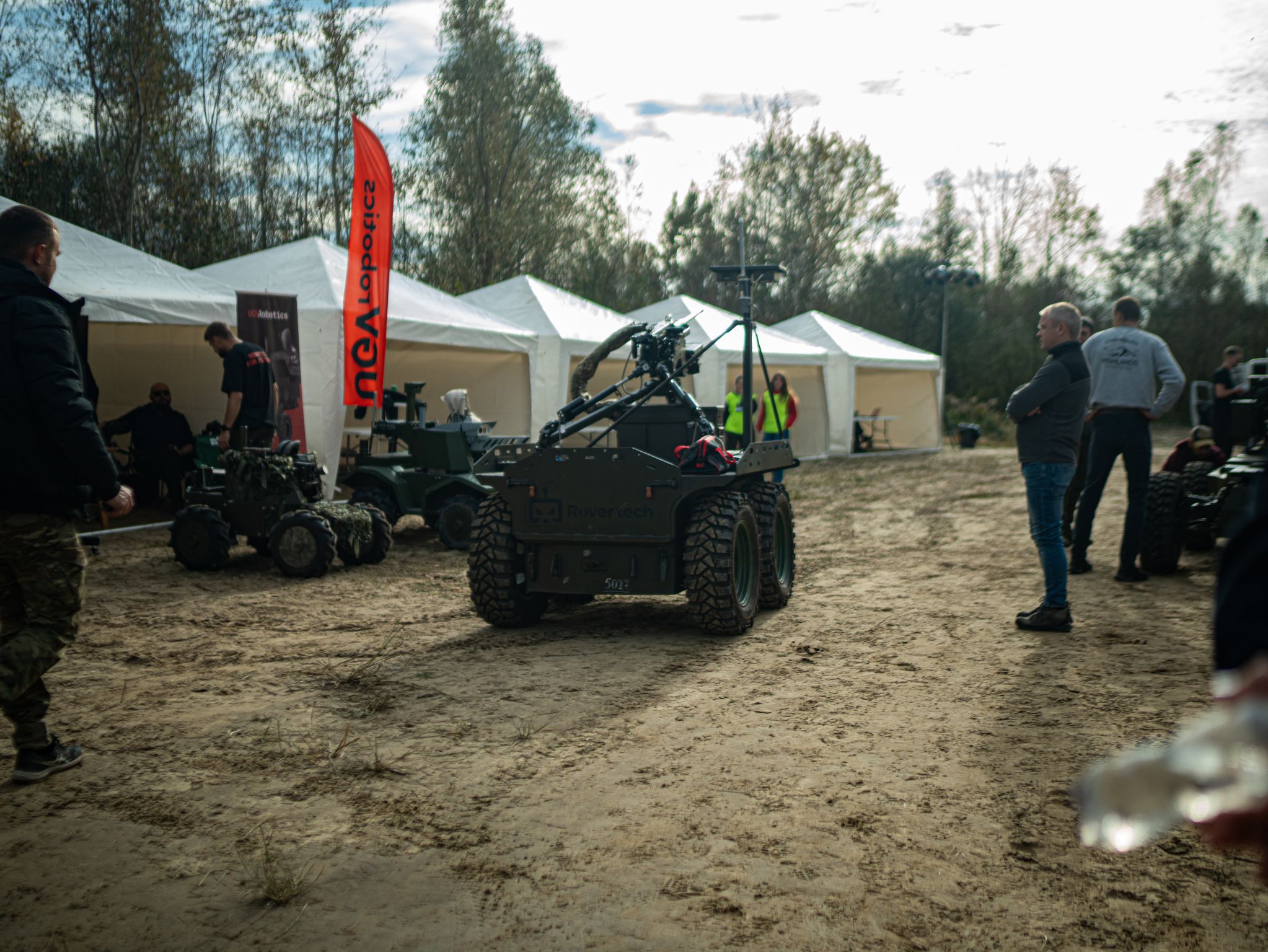
Manufacturers from DevDroid, Rovertech, Terra Traverse, and Ark Robotics participated in a follow-on discussion where they acknowledged shortcomings and discussed required changes to better align UGV performance with field requirements.
Soldiers from the NC13 UGV Company also shared operational insights from having scaled their unmanned capability into a full-fledged combat unit.
On day two, the feedback moved from talk to testing. A live, mission-like crash test was conducted by the NC13 Strike UGV Company, with manufacturers directly operating their systems from a dugout control position. Each team had to establish its own communications link before facing a complex obstacle course simulating battlefield conditions—mud, sand, trenches, elevation shifts, and a zigzag route.
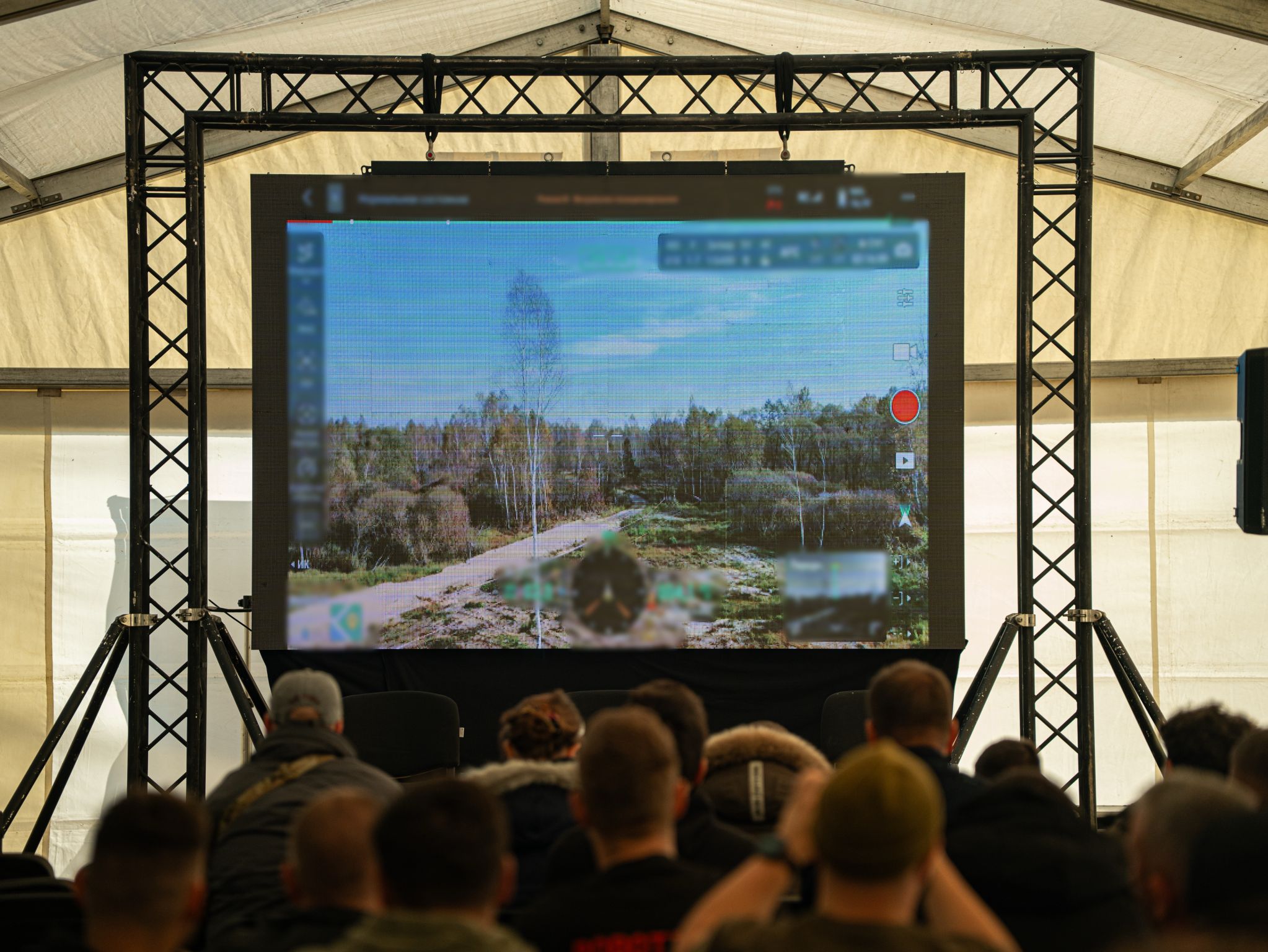
A live video feed projected each vehicle’s performance on a big screen as “Makar,” the NC13 unit commander, provided real-time commentary. Teams were pushed to respond to breakdowns and route failures with on-the-fly fixes, which Makar then translated into actionable task lists for future iterations.
The results showed promise. Some companies that had taken tough feedback at the Strike UGV Forum weeks earlier delivered improved systems that performed better under pressure. Organizers say that kind of responsiveness—grounded in soldier feedback—is key to fast-tracking real-world UGV development.
“The point isn’t perfection,” Honcharuk added. “It’s fast learning and visible improvement based on what the troops need now.”
The event underscored Ukraine’s approach to bottom-up innovation, where frontline realities—not theoretical design—drive the evolution of unmanned ground systems. With each test and iteration, manufacturers and military units are closing the gap between concept and combat utility.