

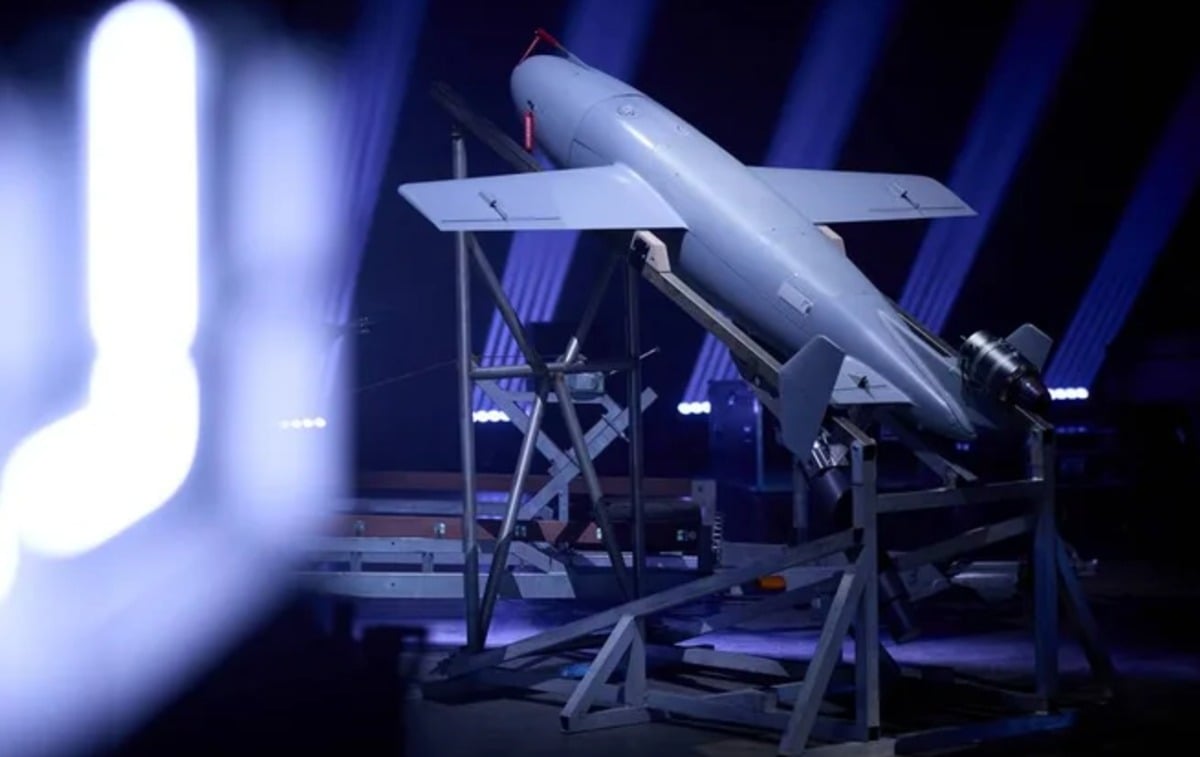
- Ukraine and Germany signed an implementation agreement on July 8 for joint production of BARS strike drones under the Build with Ukraine initiative.
- Germany will finance the first phase of BARS production, with all completed drones delivered to Ukraine's Defence Forces.
Ukraine just secured a German promise to bankroll production of one of its most closely guarded new weapons, a jet-powered strike drone capable of hitting targets deep inside Russian territory, in a deal signed on the sidelines of the NATO Summit in Ankara, Türkiye.
Ukrainian Foreign Minister Andrii Sybiha announced the agreement on X, confirming that Germany will finance manufacturing of the BARS drone system during the deal’s first phase, with every unit produced going directly to Ukraine’s own armed forces rather than Germany’s.
“Together with German Federal Minister of Defence Boris Pistorius, we signed an implementation agreement for the joint production of BARS drones,” Sybiha said.
“The agreement was concluded following joint efforts by the Ministry of Defence of Ukraine and the German Federal Ministry of Defence under the Build with Ukraine initiative,” Sybiha said.
“The German side will finance the production of the UAVs during the first phase of the project, and all manufactured equipment will be delivered to Ukraine’s Defence Forces,” Sybiha said.
BARS itself has stayed mostly out of public view since Ukraine first acknowledged the program existed. The system first surfaced publicly in April 2025, when Ukraine’s then-Minister for Strategic Industries, Herman Smetanin, listed BARS among a handful of new Ukrainian missile-drone projects without disclosing what the weapon actually does or how it works. Ukrainian defense reporting has since identified BARS as a domestically developed, jet-powered strike drone built specifically for long-range attacks on military targets deep inside Russia, a category of weapon Ukraine has increasingly relied on as it works to strike airfields, factories, and other Russian military infrastructure far beyond the front line rather than depending solely on Western-supplied missiles that come with usage restrictions attached. The drone has reportedly already seen combat use, including in strikes against military facilities in Moscow, though the German-Ukrainian statement announcing this agreement did not disclose the drone’s range, speed, warhead size, or how many units either government expects the new production line to build.
The financing arrangement matters as much as the weapon itself, since it establishes a pattern that differs from how most Western military aid to Ukraine has worked over the past four years. Rather than Germany simply handing over cash or finished weapons from its own stockpiles, this deal has Berlin paying to build Ukrainian-designed drones specifically so they can be handed straight to Ukraine’s military, a setup that keeps the weapon’s underlying technology and intellectual property under Ukrainian control while still tapping German industrial capacity and German government funding to scale up production faster than Ukraine could manage using its own manufacturing base and budget alone.
That structure traces directly back to a German government initiative called Build with Ukraine, launched in December 2025 with roughly $2.3 billion (€2 billion) allocated this year specifically to subsidize Ukrainian defense manufacturing, whether that manufacturing happens inside Ukraine itself or at facilities built in Germany. The initiative has already produced tangible results beyond Wednesday’s drone announcement. German Defense Minister Pistorius joined Ukrainian President Volodymyr Zelenskyy in February 2026 for the ribbon-cutting of a joint venture outside Munich between German company Quantum Systems and Ukrainian manufacturer Frontline Robotics, a partnership building Ukraine’s Linza logistics drone, a resupply system capable of carrying roughly 4.5 lb (2 kg) of cargo up to 6.2 miles (10 km) to frontline positions, with that Munich facility aiming to eventually produce more than 10,000 units annually.
Germany’s willingness to fund Ukrainian weapons manufacturing on this scale reflects a broader recalibration of how Berlin approaches military support for Kyiv, one that has accelerated considerably over the past year. Germany’s federal government has already approved a draft 2027 state budget that sets aside roughly $13.3 billion (€11.6 billion) in military aid for Ukraine alongside a substantial increase in Germany’s own defense spending, according to reporting from Ukrainian outlet PRM. That budget commitment sits alongside a separate contract Germany signed with Ukraine to supply 600 missiles for Patriot air defense systems, and Kyiv has reportedly also received an early, positive signal from the Trump administration regarding potential licensing that would let Ukraine produce anti-ballistic missile components domestically, a combination of signals suggesting Ukraine’s drone and missile production ambitions are drawing support from multiple directions simultaneously rather than depending on any single ally.
Wednesday’s BARS agreement was not an isolated bilateral moment either, and it arrived amid a broader flurry of drone-related diplomacy at the Ankara summit. Ukrainska Pravda reported that Dutch Prime Minister Rob Jetten and President Zelenskyy signed a separate cooperation agreement on drone technology that same day, and Ukraine signed yet another drone technology cooperation agreement with Estonia during the same NATO gathering, indicating that Ukraine is actively working multiple parallel tracks with different allies to expand its unmanned systems industrial base rather than relying on any single partnership to carry that weight.
Ukraine has set a stated goal of scaling its overall annual drone production to roughly 7 million units by the end of 2026 across all drone categories, a target that dwarfs the scale of any single weapon system like BARS but underscores just how central unmanned systems have become to Ukraine’s entire approach to fighting a war it has now waged for more than four years against a much larger opponent.