

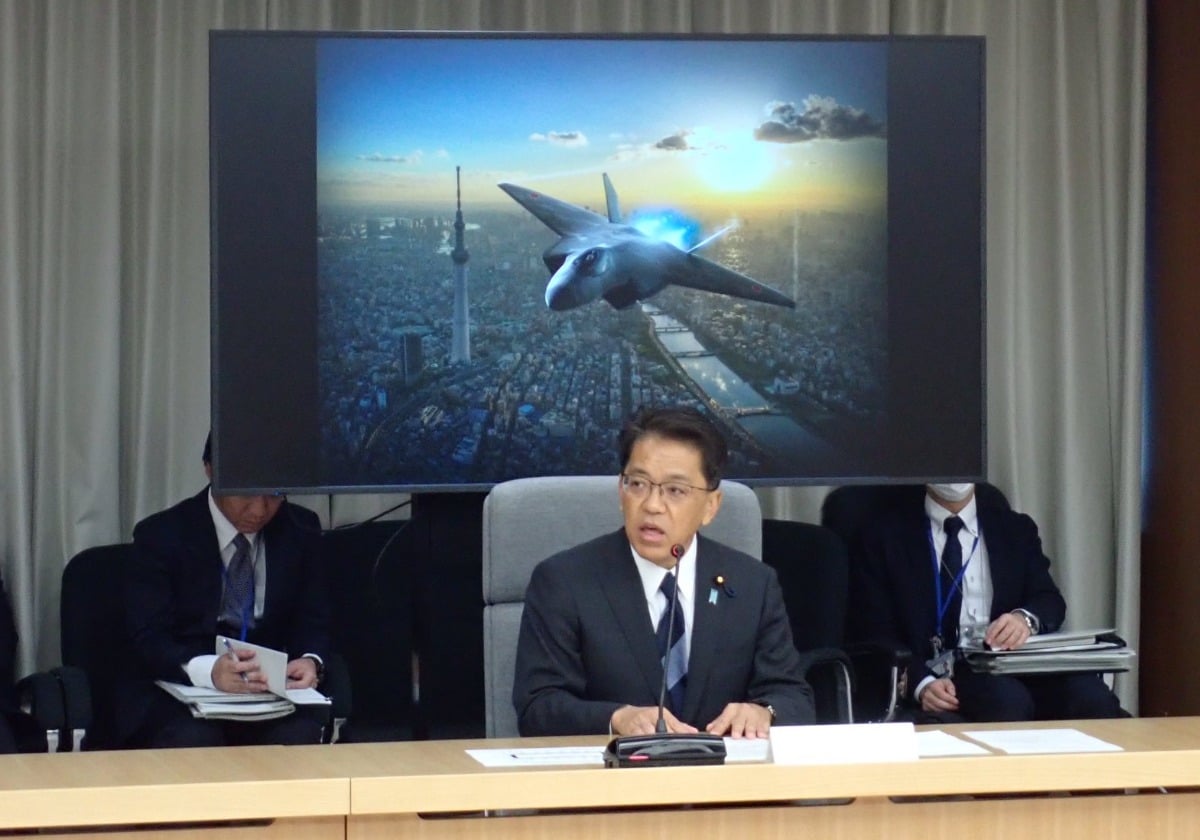
- Japan, the UK, and Italy agreed to extend the GCAP next-generation fighter contract through 2027 after Britain published its delayed Defence Investment Plan, Nikkei reported.
- The program's industrial joint venture Edgewing received an initial $907 million bridge contract in April 2026, with the demonstrator aircraft targeted for first flight before end of 2027.
Japan, the United Kingdom, and Italy will extend the contract for the Global Combat Air Programme through the end of 2027, after Britain’s delayed defense spending plan created an impasse that had left the three-nation stealth fighter effort operating on temporary bridge funding since April, Nikkei reported.
The extension resolves the immediate crisis triggered when the UK’s Defence Investment Plan, a comprehensive document setting out British defense budget commitments, was not published on its original timeline, leaving GCAP’s industrial partners without the long-term funding certainty they needed to maintain workforce and development momentum. With the plan now published, the governments can commit to a longer contract that takes the program through 2027 and allows the demonstrator aircraft, which is expected to fly before the end of that year, to proceed on schedule.
GCAP, the Global Combat Air Programme, is one of the most ambitious military aviation projects currently underway anywhere in the world, a trilateral effort to design, develop, and deliver a sixth-generation fighter aircraft intended to replace the Eurofighter Typhoon that Britain and Italy currently operate and the Mitsubishi F-2 jets that serve Japan’s Air Self-Defense Force. The program was established formally in December 2022, when the leaders of all three countries signed an agreement, and it was elevated to treaty status a year later when defense ministers signed the Convention establishing the GCAP International Government Organisation, known as GIGO, the intergovernmental body that manages the program on behalf of the three partner nations. The target service entry date for the operational fighter is 2035, a deadline that Japan in particular has treated as non-negotiable because it coincides with the planned end of the F-2’s service life.
The industrial vehicle executing GCAP’s design and development work is a joint venture called Edgewing, established in June 2025 and headquartered in Reading, England, with an equal 33.3 percent shareholding held by each of the three national prime contractors: BAE Systems of the United Kingdom, Leonardo of Italy, and Japan Aircraft Industrial Enhancement Co., a firm backed by Mitsubishi Heavy Industries and the Society of Japanese Aerospace Companies. Edgewing was originally expected to receive its first development contract by the end of 2025, but Britain’s failure to publish its Defence Investment Plan on schedule created a gap that pushed the first contract to April 2, 2026, and even then it was a three-month bridge contract worth £686 million ($907 million) running only until the end of June 2026, designed specifically to keep Edgewing funded while the UK sorted out its broader defense budget.
The stakes of that funding gap became visible when BAE Systems executive Herman Claesen warned publicly that the more than 4,000 UK-based engineers working on GCAP across BAE Systems, Rolls-Royce, and Leonardo could be forced to be redeployed if longer-term contract certainty was not established before bridge funding expired. Skilled aerospace engineers do not sit idle, and the industrial base that decades of European combat aviation programs have built cannot be reconstituted quickly once it disperses. That warning was the bluntest acknowledgment yet of how seriously the program’s industrial partners viewed the UK’s budget indecision, which had by May 2026 pushed the Italian government to revise its cost estimate for the program’s concept and assessment phase to €18.6 billion ($21.2 billion), roughly three times what Rome’s parliament had originally been told to expect.
The British government publicly signaled its intent to close the gap when, on June 13, 2026, it confirmed that a full international contract would be signed by the end of the month, timed to coincide with a visit to London by Japanese Prime Minister Sanae Takaichi. That contract, and the 2027 extension Nikkei has now reported, follows the publication of the UK’s Defence Investment Plan that had been holding up long-term commitment. The UK had committed approximately £2 billion ($2.65 billion) to GCAP since 2021 and was preparing to add approximately £6 billion ($7.94 billion) more, according to reporting in May 2026, but the formal budget settlement required to release that funding was the missing piece that kept producing successive short-term bridge arrangements rather than the multi-year development commitments the program needed.
GCAP has attracted significant interest from potential partner nations beyond the original three. Canada began participating as an observer in March 2026 following discussions that started in late 2025, and Germany, which has its own troubled parallel next-generation fighter program called FCAS being developed jointly with France and Spain, has been examining GCAP as an alternative. Japan has been explicit that it opposes adding new participants if doing so would delay the 2035 service entry target, a position that reflects Tokyo’s dependence on the program’s timeline to replace an aging fleet it cannot extend indefinitely. Saudi Arabia has also expressed persistent interest in joining, creating a separate set of complications around Japan’s export policies and the program’s technology security framework.
The demonstrator aircraft that is expected to fly before the end of 2027 will be the first British combat-air prototype since the Eurofighter Typhoon development era nearly four decades ago, and it will test the technologies that are intended to define the full production sixth-generation fighter, including advanced stealth shaping, next-generation sensors, electronic warfare systems, and propulsion technologies that go beyond what the Typhoon represents.