

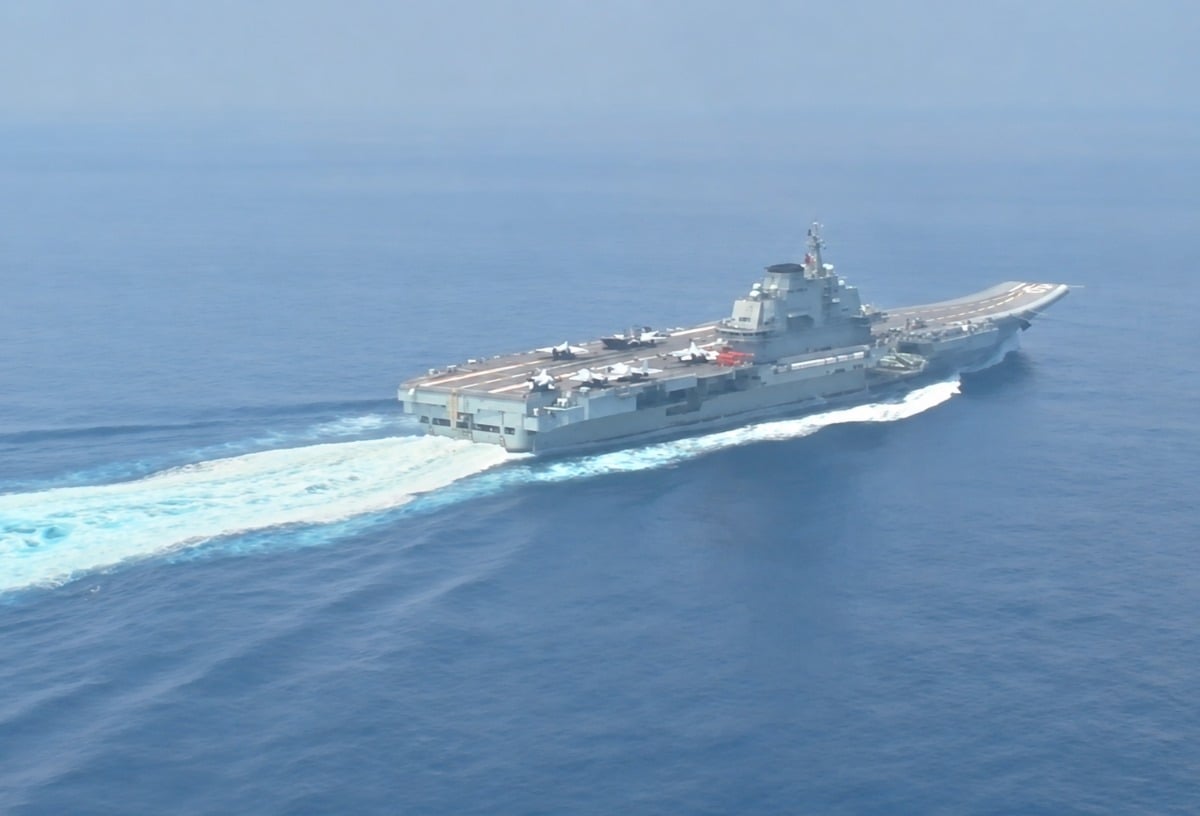
- China's state broadcaster CCTV accused Japan of conducting simulated attacks on carrier CNS Liaoning during its 40-day South China Sea and Western Pacific deployment, which concluded June 22, 2026.
- Japan's Joint Staff Office denied the claims as "not factual," stating JMSDF forces conducted professional surveillance with safety as the foremost prerequisite.
Japanese warships and aircraft conducted simulated attacks against China’s aircraft carrier Liaoning during its 40-day deployment to the South China Sea and Western Pacific that concluded on June 22, 2026, according to Chinese state broadcaster CCTV, which described the actions as “outrageously audacious”.
The claim, first reported by CCTV commentator Teng Jianqun and cited by the Global Times, marks a significant escalation in the language Beijing uses to describe Japan’s surveillance operations, framing standard JMSDF monitoring activity as something qualitatively different and more threatening than in previous deployments. Japan’s Joint Staff Office flatly denied the characterization, stating that “such claims are not factual” and that the Self-Defense Forces had conducted professional surveillance operations with safety as their foremost prerequisite.
The Liaoning carrier strike group that returned to its home port of Qingdao on June 22 was a five-ship formation: the aircraft carrier CNS Liaoning (16), cruiser CNS Wuxi (104), destroyer CNS Kaifeng (124), frigate CNS Luohe (545), and fast combat support ship CNS Hulunhu (901), as confirmed by USNI News. Over 40 days at sea, the formation traversed the South China Sea and the Philippine Sea, conducting what China’s Ministry of National Defense described as “integrated shore-sea system-of-systems confrontation, carrier-based aircraft tactical flight operations, formation search and rescue, and other subject drills.” Chinese state media separately confirmed that the Liaoning’s deployment featured the J-15T, a new twin-engine heavy carrier-based fighter that represents a significant upgrade from the original J-15 in avionics, radar, and weapons integration.
The J-15T is the catapult-optimized variant of the J-15 Flanker-derived carrier fighter, redesigned to operate from electromagnetic catapult systems like those fitted to China’s newest carrier, the Type 003 Fujian. Its appearance aboard the Liaoning, which uses a ski-jump rather than catapults, suggests the aircraft is now cleared for conventional rolling takeoff operations as well, extending its operational flexibility across China’s existing carrier fleet. The original J-15 gained international attention in December 2025 when two of Liaoning’s fighters locked their fire-control radars onto Japanese F-15 fighters that were monitoring the carrier group, an incident Japanese Defense Minister Shinjiro Koizumi condemned at the time as “a dangerous act that exceeded the range necessary for safe aircraft flight.”
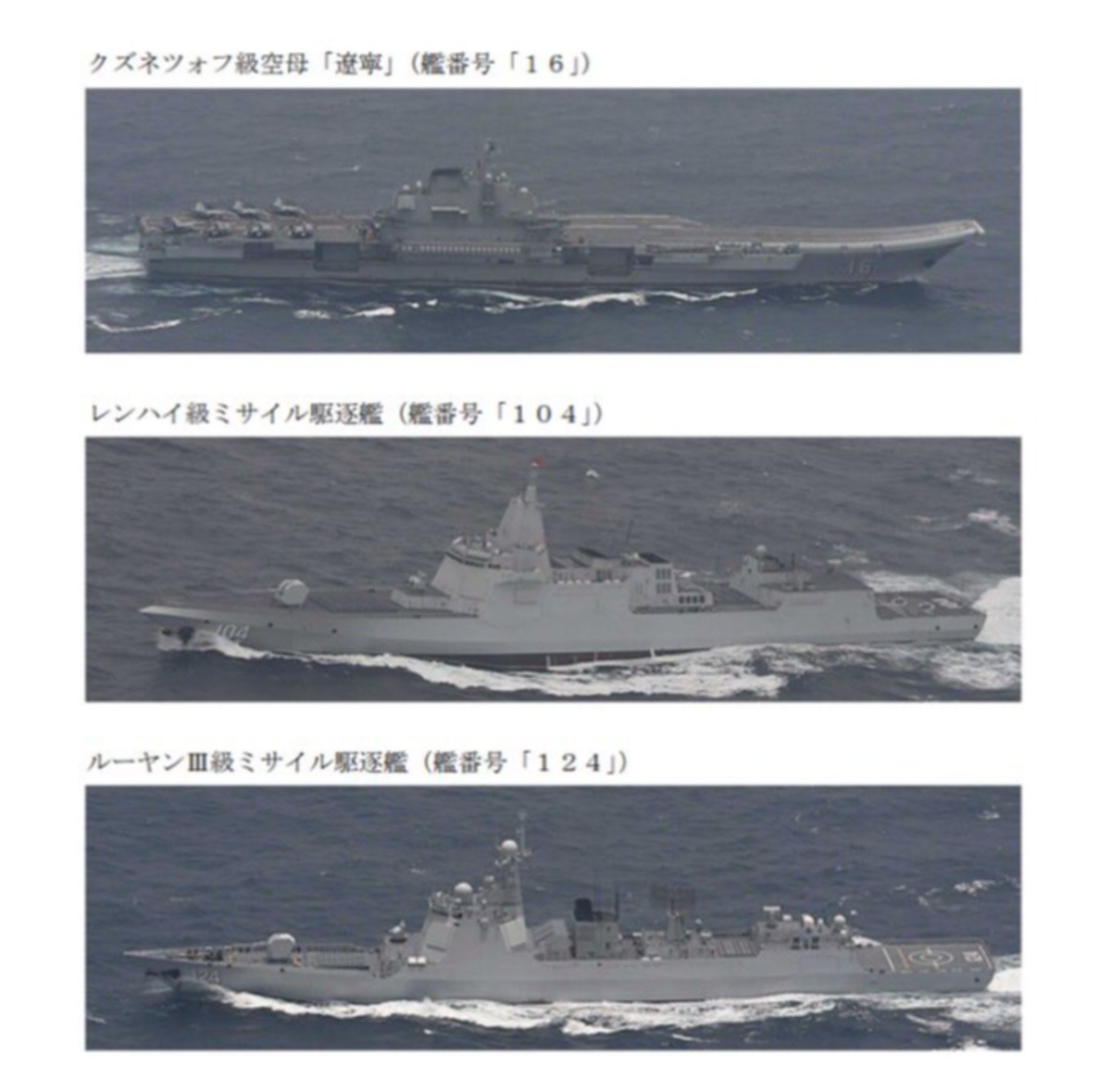
The CCTV claim about Japanese simulation attacks rests on what the commentator described as a “major change” in how close Japan’s ships and aircraft have been approaching PLA naval formations. Teng Jianqun, the CCTV commentator, characterized the proximity as qualitatively new and described Japan simultaneously executing what Japanese media had reportedly framed as “targeted simulation attacks.” The source chain here matters: CCTV is citing Japanese media reporting on Japanese exercises, which is then being reframed by a Chinese state broadcaster as aggressive provocation. No independent verification of what specifically Japan’s forces did during those approach operations appeared in the CCTV report, and no Japanese government official confirmed the characterization. What Japan has publicly acknowledged is significantly narrower: the Joint Staff Office confirmed conducting “vigilance and surveillance” and denied any interference or provocation.
The framing battle between China and Japan over Liaoning’s Pacific operations has been building across multiple deployments. During the December 2025 patrol, when Liaoning’s fighters locked radar on Japanese aircraft, Tokyo and Beijing issued contradictory accounts of what occurred, with China claiming Japan’s F-15s had intruded into a declared training area and Japan denying any unsafe approach on its part. Japanese Defense Minister Koizumi and then-U.S. Defense Secretary Pete Hegseth held a 40-minute phone call at the conclusion of that December deployment specifically to discuss China’s military activities, a conversation that publicly framed the two allies’ shared concern about PLA naval operations near Japan’s southwest islands.
The broader operational context of the Liaoning deployment is documented in the USNI News Western Pacific Pulse for June 26, 2026, which confirmed the strike group’s composition and return to port. What that contemporaneous reporting also showed is the simultaneous scale of allied activity in the same maritime space: the George Washington carrier strike group was conducting anti-submarine warfare exercises near Guam alongside Japanese destroyer carrier JS Kaga and destroyer JS Fuyuzuki, together with Royal Canadian Navy frigate HMCS Charlottetown, while P-8A Poseidon patrol aircraft from U.S., Australian, and New Zealand squadrons hunted a submerged U.S. submarine as a training target. The operational density of allied naval activity in the Western Pacific during Liaoning’s deployment provides the full context for why Japan’s surveillance was as close and continuous as China describes: every asset available was tracking.
China’s Ministry of National Defense spokesperson Zhang Xiaogang used a press conference on Thursday, June 26, to deliver Beijing’s official position in terms considerably more forceful than typical diplomatic boilerplate.
“It’s clear who is the threat and who is the provocateur. We urge the Japanese side to stop its dangerous acts of interfering with China’s normal training activities,” Zhang stated.