

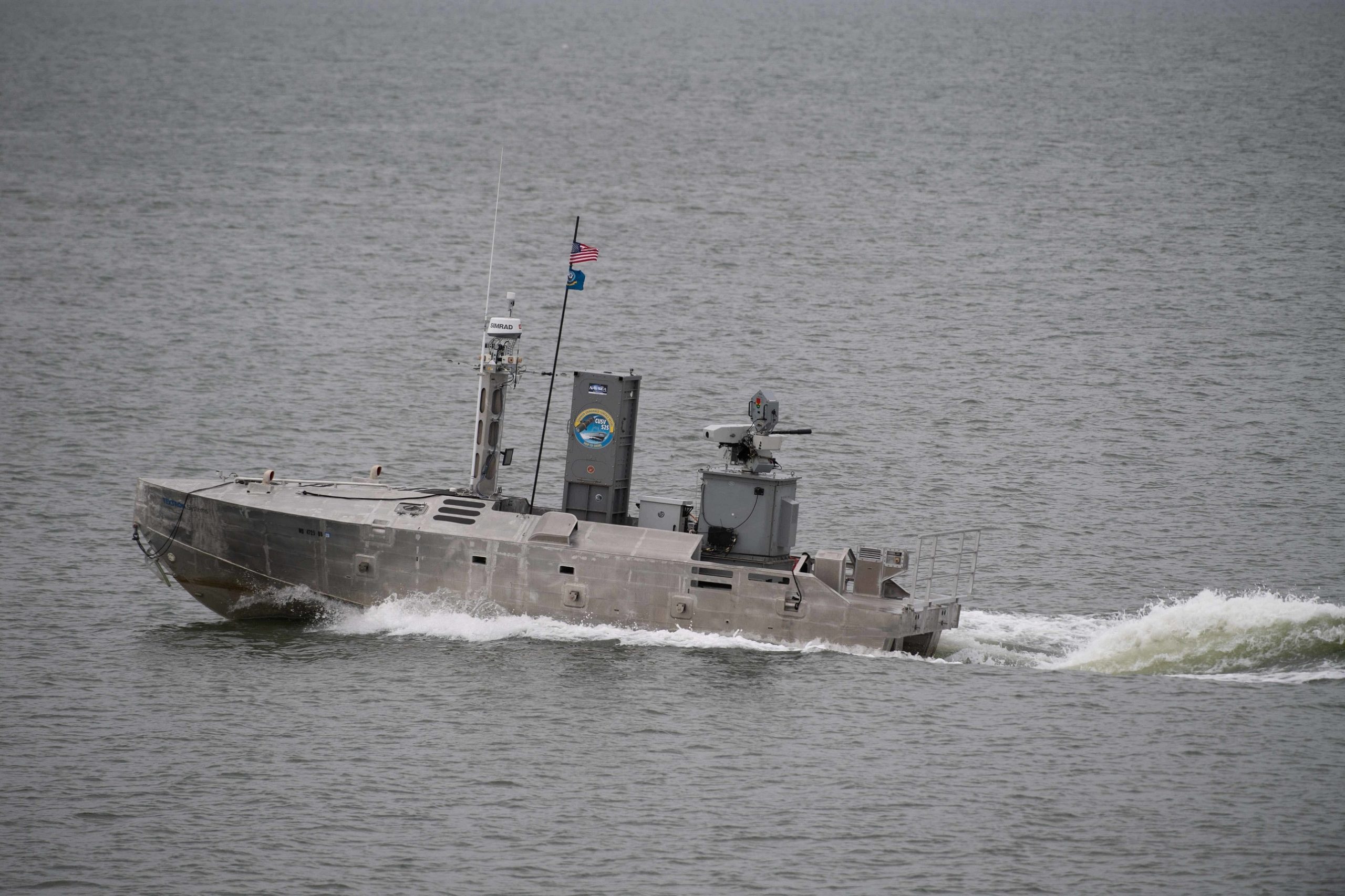
The U.S. Navy awarded Textron Systems’ AAI Corporation its first low-rate initial production (LRIP) contract for the Unmanned Influence Sweep System (UISS) Unmanned Surface Vehicle Program, according to a statement issued Friday by the U.S. Department of Defense.
The DoD said that AAI Corp. is awarded a $21,795,236 fixed-price incentive modification to previously awarded contract.
Also, the U.S. Navy has announced that the Program Executive Officer for Unmanned and Small Combatants (PEO USC) has granted Milestone C approval to the Unmanned Influence Sweep System (UISS) program. The decision clears the way for low-rate initial production (LRIP) of the system, PEO USC announced Feb. 26, 2020.
The Navy plans to exercise options for the procurement of three LRIP systems on the current Engineering and Manufacturing Development (EMD) contract with UISS prime contractor Textron Systems.
Designed for the littoral combat ship (LCS) as part of the mine countermeasures mission package, the UISS consists of a mine countermeasures unmanned surface vehicle (USV) and a towed minesweeping payload for influence sweeping of magnetic, acoustic and magnetic/acoustic combination mine types. UISS can also be launched from vessels of opportunity or from shore.
Formal Developmental Testing and Operational Assessment of UISS took place off the coast of South Florida and successfully concluded in late November 2019. Testing included a series of end-to-end minesweeping missions against simulated mine targets using the Navy Instrumented Threat Targets training system.
LCS Detachment Sailors performed operations during Developmental Testing and Operational Assessment that included shore-based launch and retrieval of the system, command and control, mission planning and post-mission analysis. The UISS USV also has completed initial integration tests with the LCS and vessels of opportunity.
Textron Systems was awarded an EMD contract in October 2014 for the UISS, based on its Common USV. The Navy exercised options for two additional vehicles in 2017, which were delivered in 2018 in support of the comprehensive Mine Countermeasures Unmanned Surface Vehicle program that will leverage the UISS USV for missions that include minehunting and mine neutralization.