

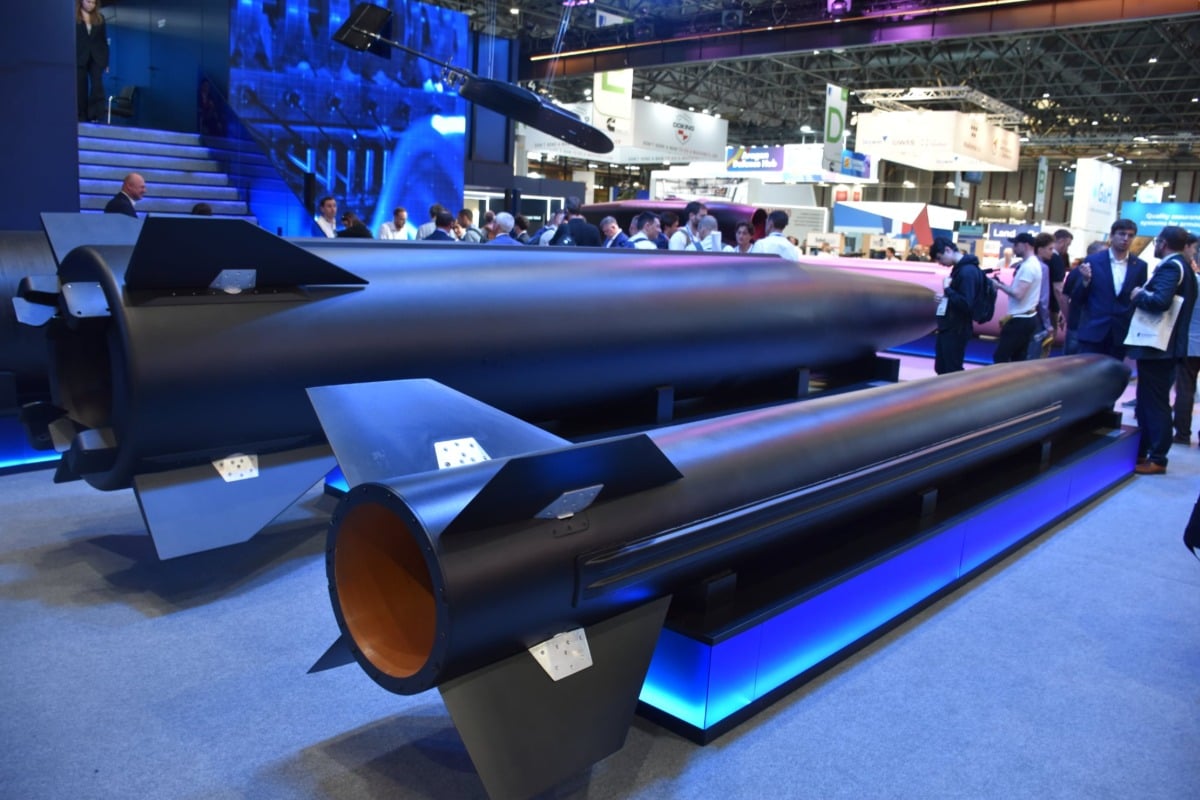
- Russia’s Ministry of Defense officially confirmed that its air defenses intercepted a “long-range operational-tactical missile,” but did not specify where the intercept occurred.
- The statement follows OSINT reports from June 30 showing a high-altitude air defense engagement over Moscow Oblast and a large crater near Yudanovka.
Russia’s Ministry of Defense has officially confirmed that its air defenses intercepted a “long-range operational-tactical missile,” adding new weight to OSINT reporting about an unusual high-altitude engagement over Moscow Oblast on June 30.
The Russian ministry did not specify where the intercept took place and did not identify the missile type. However, the statement came after Russian and Ukrainian open-source analysts reported air defense activity and a large crater in Moscow Oblast, prompting speculation that Ukraine may have launched a ballistic missile-class weapon toward the Russian capital region.
The initial observation came from Voyennyy Osvedomitel, a pro-Russian military Telegram channel, which reported that S-300 or S-400 air defense systems had operated at high altitude during a missile alert in Moscow Oblast. The channel described the engagement profile as unusual for a drone or cruise missile and referred to a large crater from the intercepted object. It also said a Ukrainian ballistic missile could not be ruled out, while stressing that the available evidence was indirect.
Ukrainian OSINT group CyberBoroshno later geolocated the crater near the village of Yudanovka in Moscow Oblast, along the Warsaw Highway corridor southwest of Moscow. The site lies deep inside Russian territory and has become central to the debate because of its distance from Ukraine and the reported characteristics of the impact area.
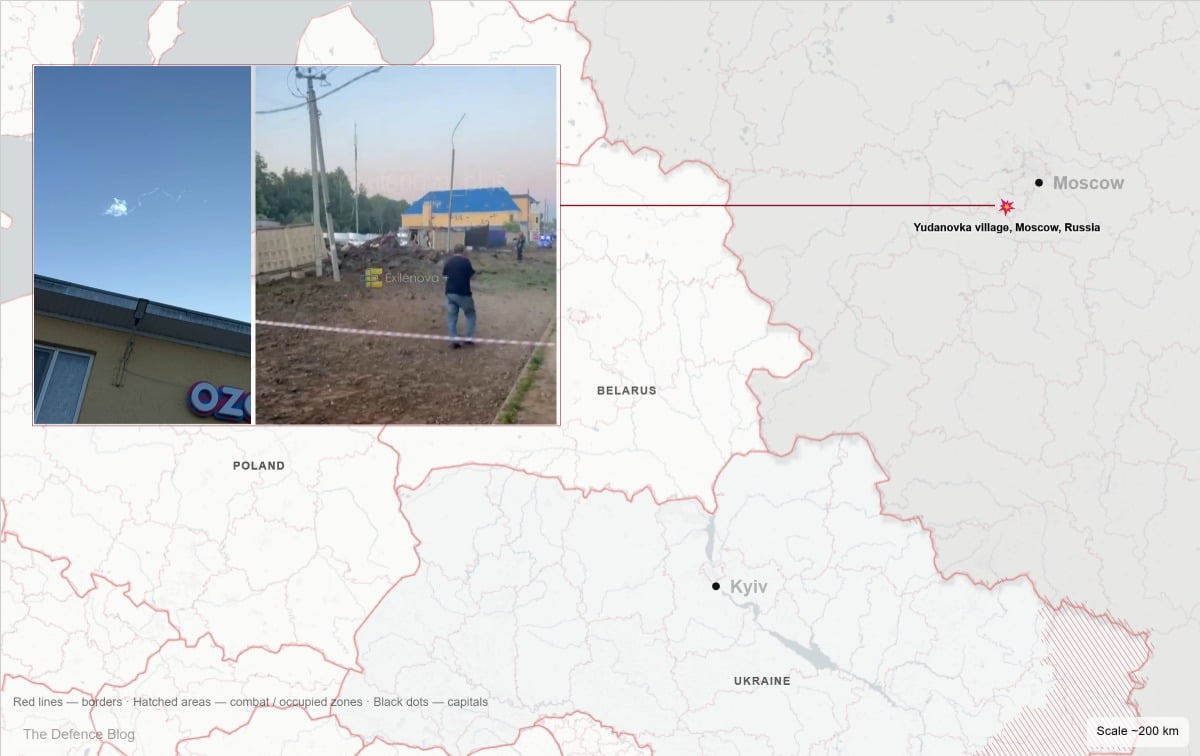
The Russian Defense Ministry’s July 1 statement does not confirm that the Yudanovka crater was caused by the missile it says was intercepted. It also does not confirm that the weapon was ballistic. Still, the phrase “long-range operational-tactical missile” is notable because it differs from Moscow’s usual public references to Ukrainian drones, guided bombs, HIMARS rockets or cruise missiles.
Analysts examining the incident have focused on three factors: the reported high-altitude air defense engagement, the size of the crater and the distance from Ukrainian territory. Together, those indicators have led some OSINT accounts to suggest that the object may have been a heavy ballistic missile rather than a drone or cruise missile.
One possible candidate discussed by analysts is Ukraine’s FP-9, a domestically developed heavy ballistic missile associated with Fire Point. That link remains unconfirmed. No official Ukrainian source has acknowledged a launch, no wreckage has been publicly identified, and there is no direct visual confirmation tying the Moscow Oblast incident to the FP-9.
Fire Point chief designer and co-founder Denys Shtilerman previously said the company was preparing engine testing for the FP-9 and expected to move toward flight trials if validation was successful. He described the missile as a system intended to reach Moscow, making the June 30 incident notable in the context of Ukraine’s expanding long-range strike programs.
Published specifications for the FP-9 describe a missile about 9.5 meters long and 1.1 meters in diameter, with a claimed range of roughly 855 kilometers and a large conventional warhead. If accurate, those parameters would place Moscow within reach from Ukrainian territory. They would also place the missile in a different class from Ukraine’s one-way attack drones and long-range cruise missile programs.