

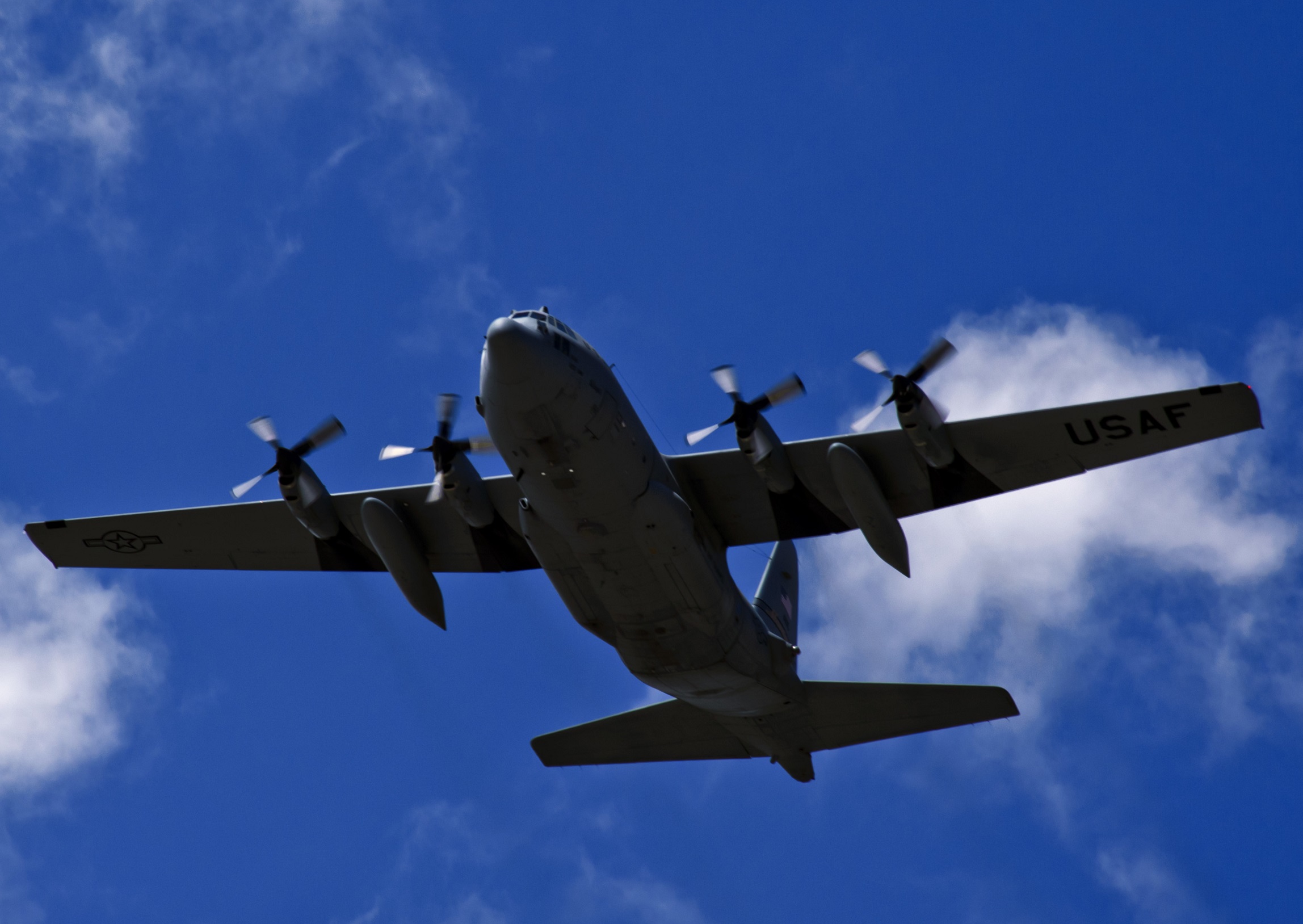
The U.S. Air Force is considering transforming all of its C-130 and C-17 cargo planes into cruise missile carriers, according to a Lockheed Martin press release.
In a release late Wednesday, Pentagon’s No.1 weapons supplier Lockheed Martin Corp announced that the U.S. Air Force Strategic Development Planning and Experimentation (SDPE) Office awarded a $25 million contract to support the next phase of the service’s Palletized Munitions Experimentation Campaign.
Under the palletized munition concept, the U.S. Air Force seeks to launch new stand-off precision-guided munitions from its cargo planes, allowing the service to relatively quickly turn them into weapons trucks, as necessary.
As noted by the company, the fourth phase includes a system-level demonstration in 2021 and continues to assess the potential to deliver large volumes of air-launched weapons via airlifters.
“Despite the Palletized Munitions program being relatively new, it’s moving very quickly,” said Scott Callaway, Lockheed Martin Advanced Strike Systems director. “The U.S. Air Force Research Laboratory (AFRL) contracting and Strategic Development Planning and Experimentation (SDPE) offices, and Lockheed Martin teams established this new contract in a record time of 30 days, supporting faster prototyping and a shorter timeline to bring this advanced capability to the warfighter in the field.”
Initial studies show that airlifters have the potential to deploy large quantities of Joint Air-to-Surface Standoff Missile Extended Range (JASSM-ER) missiles, providing a significant increase in long-range standoff scale and complementing traditional strike and bomber aircrafts. This innovative approach enables warfighters to launch offensive operations from a greater number of airfields and engage a larger number of near-peer adversarial targets.
The overall goal of the experimentation is to develop a modular system to deliver air-launched weapons, leveraging standard airdrop procedures and operations. The system will have the ability to be rolled on and off multiple types of aircraft, including the C-17 and C-130.
Phase I successfully accomplished five high-altitude airdrops from an MC-130J (manufactured by Lockheed Martin) and a C-17 earlier this year using simulated weapons. During this effort, the U.S. Air Force tested the suitability of launching JASSM-ERs from an airlifter. JASSM is a long-range, conventional, air-to-ground, precision standoff missile for the U.S. and allied forces designed to destroy high-value, well-defended, fixed and relocatable targets.