

- Ukraine loses two MiG-29 fighters in one night to drone strike and mystery crash
- Russia's new jet drone destroys Ukrainian fighter on the ground before takeoff
- Ukraine confirms two MiG-29 losses in separate overnight incidents
- A drone built to evade interceptors just destroyed a Ukrainian fighter jet on the ground
- One MiG-29 hit on the runway, another lost over Poltava: Ukraine's worst night for fighters
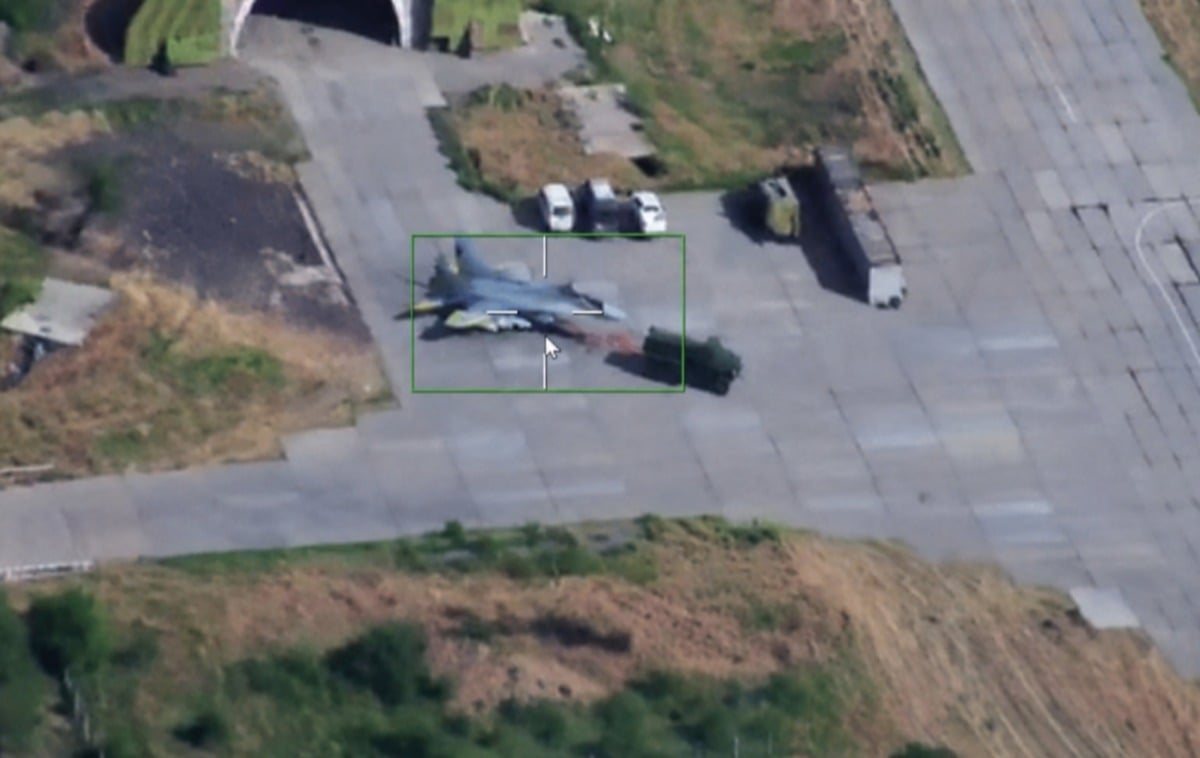
Russian media published footage of a Geran-4 kamikaze drone striking a Ukrainian Air Force MiG-29 as the aircraft prepared for a mission at an airfield in southern Ukraine, destroying it completely. Ukrainian sources confirmed the aircraft was lost but said no personnel died in the strike. Separately, the Ukrainian Air Force Command confirmed in an official statement that a second MiG-29 was lost during a combat mission over the Poltava region under circumstances that have not yet been determined, with the pilot successfully ejecting and reaching safety.
The official statement from the Communications Department of the Ukrainian Air Force Command was direct: “We report that on the night of June 27, 2026, contact was lost with a MiG-29 fighter jet of the Ukrainian Air Force, which was carrying out a combat mission in the Poltava region. We confirm the loss of the aircraft; however, the Ukrainian pilot successfully ejected, made contact with the search and rescue team and was promptly transported to a medical facility for examination and to receive the necessary care. The causes and circumstances are being investigated.”
The first loss, the airfield strike by the Geran-4, represents something qualitatively new in Russia’s drone campaign against Ukrainian air power. The Geran-4 is Russia’s latest jet-powered one-way attack drone, which Ukraine’s Defense Intelligence directorate confirmed entered combat deployment in May 2026 after mass production preparations completed in January of that year. It is a significant step beyond the propeller-driven Geran-2, the Iranian-designed Shahed-136 derivative that Russia has produced in vast numbers, which cruises at approximately 180 km/h (112 mph) and carries a warhead of 30 to 50 kg (66 to 110 lb). The Geran-4 uses a Chinese-made Telefly LX-WP-160 turbojet engine that pushes its cruise speed to between 350 and 500 km/h (217 to 311 mph), carries a warhead of either 50 kg (110 lb) or an optional thermobaric payload of 90 kg (198 lb), and has a reported range of up to 850 km (528 miles) compared to the Geran-2’s range of up to 2,500 km (1,554 miles) at slower speeds. Ukraine’s Defense Intelligence found components from the UK, the United States, Germany, China, Switzerland, Japan, and Taiwan in a recovered Geran-4 airframe.
The drone’s increased speed matters enormously in the context of targeting aircraft on the ground. Ukraine’s interceptor drone units, which have shot down thousands of Geran-2 variants, are largely optimized for slower, propeller-driven targets. Ukraine’s 1020th Anti-Aircraft Missile Regiment confirmed one Geran-4 kill using a Wild Hornets STING interceptor in early May 2026, the first confirmed intercept of the type, though engagement reliability at scale remains unverified. A drone capable of 500 km/h (311 mph) and sophisticated enough to locate and strike an aircraft preparing for takeoff represents a different order of threat from the slow-flying Geran-2s that Ukraine’s mobile ground-based drone interceptors have spent years learning to hunt.
The MiG-29, known by its NATO reporting name “Fulcrum,” is a twin-engine supersonic fighter developed by the Soviet Mikoyan design bureau as a lighter, cheaper complement to the heavier Su-27 Flanker. Ukraine inherited a large fleet from the Soviet Union and has sustained combat losses across more than four years of full-scale war through deliveries from former Warsaw Pact allies, including Slovakia, Poland, and Bulgaria. Oryx, the open-source intelligence project that tracks visually confirmed equipment losses, has recorded more than 100 fixed-wing Ukrainian aircraft destroyed since February 2022. Poland agreed in late 2025 to transfer its remaining MiG-29 fleet to Ukraine as part of an exchange arrangement tied to Ukrainian drone technology, though as of mid-June 2026 Poland’s deputy defense minister confirmed that no aircraft from that batch had yet been delivered, with Warsaw holding the transfer pending receipt of agreed drone technology from Kyiv.
The southern Ukraine airfield strike is the latest in a series of attacks on Ukrainian aviation infrastructure that Russia has pursued with increasing persistence as Kyiv’s air defenses have grown more capable of defending against aircraft-launched strikes. Geran-2 drones have previously destroyed helicopters on the ground, most notably a documented strike on a Mi-8 at Mykhailivka helipad that OSINT analysts noted showed no camouflage or nearby air defense coverage. The pattern of such strikes reveals a consistent Russian targeting logic: when Ukrainian aircraft cannot be reliably engaged in the air against maturing air defenses and electronic warfare systems, attack them on the ground with drones that can loiter, wait, and strike during pre-mission preparation windows.
The second loss, over Poltava, remains unexplained. Ukrainian authorities have not attributed it to enemy action, stating only that the causes and circumstances are under investigation. Poltava Oblast lies in north-central Ukraine, roughly 350 km (217 miles) northeast of Kyiv, and has been the site of previous Ukrainian air activity including ground-attack and interception missions. The pilot’s successful ejection and recovery by search and rescue suggests the loss was not a catastrophic mid-air destruction but a more controlled, survivable sequence, which could point toward either a mechanical failure, a hit from an enemy weapons system, or some combination of causes. What caused the aircraft to go down remains unknown at the time of publication.
Together, the two losses point to the twin pressures on Ukraine’s MiG-29 fleet: the drone threat hunting aircraft on the ground, and whatever combination of air defense missiles, electronic warfare, and operational hazard continues to claim fighters in the air. Every MiG-29 Ukraine loses is harder to replace than the aircraft that preceded it in the inventory. Poland’s batch sits grounded in a diplomatic standoff, and no other NATO member currently operates the type. Ukraine’s gradual transition to Western aircraft, including F-16s already in service and the Rafale and Gripen deals signed in late 2025, provides a long-term answer. In the short term, two fewer MiG-29s flew combat missions on the morning of June 27.