


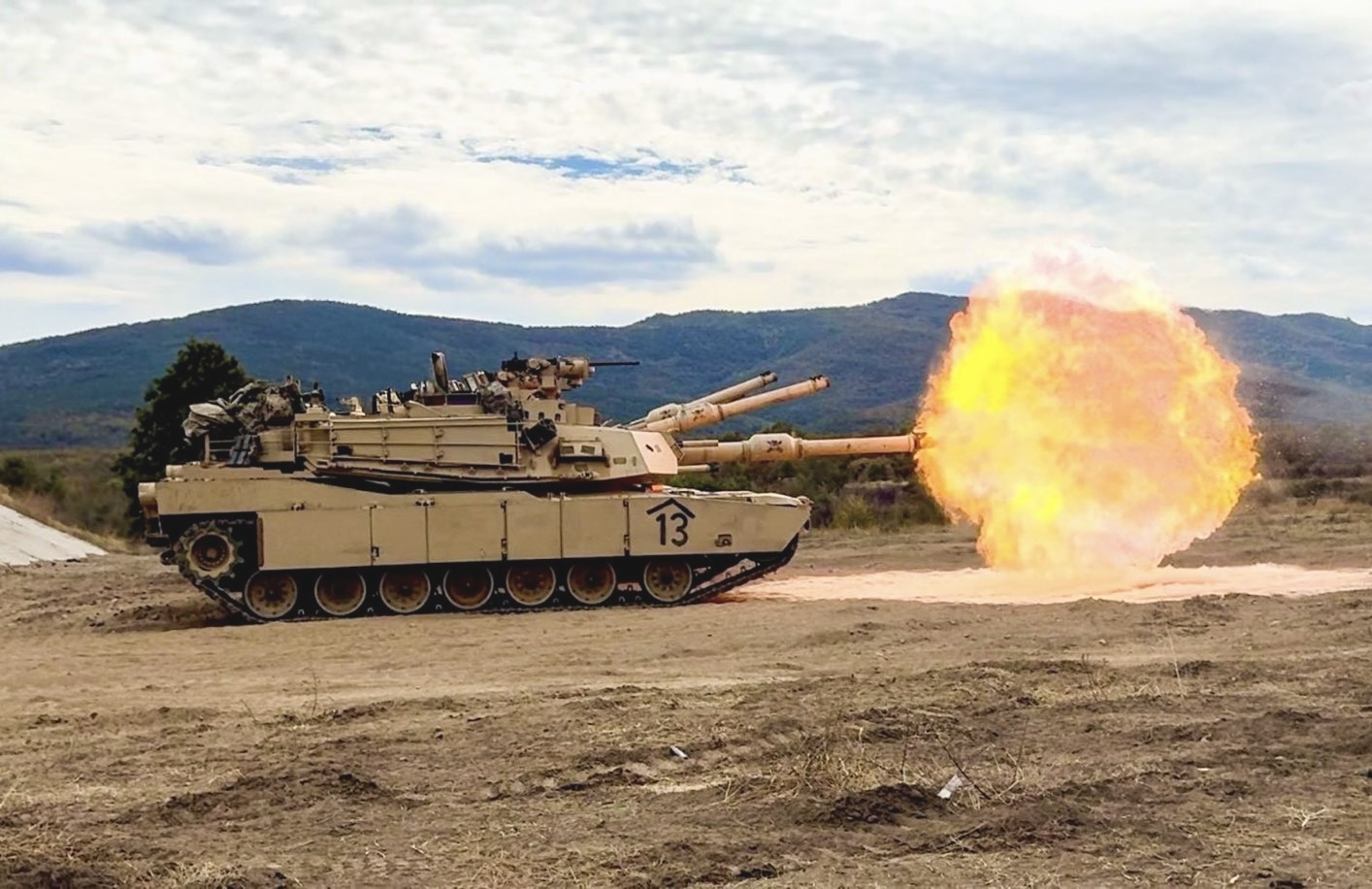
U.S. soldiers from the 1-16th Infantry Regiment, 1st Armored Brigade Combat Team, 1st Infantry Division carried out live-fire exercises in Bulgaria from September 29 to October 5, 2025, conducting a week of intensive training with Abrams tanks aimed at enhancing precision, maneuvering, and team effectiveness on the battlefield.
The training focused on engaging tactical targets under day and night conditions while refining crew coordination and equipment performance. Around 15 Abrams tanks participated in the exercise, executing six separate gunnery tables and firing their 120mm M256 main guns at targets designed to simulate combat scenarios.
According to the U.S. Army, gunnery training plays a central role in building trust and cohesion among tank crews. Each member — driver, gunner, loader, and tank commander — must perform their duties precisely and in sync to ensure operational effectiveness. The training environment reinforces those dynamics, creating a foundation for seamless teamwork under pressure.
Staff Sgt. Riley Croft, a tank commander with the 1-16th Infantry, described how every member’s actions are essential to the crew’s success.
“Everyone has their piece to play,” stated Croft. “Everyone has a vital role.”
Croft said the exercises also serve to pass down knowledge to newer members of the unit, helping them adapt more quickly and prepare for leadership roles in the future.
“Training builds muscle memory,” said Croft. “The people underneath you are going to be the people that fill your shoes. I’m always trying to teach them better ways to do things so when they reach my position they won’t have the problems that I had or the worries that I faced.”
The exercises emphasized the importance of communication — a critical element in tank operations where precise timing and coordination can determine mission success.
“Communication plays a big part of being able to succeed,” stated Spc. Jocelyn Trejo, a gunner with the 1-16th Infantry. “It goes all the way from the driver to the TC, telling the driver when to stop, telling the loader to load and then the commands to fire. Communication is the main key.”
Sgt. First Class Corey Smith, a master gunner for the unit, highlighted how the training process shapes new soldiers, taking them from simulator-based learning to live-fire proficiency.
“My favorite thing is watching young soldiers grow,” said Smith. “We have a lot of new Soldiers in this company. Seeing how they’ve progressed from the simulator, to gunner skill assessment until now, they are continuing to progress everyday.”
Smith added that building camaraderie within the team directly influences performance.
“The more camaraderie you have, the better you work as a crew,” stated Smith. “Things just start flowing. Fire commands start to run smoother.”
The gunnery drills replicate the stress and complexity of combat operations, pushing crews to operate with precision and confidence under realistic conditions. They also allow units to assess and strengthen their readiness for future missions.
With the gunnery phase complete, the Abrams crews will advance to a Platoon Situational Training Exercise (STX), followed by a Company STX and a Combined Arms Live Fire Exercise (CALFX). Each phase is designed to build on the last, escalating the complexity of operations and preparing the unit for joint combat missions.
For the U.S. Army, exercises like these are vital for sustaining readiness and interoperability along NATO’s eastern flank, where rapid response and cohesive armored capabilities remain central to deterrence and defense.