


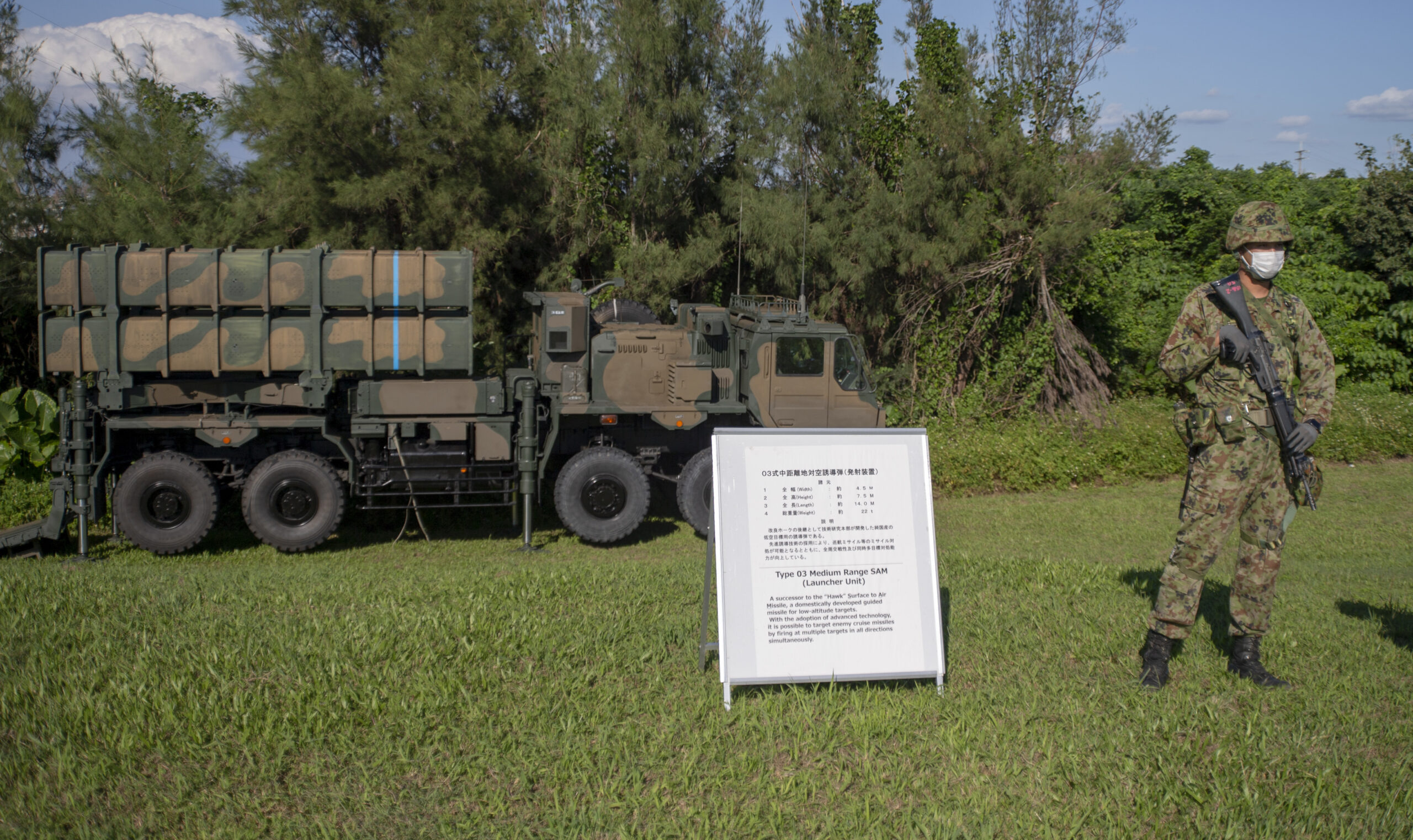
- Japan’s defense minister said the planned Type 03 missile deployment on Yonaguni Island is for defensive purposes and not intended to attack other countries.
- China criticized the plan as escalating regional tension, linking it to recent Japanese comments on Taiwan.
Japan’s Defense Minister Shinjiro Koizumi defended the planned deployment of surface-to-air missiles on Yonaguni Island, calling the move a protective measure aimed solely at strengthening the country’s air defense posture.
His remarks came after Beijing accused Tokyo of escalating regional tensions.
Speaking at a press conference at the Ministry of Defense, Koizumi said the missiles are “equipment intended for defense.” He emphasized that “they are not for attacking another country,” responding directly to China’s claim that the deployment would “deliberately heighten regional tension.”
According to Japanese officials, the Ministry of Defense plans to station the Type 03 medium-range surface-to-air missile system at the Japan Ground Self-Defense Force’s Yonaguni garrison. The system is designed to intercept hostile aircraft and missiles. Yonaguni, located roughly 110 kilometers from Taiwan, has become an increasingly sensitive site amid rising cross-strait tensions and growing Chinese military activity in the region.
Koizumi visited the island on November 23, meeting with Yonaguni Mayor Tsuneo Uechi to seek local understanding for the deployment. According to Japanese media, residents have expressed concerns about both security risks and the island’s growing strategic visibility, as rival powers expand their military posturing in the Western Pacific.
China’s criticism was delivered on November 24, when Foreign Ministry spokesperson Mao Ning described the missile plans as “extremely dangerous,” linking them to recent remarks by Japanese Prime Minister Sanae Takaichi regarding Taiwan. Beijing warned that Tokyo’s stance on the Taiwan question, paired with new defense deployments, would undermine regional stability.
Koizumi rejected that argument, pointing instead to global examples of why enhanced missile defense is necessary. He referenced Russia’s ongoing missile attacks against Ukraine, saying the destruction of power infrastructure demonstrates that “missile defense is an essential capability, and this has been proven again.”
Japan’s defense chief said Tokyo would maintain dialogue with Beijing despite the dispute. “We will continue steady and candid discussions and communication between our defense authorities,” he said, adding that Japan seeks to prevent misunderstandings even as it expands its defensive readiness in the country’s southwest.
The planned deployment is part of a broader Japanese effort to reinforce its southwestern islands, including Okinawa and the Nansei chain, where the government has added radar stations, missile units, and new garrisons over the past decade. These locations sit along key routes used by Chinese naval and air forces entering the Pacific.
Japan argues the missile units are a response to China’s expanding military presence around Taiwan and the Senkaku Islands, which Tokyo administers but Beijing claims as its own. Chinese military aircraft and maritime patrols have grown in frequency, prompting routine scrambles by Japan Air Self-Defense Force fighter jets.
The Ministry of Defense says the Yonaguni deployment will strengthen the country’s ability to intercept incoming threats and protect critical infrastructure across the Nansei region.