


The pride of Russia’s defense industry—a much-advertised “next-generation” combat robot once showcased by Defense Minister Sergei Shoigu and personally praised by Vladimir Putin—has become one of the most embarrassing failures in Moscow’s military modernization campaign.
The multi-million-dollar Uran-9 program, hailed as a leap into the future of robotic warfare, was presented in 2016 as a breakthrough in unmanned ground systems. Russian state media at the time promised that the country’s armed forces would soon receive 20 advanced robotic combat complexes armed with anti-tank missiles, automatic cannons, and machine guns.
The Uran-9, produced by Rostec State Corporation, was introduced as a remotely controlled “mini-tank” that could operate without endangering soldiers.
The Uran-9 was designed as a tracked unmanned combat ground vehicle (UCGV) equipped with a 30 mm 2A72 automatic cannon, a coaxial 7.62 mm machine gun, and several 9M120 Ataka anti-tank guided missiles. The vehicle also carries a complex suite of optics and targeting systems, including thermal imaging and a laser designator.
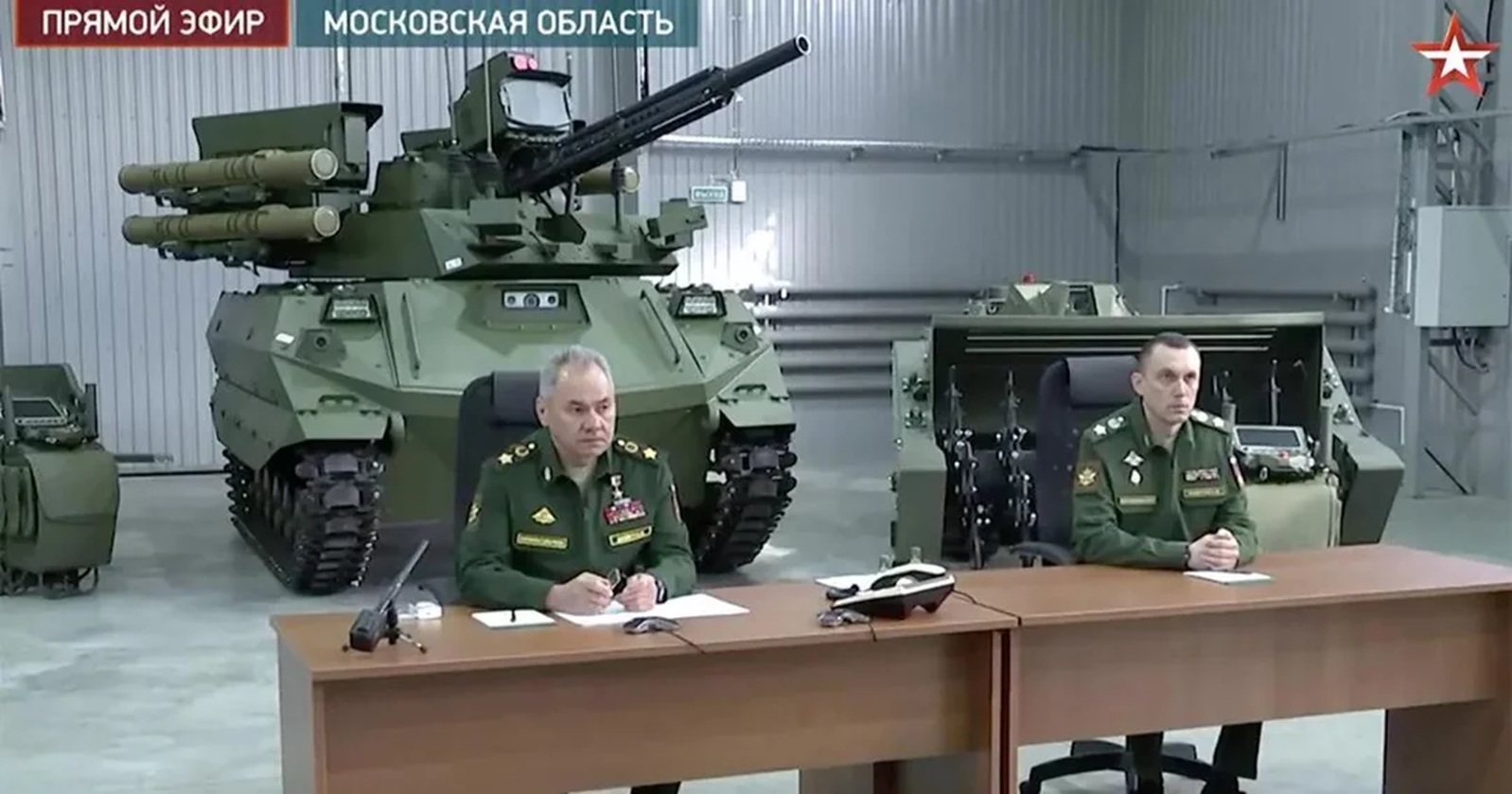
It was heavily promoted in Russian media as a platform that could replace traditional tanks and infantry fighting vehicles in the most dangerous combat zones. In 2019, despite widespread doubts, the Russian Ministry of Defense officially accepted the Uran-9 into service—even after its disastrous performance during combat trials in Syria.
At the 10th All-Russian Scientific Conference “Actual Problems of Protection and Security” held from April 3–6, 2018, at the N.G. Kuznetsov Naval Academy in St. Petersburg, Senior Research Officer A.P. Anisimov of the 3rd Central Research Institute of the Russian Defence Ministry presented a detailed report on the Uran-9’s performance in Syria.
According to Anisimov, the Uran-9 was “not capable of performing the assigned tasks.” During combat operations, the average effective control range from the forward command post was only 300–500 meters in urban areas with low-rise buildings. There were 17 cases of short-term loss of control (up to one minute) and two instances of long-term loss of control (up to 1.5 hours).
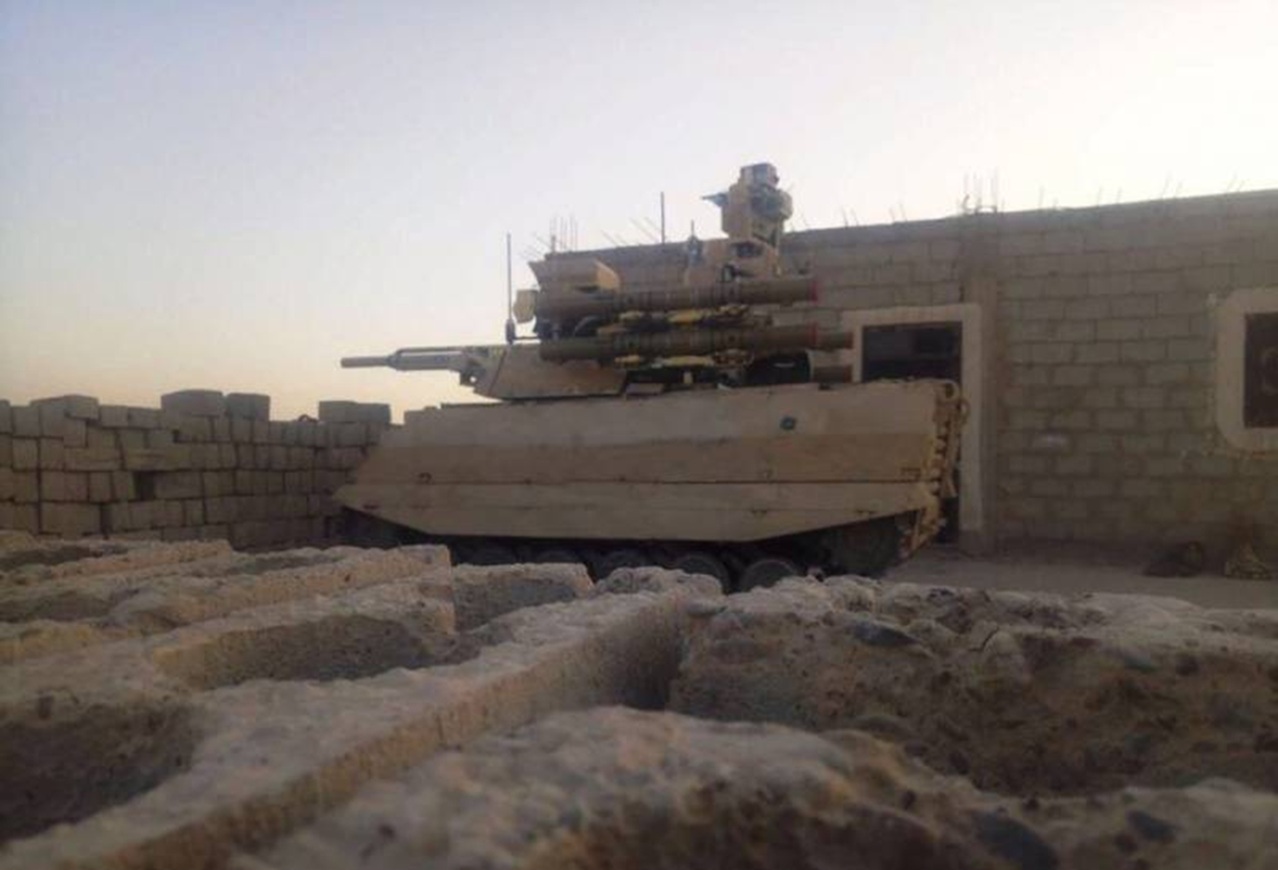
The trials also exposed major mechanical issues. The suspension, support rollers, and track components proved unreliable, forcing repeated field repairs. The chassis could not sustain long-term combat operations without breakdowns.
Tests of the reconnaissance systems showed that the electro-optical sensors could detect and identify targets at a distance of no more than 2 kilometers. The OCH-4 optical station failed to identify enemy observation and targeting devices and frequently generated false signals from terrain and airspace clutter.
Weapons performance was equally poor. The 30 mm 2A72 cannon experienced six delays and one complete failure, and the system was unable to fire while moving because its weapons and sensors lacked stabilization. “Modern Russian combat unmanned ground vehicles are not yet able to perform assigned tasks in conventional combat operations,” Anisimov concluded.
Despite the disastrous results, Russian officials insisted that the problems had been fixed and claimed a “new version” of the Uran-9 was entering serial production. The vehicle was even offered for export to Saudi Arabia, India, the UAE, and Serbia. Among potential customers, Myanmar came closest to a deal.
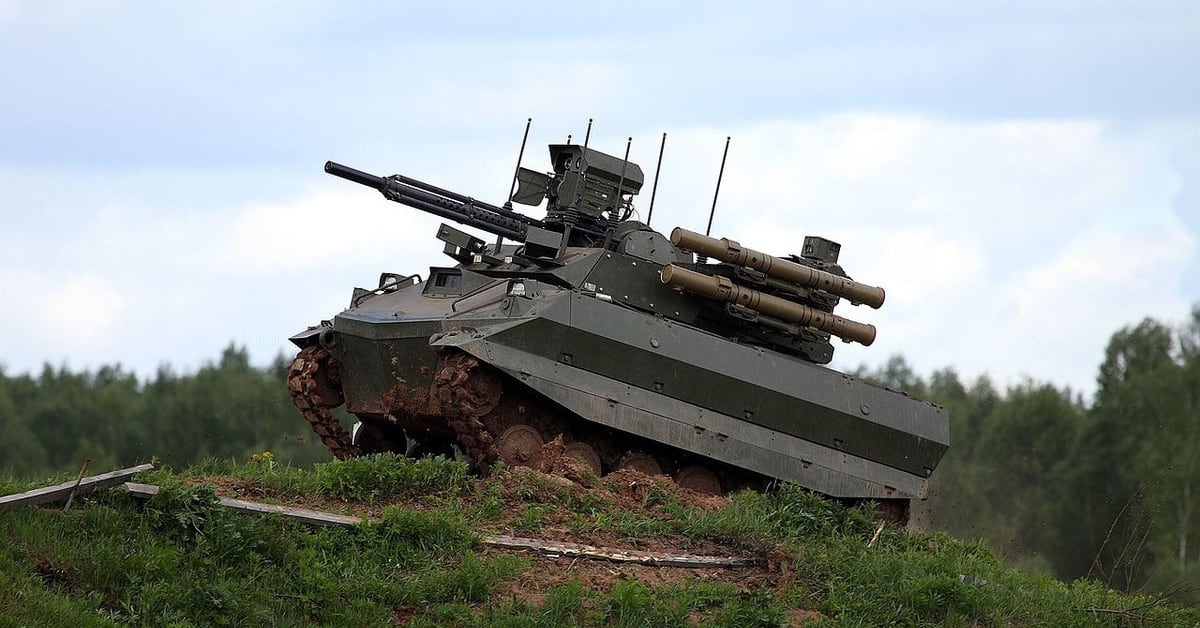
Myanmar’s Commander-in-Chief of Defence Services, Senior General Min Aung Hlaing, visited Russia and personally observed a demonstration of the Uran-9 complex. However, after evaluating its performance, Myanmar’s military decided to reject the offer—even with what Russian negotiators described as a “partner discount” and the possibility of trading older T-34 tanks. The tanks were later exchanged for other military equipment instead.
Western defense analysts were equally skeptical. Britain’s largest defense contractor, BAE Systems, examined Russian unmanned ground vehicles in a series of analytical reports. According to BAE Systems, Russia’s modern combat drones “face serious shortcomings.”
The report specifically analyzed the Uran-9 and concluded that it was “unreliable.” Its thermal and electro-optical sensors failed to detect targets beyond 1.25 miles. The report added that its sensors and weapon systems were “useless while the Uran-9 was moving due to a lack of stabilization,” and that the vehicle suffered “significant delays” when executing fire commands.
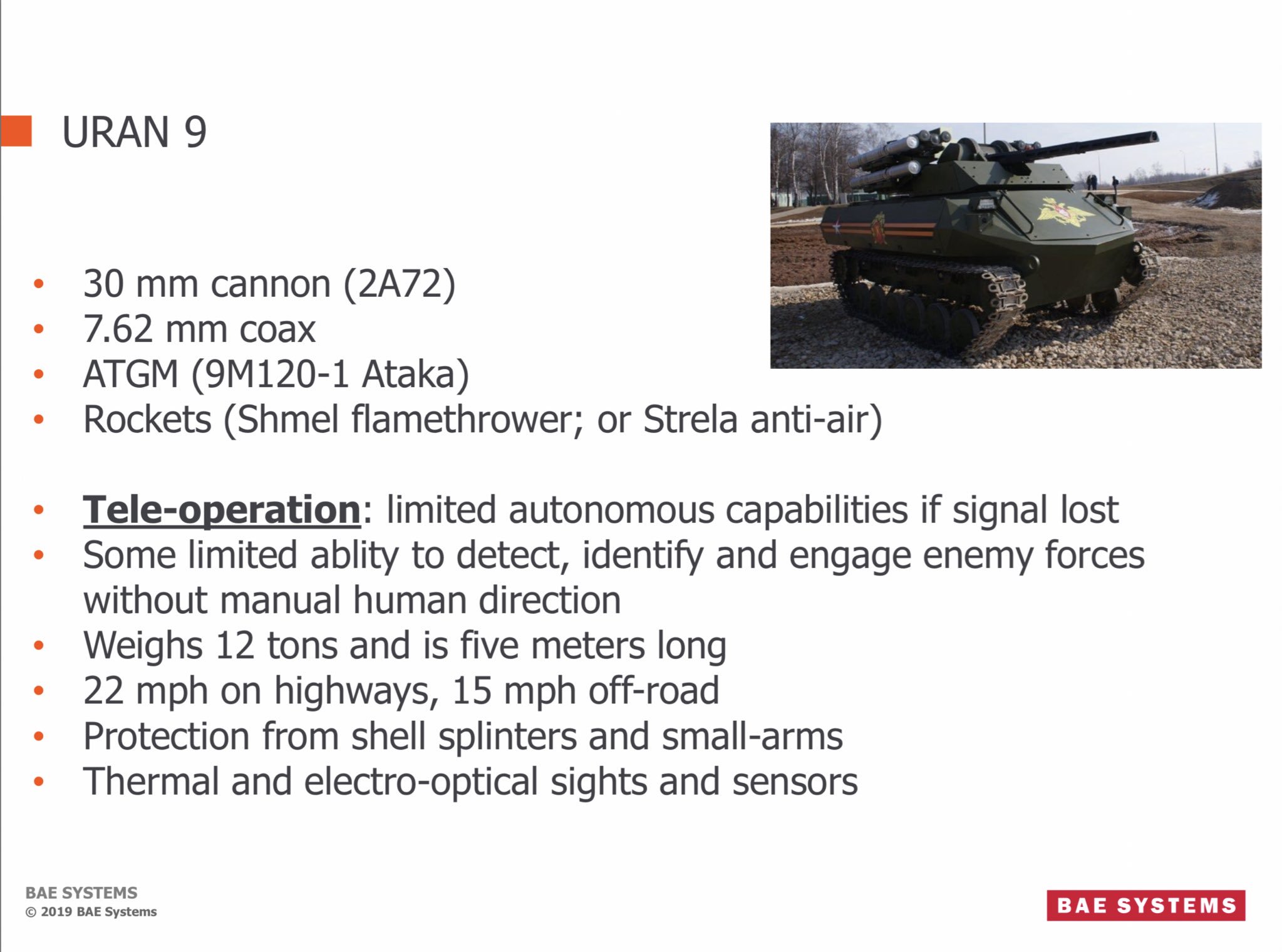
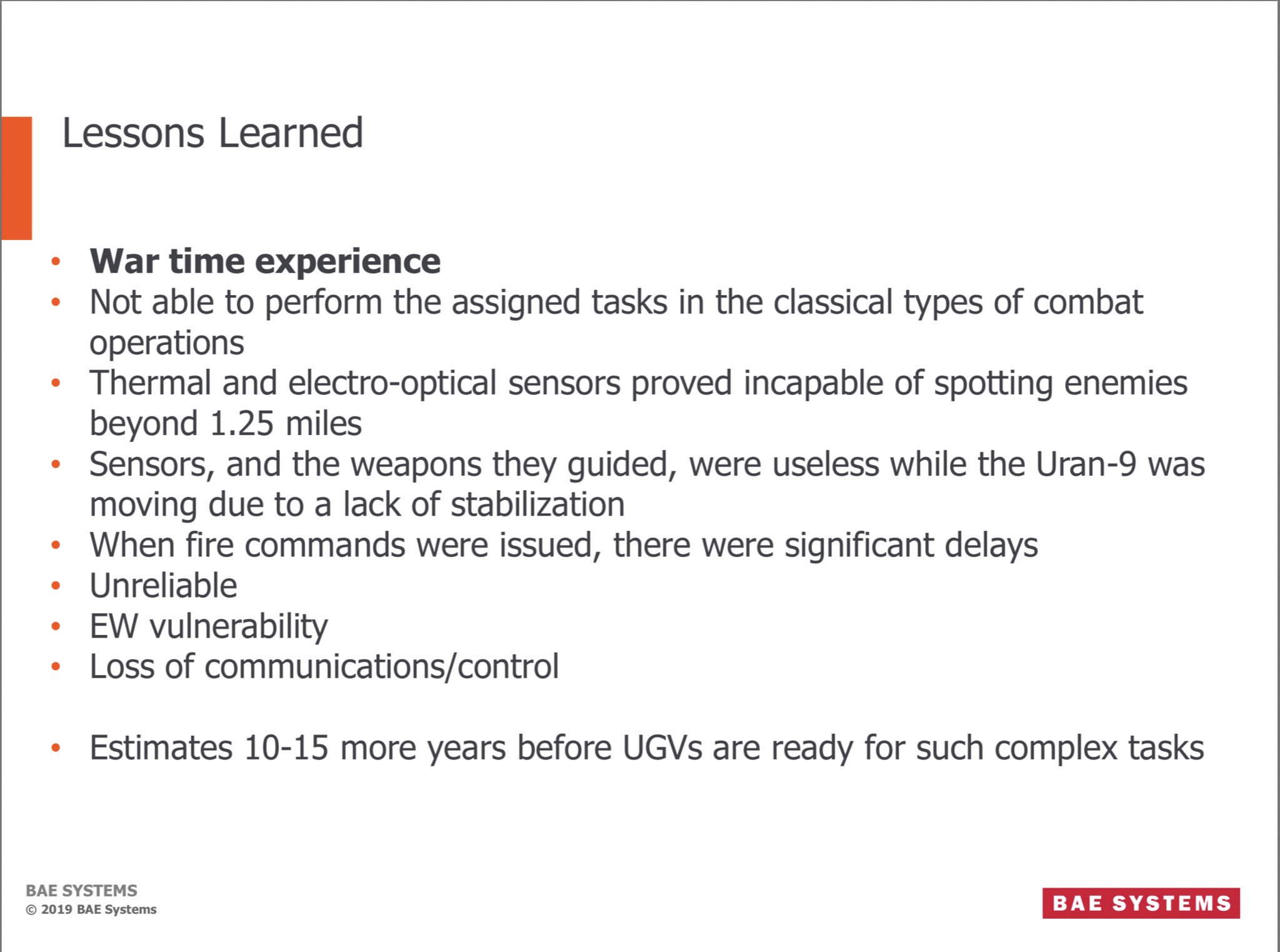
BAE Systems’ assessment echoed Anisimov’s findings, noting that the Uran-9 was far from being a practical or export-ready combat system.
Notably, during Russia’s full-scale invasion of Ukraine, the Uran-9 has never been seen in combat. Despite years of development and official claims of serial production, the system has not appeared on the front lines.
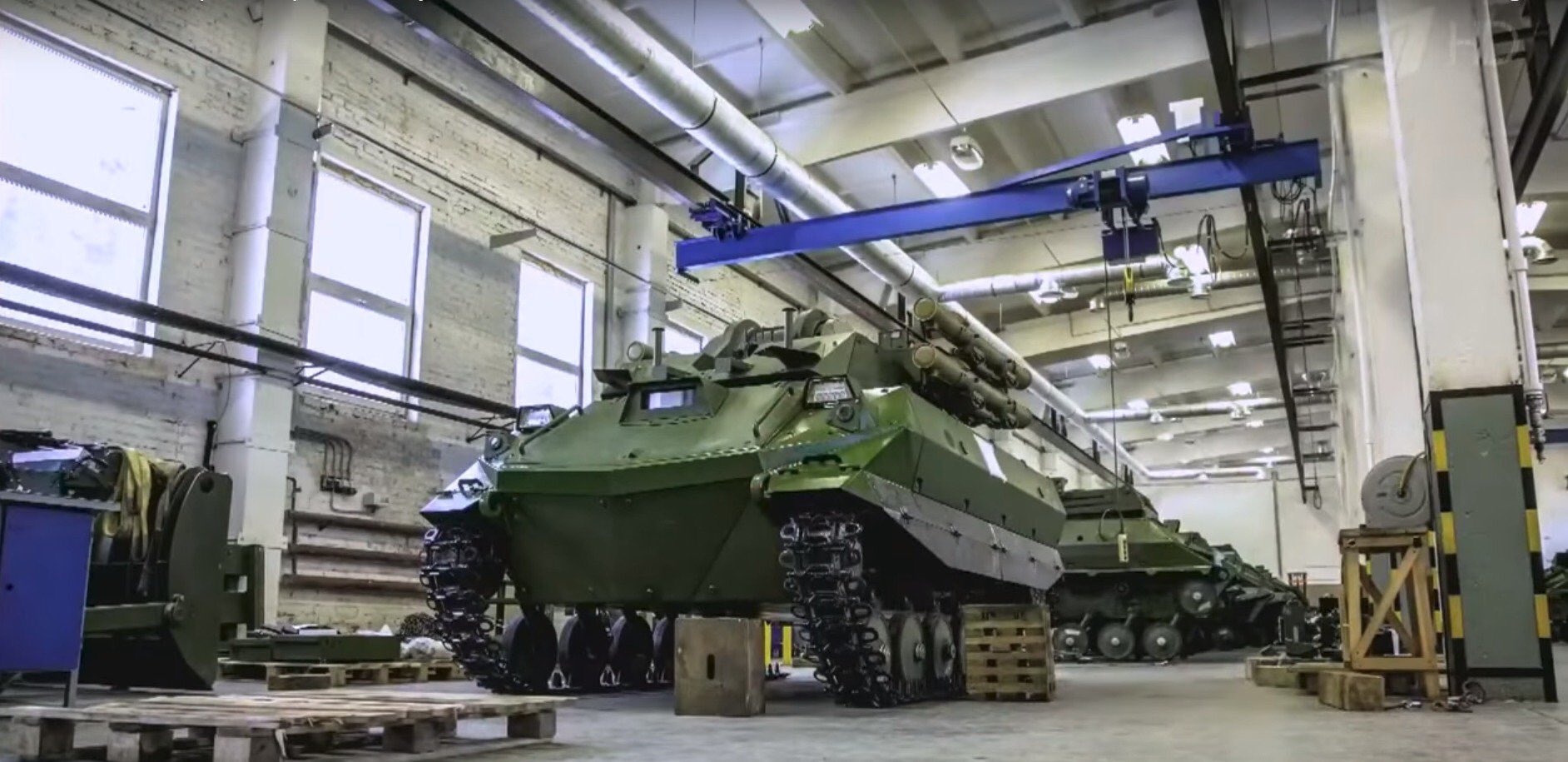
Instead, Russian forces rely on improvised unmanned ground platforms—so-called “garage-made” robots built by volunteer engineers and enthusiasts in small workshops. These lightweight UGVs, such as the “Courier” robot, are now being adapted for limited production and tested in Ukraine.
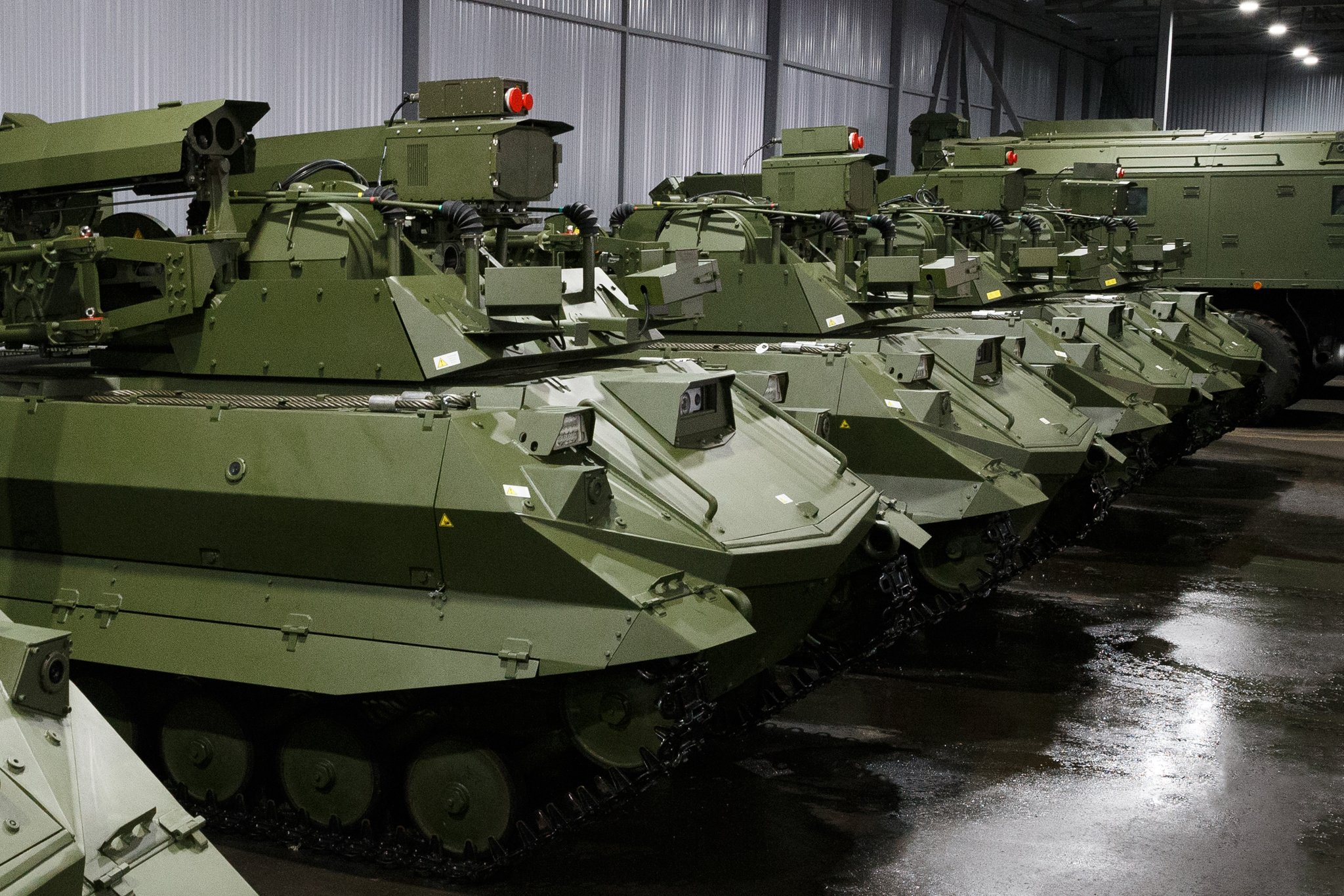
The long-running Uran-9 program, which has consumed billions of rubles over the past decade, remains an expensive symbol of unfulfilled promises and propaganda. Once showcased as proof of Russia’s technological superiority, the Uran-9 has instead become a case study in failure—a reminder that in the race for autonomous warfare, ambition alone cannot replace engineering reality.