

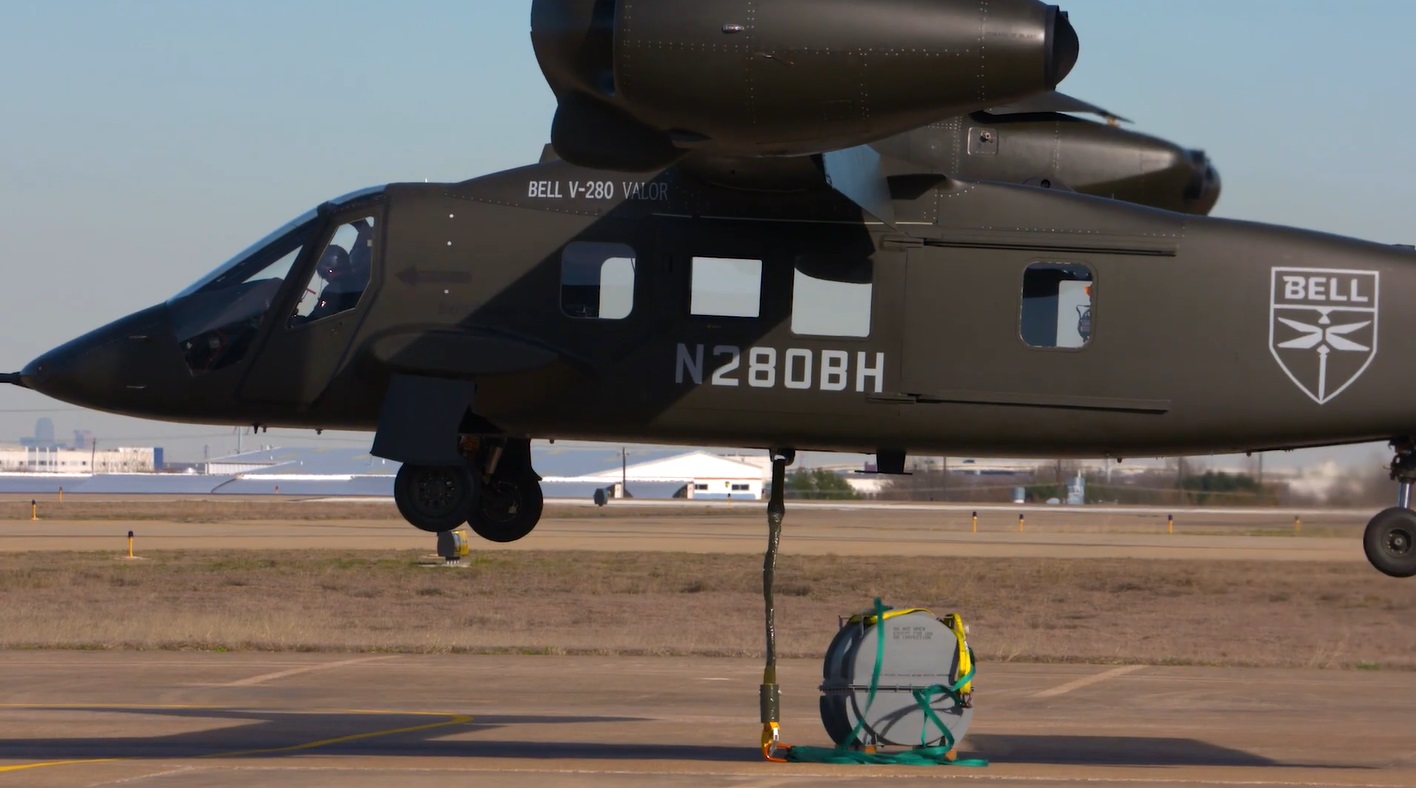
The U.S. Army has designated the 101st Airborne Division as the first unit to receive the new MV-75 tiltrotor aircraft, a next-generation platform set to replace the UH-60 Black Hawk as part of the Army’s Future Vertical Lift (FVL) program.
The MV-75, developed by Bell and Lockheed Martin and based on the V-280 Valor prototype, is designed to fly faster and farther than any current rotorcraft in the Army’s inventory.
According to the Army, the aircraft can exceed speeds of 320 miles per hour and carry up to 14 troops into combat, with the capability to extract casualties on return missions.
“This aircraft changes how we move forces — it changes the geometry of ground combat,” said Gen. James Mingus, the Army vice chief of staff.
Although the MV-75 will not enter operational service with the 101st until 2030, Army officials hope acquisition reforms announced last month by Defense Secretary Pete Hegseth could bring that date forward.
“The Army must transform at an accelerated pace,” Hegseth said, underscoring a broader shift away from manned helicopters toward uncrewed aerial systems.
Initiated in 2009, the FVL program aims to modernize the Army’s air fleet and eventually replace several aging platforms, including the Black Hawk, Apache, Chinook, and Kiowa.
While the MV-75 program moves forward, not all FVL efforts have fared well. The Pentagon canceled the Future Attack Reconnaissance Aircraft (FARA) earlier this year after spending $2 billion, citing lessons learned from the war in Ukraine and the growing effectiveness of cheap drones against crewed aircraft.
Despite progress, the Black Hawk remains the Army’s mainstay for combat operations, rescue missions, and logistics.
“The Black Hawk today is something like the Huey in the old Vietnam days — everybody has been in it, knows it, trusts it,” said Chief Warrant Officer 5 Barry Sledd of the 7th Infantry Division.
The MV-75, however, represents a shift in doctrine and capability that could define Army aviation for the coming decades.