

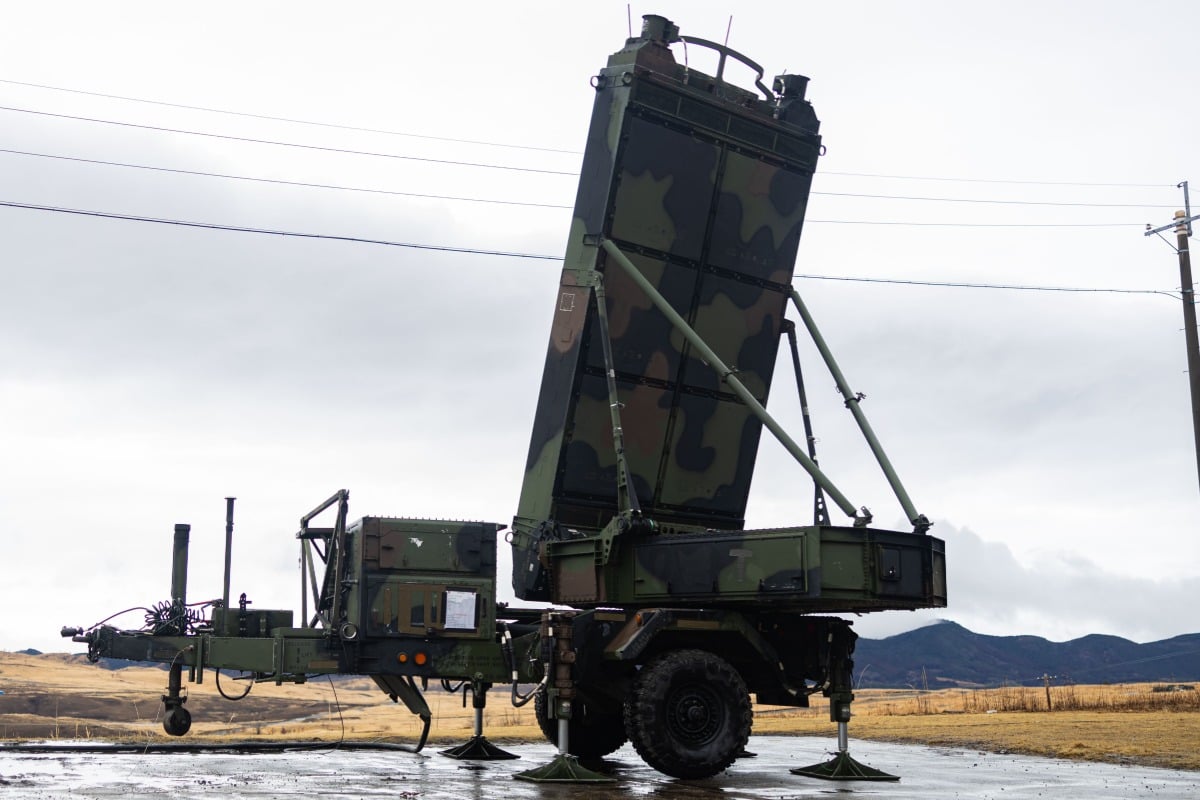
- Northrop Grumman has delivered more than 40 AN/TPS-80 G/ATOR radar systems to the U.S. Marine Corps and U.S. Air Force, with 60 total contracted through 2029.
- G/ATOR combines five radar functions into one mobile AESA system and is in full-rate production with capacity to meet international demand, Northrop Grumman says.
More than 40 of Northrop Grumman’s most advanced ground radar systems are already in the hands of U.S. Marines and airmen, and the company is pushing the system hard to international buyers as demand for mobile, multi-mission air defense sensors surges worldwide.
Northrop Grumman published a capability overview on June 4, highlighting the operational status and international availability of the AN/TPS-80 Ground/Air Task-Oriented Radar, universally known as G/ATOR. The company is under contract to deliver a total of 60 systems to the U.S. Marine Corps and U.S. Air Force through 2029, with more than 40 already delivered. Northrop says it is in full-rate production and has capacity to expand output to meet growing international demand.
The G/ATOR’s defining characteristic is consolidation. Where previous generations of ground-based military radar required separate systems for air surveillance, air defense, fire control, counter-battery, and short-range threat detection, G/ATOR performs all five functions simultaneously from a single mobile platform. That integration matters enormously to commanders managing the logistics and footprint of a deployed force. Every radar system requires a vehicle to move it, trained operators to run it, spare parts to sustain it, and a communications network to connect it. A single system that replaces five separate ones does not simply reduce weight on paper — it compresses the support tail, shrinks the number of targets an adversary can strike to degrade radar coverage, and frees manpower for other tasks. The Marine Corps, which operates in expeditionary environments where every kilogram of equipment has a cost, was among the earliest and most committed customers for exactly that reason.
The radar uses an Active Electronically Scanned Array, or AESA, architecture. Unlike older mechanically rotating radar dishes that sweep a beam around by physically turning, an AESA antenna steers its beam electronically, redirecting transmitted energy in milliseconds without any moving parts. That gives G/ATOR the ability to track multiple targets simultaneously across a full 360-degree field of view while also executing fire control calculations for specific threats, all at the same time. The practical result is a radar that can watch the entire sky, hand targeting data to missile batteries, and update its threat picture continuously without the gaps in coverage that a rotating antenna creates between sweeps. AESA radars are also harder to jam than their mechanically scanned predecessors, because their frequency agility, the ability to shift operating frequencies rapidly and unpredictably, makes it difficult for an adversary’s electronic warfare systems to lock onto and suppress the signal.
G/ATOR’s mobility credentials are central to its appeal for both the Marine Corps and the Air Force. The system is designed for rapid set-up and pack-down, transportable by aircraft, helicopter, or truck, which means it can move with a force that is displacing under pressure rather than becoming a fixed target that an adversary can locate, target, and strike. That survivability through mobility has become a more urgent design requirement since Russia’s campaigns in Ukraine demonstrated the vulnerability of static air defense and radar emitters to precision long-range strikes. Ukrainian air defense forces have had to develop tactics built around constant movement of their radar and missile systems precisely because stationary emitters, once detected, attract cruise missiles and anti-radiation weapons within hours. A radar that can relocate quickly and resume operation rapidly is inherently more survivable than one that requires hours to disassemble and reposition.
The expanding counter-drone mission is the sharpest edge of G/ATOR’s current relevance. The radar’s enhanced threat response capabilities are specifically noted by Northrop Grumman to include uncrewed systems, reflecting the hard lesson that the same radar architecture designed to track fast jets and cruise missiles now needs to reliably detect and track small, slow, low-altitude drones operating in cluttered environments where radar returns from buildings, terrain, and birds create constant false-alarm challenges. The AESA architecture and advanced signal processing that G/ATOR brings to the traditional air defense mission also make it more capable in the counter-drone role than older single-mission systems that were never designed with that threat in mind.
The Marine Corps has been the primary U.S. operator, with G/ATOR replacing the legacy AN/TPS-59 long-range surveillance radar and AN/MPQ-62 Sentinel systems that the service previously relied upon for ground-based air defense. The Air Force has also taken deliveries, using the system to extend expeditionary air base defense capabilities. Both services have integrated G/ATOR into their broader air defense architectures, connecting its fire control outputs to missile systems including the National Advanced Surface-to-Air Missile System, known as NASAMS, and other short to medium-range interceptors.
With 40-plus systems delivered, a firm contract for 60 total through 2029, and full-rate production underway, Northrop Grumman is positioning G/ATOR not as a developmental program but as a mature, available product for international customers who need a capable mobile radar without the multi-year wait that a new development program would entail. NATO members who have been accelerating air defense investment since 2022, and Indo-Pacific partners facing expanding aerial threat inventories, represent the most obvious potential customer base.