

- NATO allies announced more than $50 billion in new defense procurement deals at the July 2026 Ankara summit's Defense Industry Forum.
- Separately, 20 NATO members committed to a five year, $40 billion counter drone investment program called the Drone Edge initiative.
NATO leaders wrapped up their summit in Ankara, Turkey, in July 2026 having announced more than $50 billion in new defense procurement deals, covering everything from precision strike weapons to air and missile defense systems, according to the alliance’s own summit declaration. Alongside that headline figure, member states also committed to a five-year, $40 billion investment in counter-drone technology, a push covering detection systems, jamming equipment and the hardware needed to physically knock hostile drones out of the sky. Twenty NATO member states signed on to that program, known as the Drone Edge initiative, according to NATO Secretary General Mark Rutte.
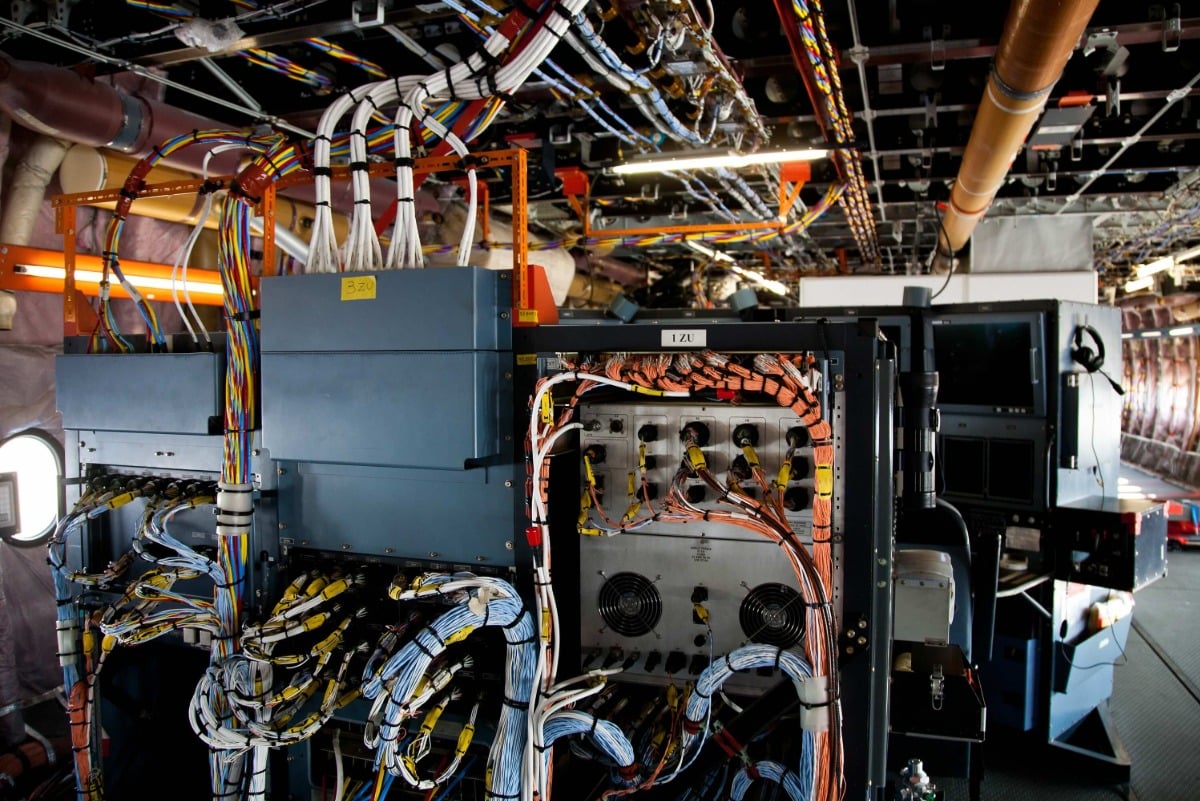
Those numbers sound abstract until you follow them down to the factory floor. Every one of those procurement deals eventually turns into a production order, and every production order for a modern military platform runs on qualified electrical components, the wire, cable and connectors that carry power and data through drones, missile systems, armored vehicles and aircraft. That is where the defense industrial buildup is running into a bottleneck that gets far less attention than contract values or delivery dates, according to Ryan Barnhart, senior supply chain director at WireMasters, a wire, cable and interconnect specialist that supplies military manufacturers.
Barnhart’s warning centers on a detail of defense manufacturing that most people outside the industry never encounter: qualification. Before a wire or cable can be used in a military platform, it has to be tested and formally approved for that specific application, a process that can involve extensive engineering review and documentation. Once a component earns that approval, swapping it out for something else, even a nearly identical part from a different supplier, is not a simple substitution. It triggers a fresh round of engineering review, updated documentation and customer sign off, and for some products, getting a new component through that process can take between 12 and 24 months. That timeline matters enormously when a defense program suddenly needs to scale production and its approved supplier cannot keep pace.
The products under the most strain tend to be the most specialized ones. High temperature aerospace wire and ruggedized harness management gear, the kind of components that protect wiring bundles from heat, vibration and chafing inside aircraft and combat vehicles, rely on specialist materials and military-grade qualifications, and only a limited number of manufacturers are approved to produce them. When several defense programs ramp up output at the same time, as they are now doing across NATO and allied markets, that narrow supplier base cannot simply expand overnight to match demand.
NATO has explicitly tied its buildup to a shift toward more electronically complex systems, the sensors, autonomous platforms and networked equipment that increasingly define modern warfare. NATO stated that the alliance’s investment plan is meant to deliver the “forces, capabilities, resources, infrastructure, warfighting readiness and resilience” needed to strengthen deterrence and defense, and the alliance has separately noted that emerging technology is reshaping conflict itself, pointing to “emerging and disruptive technologies like artificial intelligence, autonomous systems, biotech and quantum technologies” as forces changing the character of modern combat. Systems built around those technologies typically require more shielded data and power cabling to handle denser, more sensitive electrical architectures than older platforms needed, adding another layer of demand onto an already strained supply base.
None of this emerged overnight. NATO members agreed at the 2025 summit in The Hague to invest 5 percent of GDP annually in core defense and security related spending by 2035, split between at least 3.5 percent for core military requirements and up to 1.5 percent for areas like critical infrastructure and defense industrial capacity. European allies and Canada have already increased core defense investments by more than $139 billion since that pledge was made, according to NATO’s own summit materials, and the Ankara summit marked the moment that spending commitment started converting into signed contracts at scale. The Lockheed Martin and Rheinmetall agreement to jointly produce ATACMS missiles in Germany, announced during the same forum, is one example of a deal that will eventually generate exactly the kind of interconnect demand Barnhart is describing, since every missile manufactured under that partnership will need its own qualified wiring harness.
Supply chain risk in this sector extends beyond the core wire and cable products themselves. Connector accessories, backshells and shielding materials all have to come together to complete a finished harness assembly, and price swings in metals like copper, silver, gold and nickel can slow deliveries just as effectively as a qualification bottleneck can. Incomplete paperwork carries similar weight in an industry where documentation failures can leave otherwise usable materials stuck in inspection or barred from inventory entirely. Distribution partners can help absorb some of that pressure through demand planning and value added services like kitting and cable preparation, delivering materials to manufacturers in a production ready format rather than raw stock that still needs processing.