


- Axon Vision and ParaZero Technologies announced an integrated counter-drone system on July 27, 2026, in Tel Aviv, Israel.
- The configuration combines Axon Vision's ForceField detection platform with ParaZero's DefendAir net-based interceptor for non-destructive drone takedowns.
Axon Vision, an Israeli defense technology company based in Tel Aviv, announced Monday that it has teamed up with ParaZero Technologies, an Israeli firm based in Kfar Saba, to build an integrated counter-drone system aimed at protecting critical infrastructure sites where blowing an incoming drone out of the sky simply isn’t an option.
The new configuration combines Axon Vision’s ForceField system, an Edge AI powered detection and response platform the company introduced just weeks earlier on July 16, with ParaZero’s DefendAir, an autonomous interceptor that brings down hostile drones using a physical net instead of an explosive charge.
The distinction between those two approaches matters enormously depending on where a drone is trying to attack. ForceField in its original form was built to protect maneuvering military forces, meaning troops, vehicles and convoys on the move, and it does that through a kinetic response, essentially using standard weapons and ammunition to physically strike incoming threats rather than relying on a dedicated interceptor system, according to Axon Vision’s original product announcement. That works fine on a battlefield where a downed drone falling out of the sky poses limited additional risk.
It works far worse over an airport runway, an energy facility, or a crowded public building, where a hard kinetic intercept can send debris, unexploded ordnance or a falling drone straight into the exact people and infrastructure the system is supposed to protect. That gap is precisely what the ParaZero partnership is designed to close, extending the ForceField family into what the companies describe as operational environments where non-destructive interception is preferred, including airports, homeland security sites and other sensitive locations.
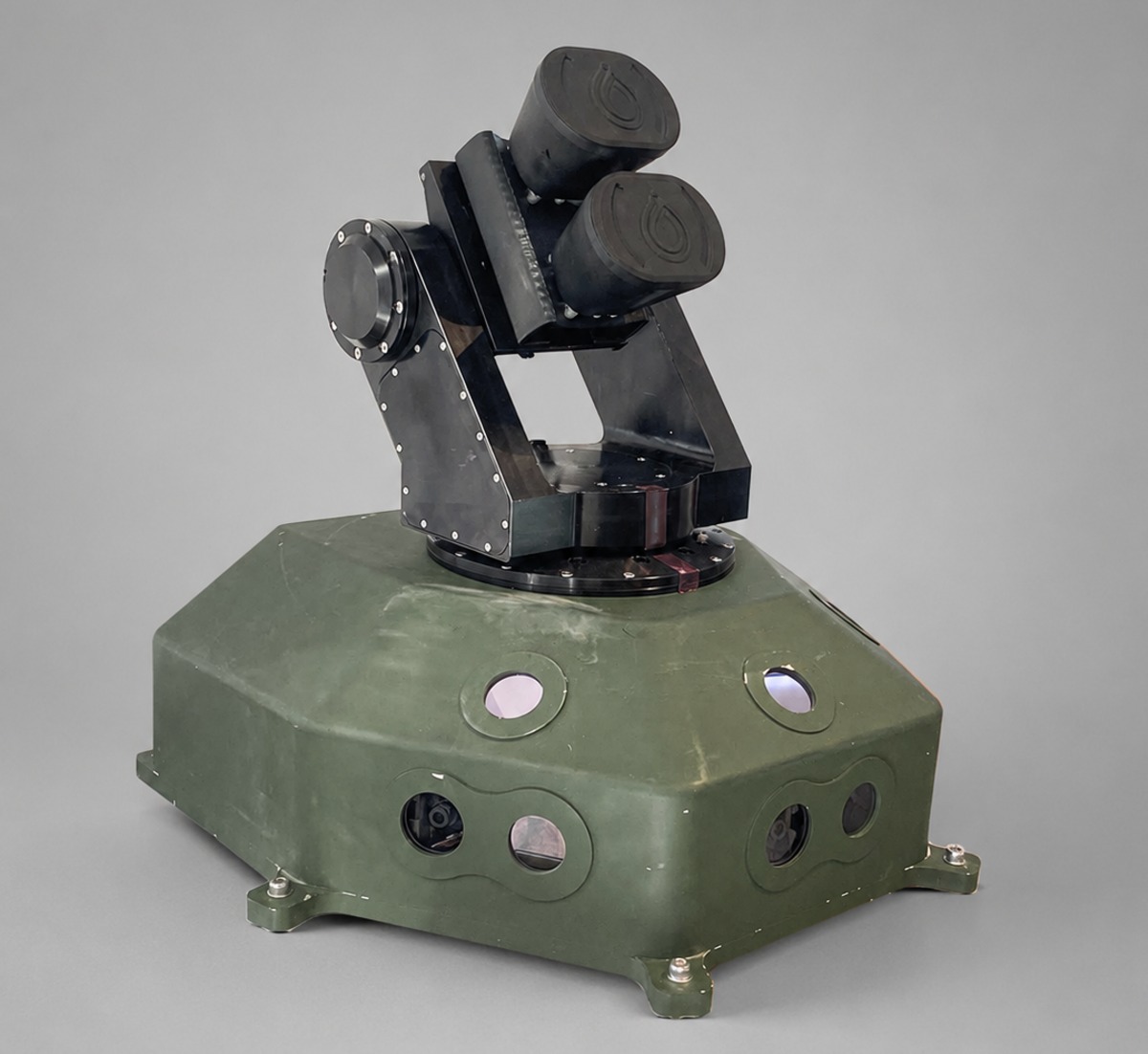
ParaZero’s system detects an incoming drone and fires a weighted net designed to entangle the target’s rotors or control surfaces, bringing it down intact rather than destroying it midair, an approach the company has spent recent months proving out against increasingly difficult targets. In February 2026, ParaZero said it achieved the first successful net based interception of a drone moving at 70 mph (113 km/h) during internal live testing, demonstrating the system’s ability to handle fast, close-range threats like first person view attack drones rather than just slow moving hobbyist aircraft. The company has also shown DefendAir can bring down far larger targets, successfully intercepting a DJI FlyCart, a heavy lift commercial drone capable of carrying substantial cargo, a capability that matters as delivery-style drones become a more common tool for smuggling contraband or hostile payloads near sensitive sites.
Bringing DefendAir into the ForceField architecture required more than a simple product bundling exercise. ForceField operates on what Axon Vision calls a Detect, Understand, Respond cycle, using passive electro optical sensors, meaning cameras and imaging systems that don’t emit any signal that could reveal the location of the asset being protected, combined with AI driven threat analysis and a human operator kept in what the industry calls a Man on the Loop role, someone who authorizes engagement decisions rather than the system acting entirely on its own. The integrated configuration slots DefendAir’s net based interception directly into that same detect and decide workflow, so operators protecting an airport or power plant use the identical decision-making process as troops in the field, just with a different, non-lethal method of actually stopping the threat once a response is authorized. Axon Vision and ParaZero said they validated that interoperability during a recent trial campaign in Israel, testing the combined system under what the companies described as operationally representative conditions.
Neri Zin, CEO of Axon Vision, framed the collaboration as proof of the platform’s underlying design philosophy.
“ForceField was designed from day one as an open and modular operational architecture, rather than a single product configuration. Different operational environments require different engagement capabilities. Our collaboration with ParaZero demonstrates how the same ForceField architecture can support complementary interception options while maintaining the same Edge AI core and operational workflow. This approach allows us to address a broader range of operational requirements while continuing to build the ForceField family around a common technology foundation,” said Neri Zin, CEO of Axon Vision.
Ariel Alon, CEO of ParaZero Technologies, pointed to the growing urgency behind the partnership.
“The integration of DefendAir with ForceField brings together two highly complementary technologies to address one of today’s fastest-growing security challenges. Together, we are expanding the range of operational environments that can benefit from advanced Counter-UAS capabilities, providing customers with an effective non-destructive interception option for protecting critical infrastructure, airports, energy facilities, homeland security assets and other sensitive sites,” said Ariel Alon, CEO of ParaZero Technologies.
ParaZero disclosed just three days earlier, on July 24, that a third separate business unit within an unnamed Tier 1 Israeli based global defense company had placed its own order for DefendAir Net Pods, on top of an earlier framework agreement announced in April under which another Tier 1 international partner committed to purchasing a minimum of 2,000 customized Net Pod units. Axon Vision, for its part, has been building out ForceField’s reach into the American market through an expanding relationship with Leonardo DRS, a major U.S. defense contractor, positioning the newly expanded ForceField family to compete for both battlefield protection contracts and the fast growing market for defending airports, power grids and other civilian infrastructure against the same low cost drone threats that have already reshaped modern combat.
What this partnership ultimately signals is a shift in how the counter-drone industry is thinking about its own market. A tool built to save soldiers’ lives on a battlefield and a tool built to protect a runway or a substation used to belong to entirely separate product categories, sold to entirely separate customers. Folding a non-explosive interceptor directly into a military grade detection and decision architecture suggests that line is starting to disappear, and that the companies building these systems expect the next wave of drone threats to arrive just as often over a city as over a front line.