


- Japan and the UK conducted Exercise Vigilant Isles 25 in Hokkaido from November 5 to 20, including their first joint airborne drop in Japan.
- The training involved the JGSDF’s 1st Airborne Brigade, the Amphibious Rapid Deployment Brigade and British paratroopers from 2nd Battalion, The Parachute Regiment.
The Japan Ground Self-Defense Force (JGSDF) and the British Army completed Exercise Vigilant Isles 25 in Hokkaido, conducting expanded training that included the first-ever joint Japan–UK airborne drop on Japanese territory.
The exercise ran from November 5 to November 20 and brought together Japanese airborne and amphibious forces with British paratroopers from the 2nd Battalion, The Parachute Regiment.
According to an official JGSDF announcement, “From November 5 to November 20, the Japan Ground Self-Defense Force conducted the live-fire exercise ‘Vigilant Isles 25’ with the British Army in Hokkaido.”
The statement added that this year’s training represented a major step forward, noting: “This fiscal year, for the first time in Japan, a Japan–UK joint airborne drop was conducted, and with participation from the Amphibious Rapid Deployment Brigade, the content of the exercise was expanded to improve operational capabilities related to counter-landing operations.”
JGSDF also highlighted the broader diplomatic and military importance of the event, stating: “The exercise promoted mutual understanding and trust with the United Kingdom and other European countries.”
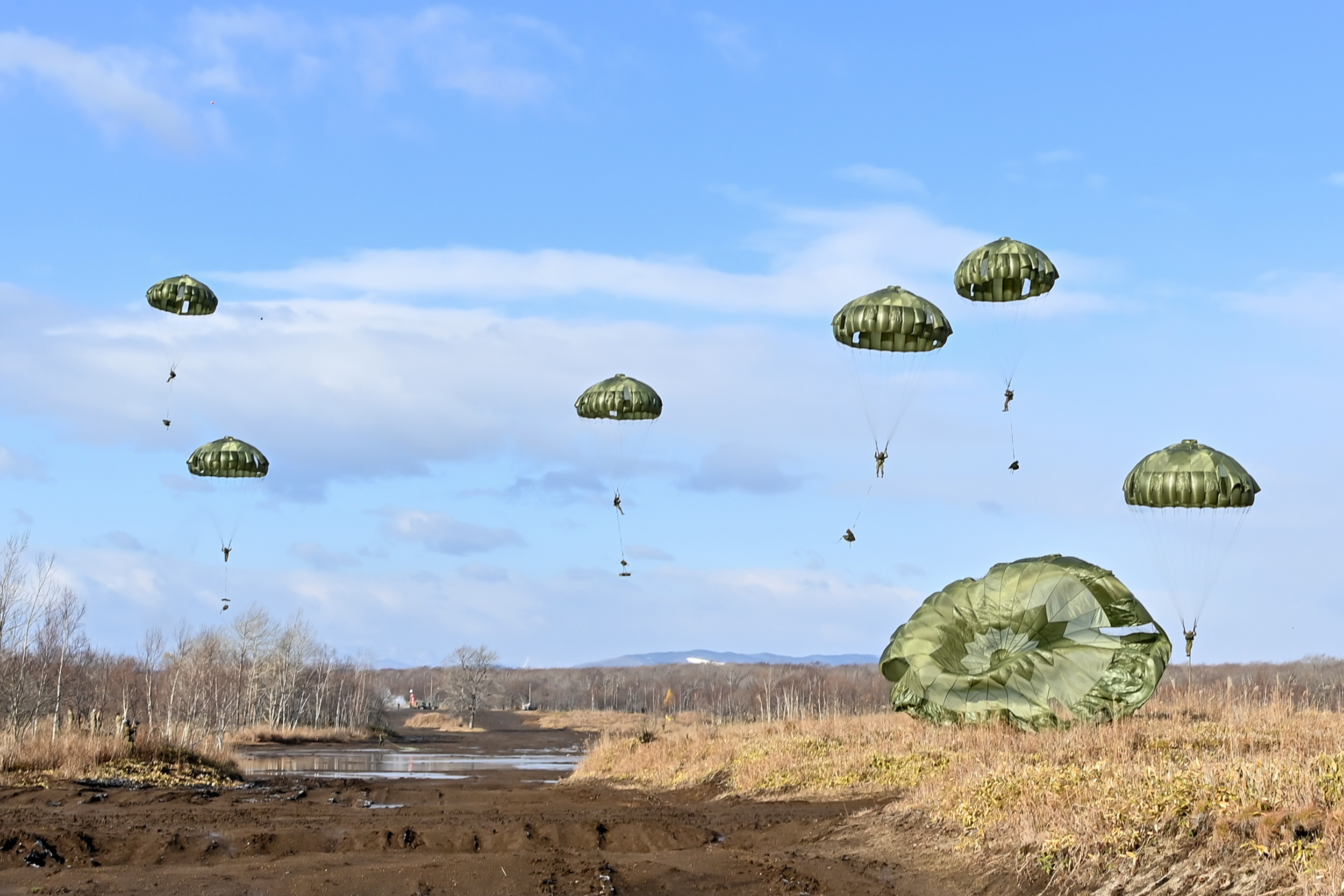
During the exercise, British Airborne soldiers from 2nd Battalion the Parachute Regiment trained with Japan’s 1st Airborne Brigade in Enami. The British contingent conducted parachute jumps using Japanese parachutes for the first time, and both sides carried out joint drills to understand each other’s equipment, procedures and tactics. As noted in the description, “British troops jumped using Japanese parachutes, and the two nations’ troops got to know each other’s equipment and tactics.”
The training in Hokkaido focused on counter-landing operations—missions designed to prevent hostile forces from conducting amphibious assaults or seizing critical terrain. Japan’s Amphibious Rapid Deployment Brigade, which specializes in defending remote islands and conducting coastal operations, joined the exercise to expand cooperation with British airborne units.
Exercise Vigilant Isles is a recurring bilateral event, but the 2025 iteration marked the largest and most complex version to date, with new components and deeper integration between airborne and amphibious formations.