

- Estonian company Vegvisir is launching a Communications Module at Eurosatory 2026, Hall 6 J119, June 15-19, with automatic multi-network failover and its first European customer contract already secured.
- Vegvisir solutions are tested or deployed in nine countries including Australia, the UK, and the USA; the Australian Army is the company's largest customer, using Vegvisir in unmanned M113 experiments.
An Estonian defense technology startup is launching a communications module designed to keep military drones and unmanned vehicles connected when adversaries are actively trying to cut those links, set to debut the product at Eurosatory 2026 in Paris from June 15 to 19 alongside a major expansion of its battlefield command platform to cover air, maritime, and underwater operations.
Vegvisir, a defense technology company based in Estonia, announced the Communications Module ahead of its Eurosatory debut and confirmed it has already secured its first European customer contract for the product. The company’s situational awareness and command platform is simultaneously expanding beyond land operations to support unmanned systems across all domains, giving military commanders a single operational environment to manage drones, underwater vehicles, and surface systems alongside conventional ground forces.
The communications problem Vegvisir is targeting is one of the defining vulnerabilities of modern unmanned warfare. Every drone, autonomous vehicle, and remotely operated system on the battlefield depends on a communications link to receive commands, transmit sensor data, and integrate with the broader force. Russia has invested heavily in electronic warfare systems that jam, spoof, and sever those links, and Ukraine’s experience since 2022 has demonstrated repeatedly how rapidly battlefield connectivity can degrade when an adversary actively targets it. A platform that loses its link mid-mission becomes at best a liability and at worst a threat to the operators trying to recover it.
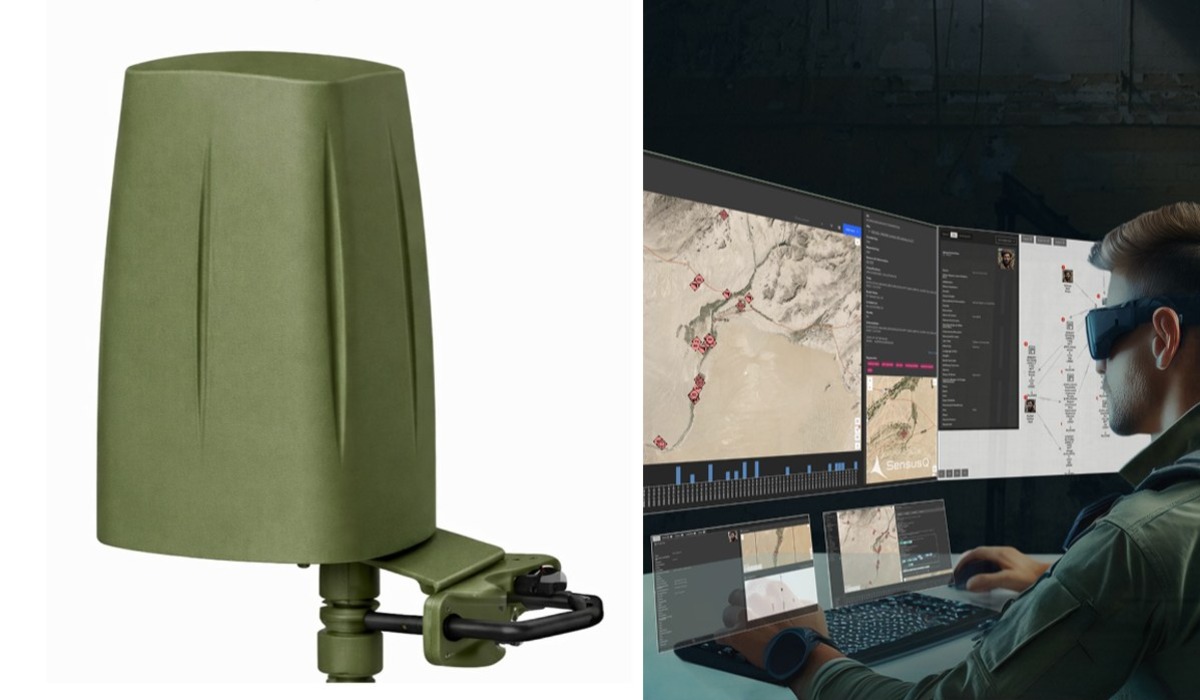
The Vegvisir Communications Module addresses that vulnerability by automatically managing and prioritizing multiple communication channels simultaneously, including 5G, 4G, Wi-Fi, Starlink satellite communications, and tactical military networks. If the primary connection degrades or is jammed, the system switches automatically to an alternative without requiring the operator to intervene, maintaining the link through contested signal environments without adding the cognitive burden of manual network management to crews already operating under pressure. The module features dual-modem failover capability, integrated omnidirectional antennas that require no external installation, and an IP68 waterproof and dust-resistant casing rated for harsh field environments. It also supports fiber-optic communications, which generates no radio frequency emissions, making it a viable option for operations where radio silence is required to avoid electronic detection.
“One of the key lessons from the war in Ukraine is that connectivity can no longer be taken for granted,” said Ingvar Pärnamäe, Co-Founder and CEO of Vegvisir. “Armed forces rely on a growing mix of drones, unmanned vehicles and autonomous systems, but these platforms are only effective if they remain connected to operators and commanders. We see strong demand for solutions that help bridge that gap.”
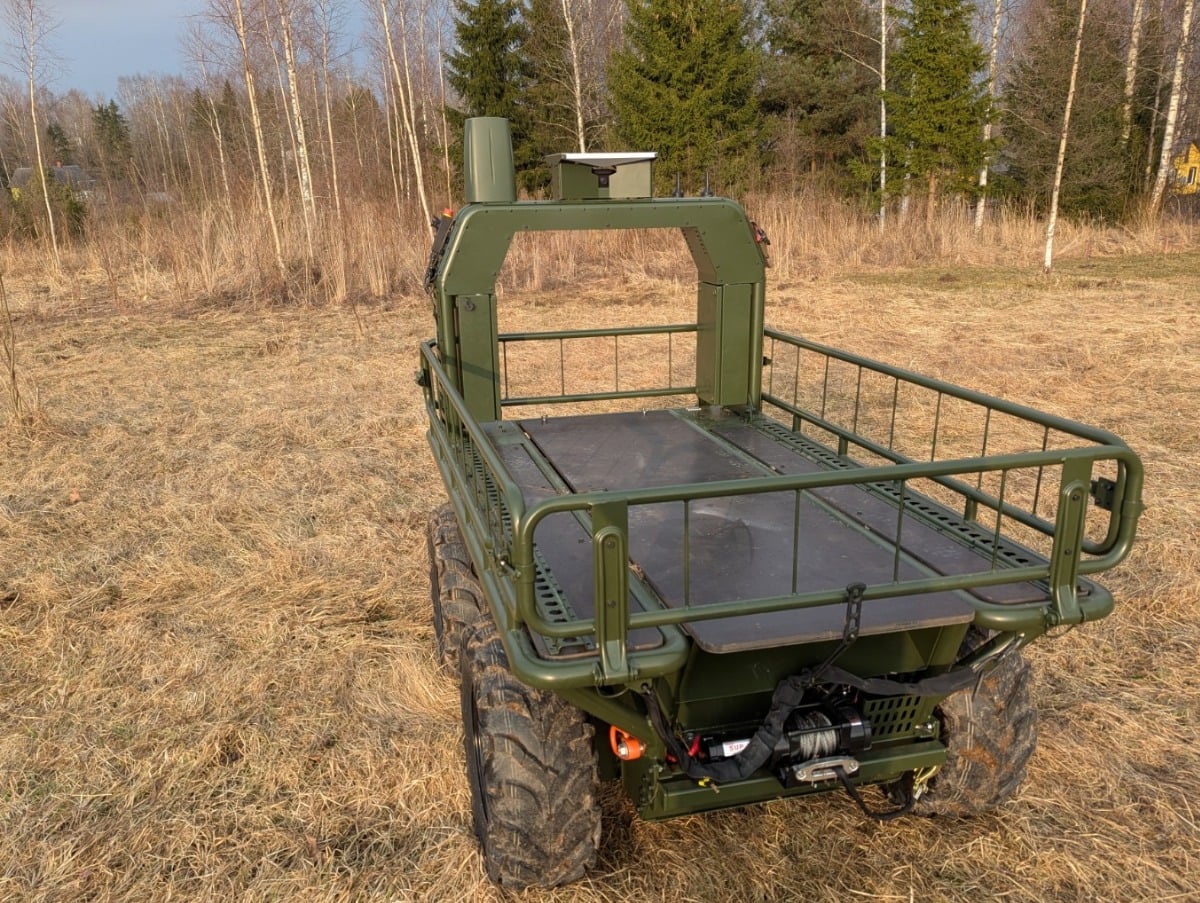
Vegvisir’s solutions are currently being tested or deployed in nine countries: Estonia, Finland, Latvia, Belgium, Norway, the Netherlands, the United Kingdom, the United States, and Australia. The company’s largest customer to date is the Australian Army, which uses Vegvisir technology in its experimentation with optionally manned and unmanned M113 armored personnel carriers. The M113, an aluminum-hulled tracked vehicle that entered service in the 1960s and remains in widespread use globally, is being evaluated by Australia as a platform for autonomous and remote operation, and Vegvisir’s situational awareness systems are part of that experimentation program.
The platform expansion to air, maritime, and underwater domains represents a significant step beyond Vegvisir’s original land-focused capability. Military operations are increasingly multi-domain, with ground commanders needing to coordinate not just infantry and armored vehicles but aerial surveillance drones, maritime patrol systems, and underwater sensors in a single coherent picture. The traditional approach to managing that complexity, a physical command post with multiple screens showing feeds from different systems, each managed by a separate specialist, scales poorly under the time pressure of actual combat. Vegvisir’s Virtual Command Station is designed to replace that fragmented approach with a unified operational environment where a commander can see live feeds, maps, and mission data from air, sea, and land assets simultaneously.
Pärnamäe described the operational challenge the expanded platform addresses directly. “One of the biggest challenges of modern warfare is making manned and unmanned assets work together effectively. Through Vegvisir’s enhanced Virtual Command Station, commanders can access live feeds, maps and mission data from multiple platforms within a single operational environment instead of traditional physical command centres built around multiple screens and standalone systems. This improves manned-unmanned teaming, reduces the manpower required to operate autonomous systems and gives commanders a clearer understanding of where assets are, what they see and how they contribute to the mission.”
Vegvisir’s broader ecosystem ties the command platform to two hardware products designed for different ends of the operator chain. The CORE solution gives armored vehicle crews a mixed-reality capability the company describes as see-through-armour, using sensor fusion and display technology to give crews situational awareness of what is happening outside their vehicle without exposing them to direct observation. The NANO system brings advanced situational awareness to unmanned platforms and first-person-view drone operations, the category of drone control that has become central to both reconnaissance and attack missions in Ukraine. Both integrate into the Virtual Command Station, managed through Vegvisir’s proprietary Visor headset and Mission Grip controller.