

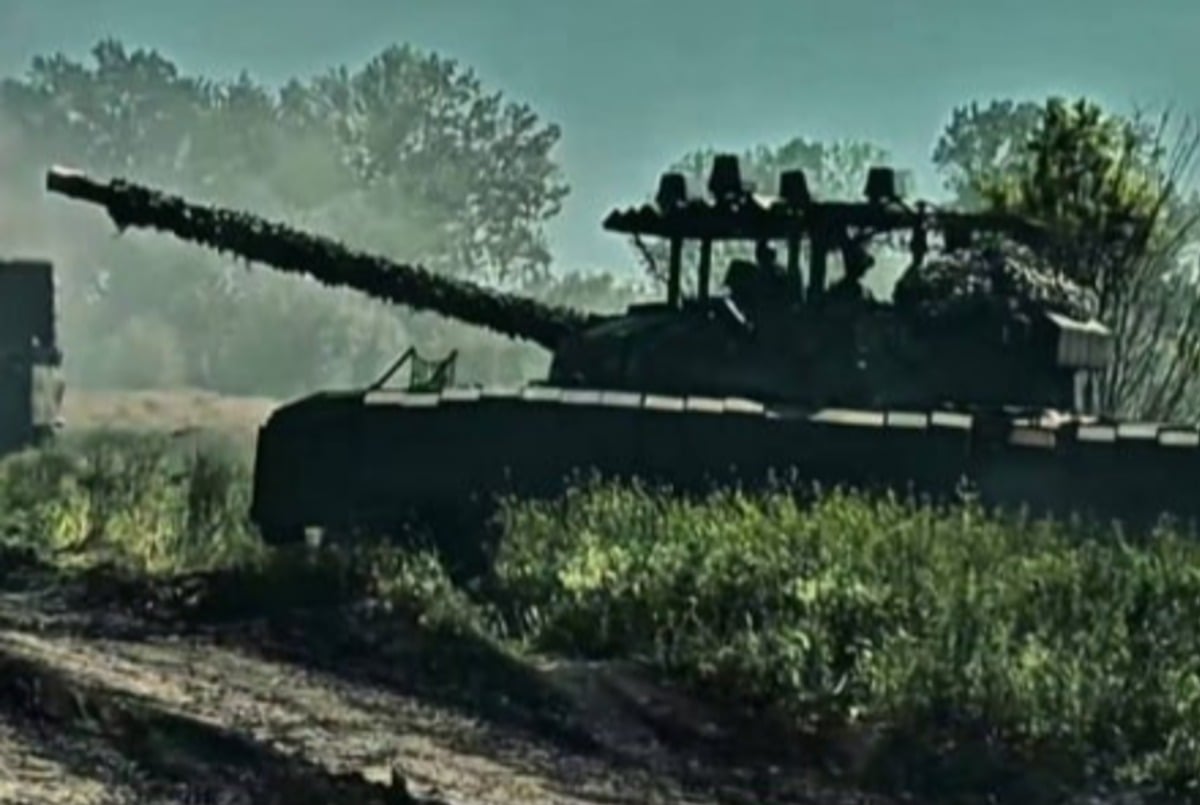
- A Russian T-72B3A tank equipped with the Arena-M active protection system's anti-drone mode failed to stop a Ukrainian FPV drone strike, Militarnyi reported, citing footage from Ukraine's National Guard Omega unit.
- The tank was part of a ten-vehicle column attacked near Maiak in Donetsk Oblast, and it is unknown how many of the other tanks carried the system.
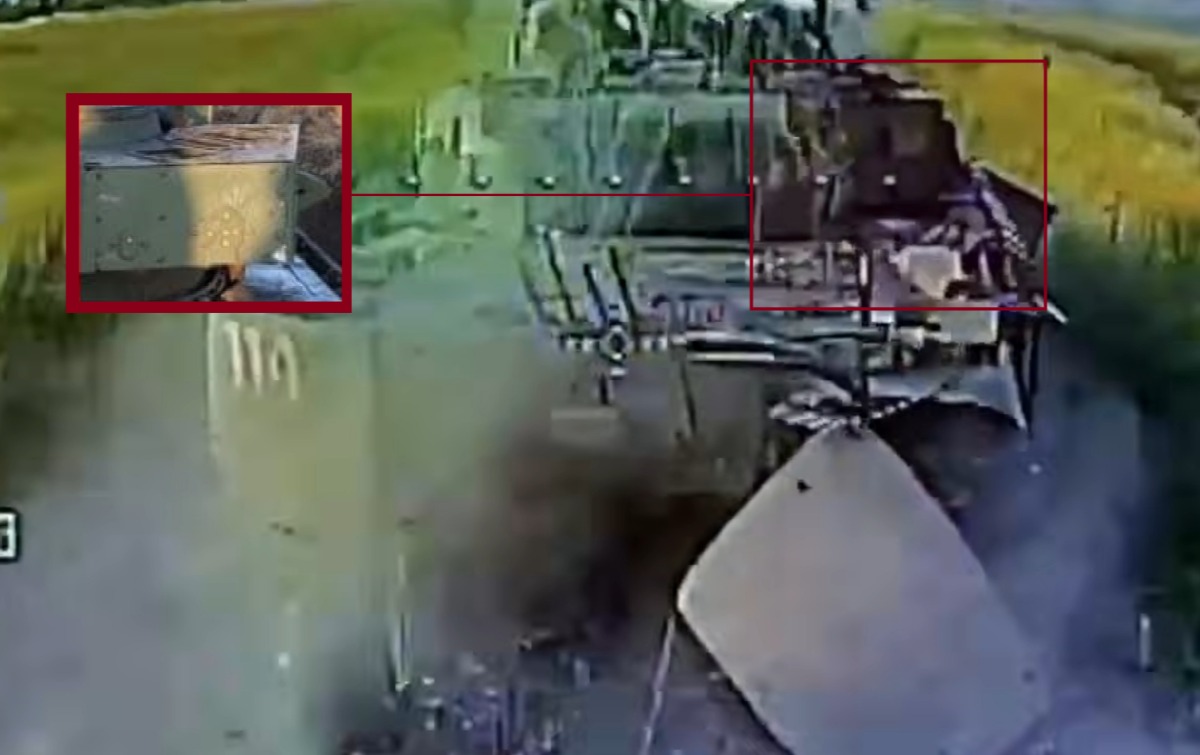
The first publicly documented combat test of Russia’s upgraded anti-drone tank defense system ended in failure, with footage showing a Russian T-72B3A tank taking a direct hit from a Ukrainian FPV drone despite carrying the modified Arena-M active protection system specifically built to stop exactly that threat, Militarnyi reported.
The video shows the FPV drone striking the tank’s rear, the vehicle’s most vulnerable point since Arena-M’s radar and countermeasure launchers are primarily oriented to cover the frontal and side arcs where a tank crew expects incoming fire.
Militarnyi’s report noted the strike occurred as part of a larger assault involving a column of ten Russian tanks near the settlement of Maiak in Donetsk Oblast, and the presence of Arena-M on the targeted vehicle was confirmed by the system’s distinctive turret-mounted module and a smaller anti-drone grate previously documented on other Arena-M-equipped tanks, according to Militarnyi’s sourcing. It remains unclear how many of the ten tanks in that column were actually fitted with the system.
Arena-M represents Russia’s first operational hard-kill active protection system, a category of defensive technology that uses radar to continuously scan a vehicle’s surroundings, calculate the trajectory of anything approaching, and fire a countermunition to physically destroy the incoming threat before it hits, functioning as a last line of defense once a tank’s armor alone can no longer be relied on to save it.
The Defence Blog has tracked the system’s uneven rollout closely over the past year. Russian defense officials confirmed in early January 2026 that engineers had finished software updates giving Arena-M a dedicated anti-drone mode, extending a system originally designed to counter anti-tank guided missiles and rocket-propelled grenades so it could also target the first-person-view drones that have become one of the most consistent killers of Russian armor in Ukraine. Russian state-aligned outlet Izvestia later reported that frontline units had begun receiving T-72B3A tanks equipped with this upgraded Arena-M configuration, with crews undergoing additional training before the vehicles were sent to support assault operations, a rollout that appears to have led directly to the tank now shown failing its first documented combat test.
Whether the failure came down to a fundamental technical limitation or simple bad luck remains genuinely unclear, and Militarnyi’s report was careful not to resolve that ambiguity. The outlet laid out three possible explanations drawn from its sourcing: the system may simply be unable to intercept drones despite Russian claims to the contrary, it may have been switched off at the time of the strike, or it may have already expended its supply of countermunitions earlier in the engagement before the fatal hit arrived. That uncertainty echoes concerns raised well before this incident. Russian military analyst Viktor Murakhovsky told Russian media in comments The Defence Blog covered in November 2025 that Arena-M’s radar struggles to distinguish small airborne objects from ground clutter at short range, and that the system’s target detection and prioritization algorithms remain underdeveloped for drones that move unpredictably and at low speed compared to the faster, more linear flight paths of traditional anti-tank missiles the system was originally built to counter. Militarnyi’s report also referenced earlier findings from November that Russia had failed to successfully adapt Arena-M for FPV interception specifically because of limitations in Russian radar technology, a gap that predates this latest failure by several months.
Arena-M’s broader track record in Ukraine has been sparse relative to how heavily Russian state media has promoted it. The system first appeared publicly on a T-72B3M spotted on the battlefield in March 2025, and Uralvagonzavod, the Rostec-owned manufacturer behind Russia’s tank production, confirmed that February that both T-90M and T-72B3M variants were being fitted with the system, though analysts at the time remained skeptical about full-scale implementation given the plant’s limited production capacity. Unlike Israel’s Trophy active protection system, which has an extensive combat record on Merkava tanks, Arena-M entered this engagement with its real-world effectiveness against drones still fundamentally unproven, resting mostly on Russian claims and computer-animated demonstrations rather than documented battlefield results.
That gap between promotional claims and battlefield performance sits at the center of why this single piece of footage carries more weight than one failed intercept might otherwise suggest. Russia has spent roughly two years publicly showcasing Arena-M as an answer to the drone threat that has devastated its armored formations, and open-source investigators tracking Russian tank losses throughout the war have documented well over 150 confirmed T-90M losses alone, a toll that helps explain why Russian defense officials pushed so hard to field active protection more broadly even on some of their most capable operational tanks. A single video from a Ukrainian special operations unit doesn’t settle whether Arena-M’s anti-drone mode is fundamentally broken or simply inconsistent, but it does mark the first time the public has actually watched the system fail its stated mission in real combat conditions, rather than simply hearing Moscow’s account of what the technology is supposed to do.