

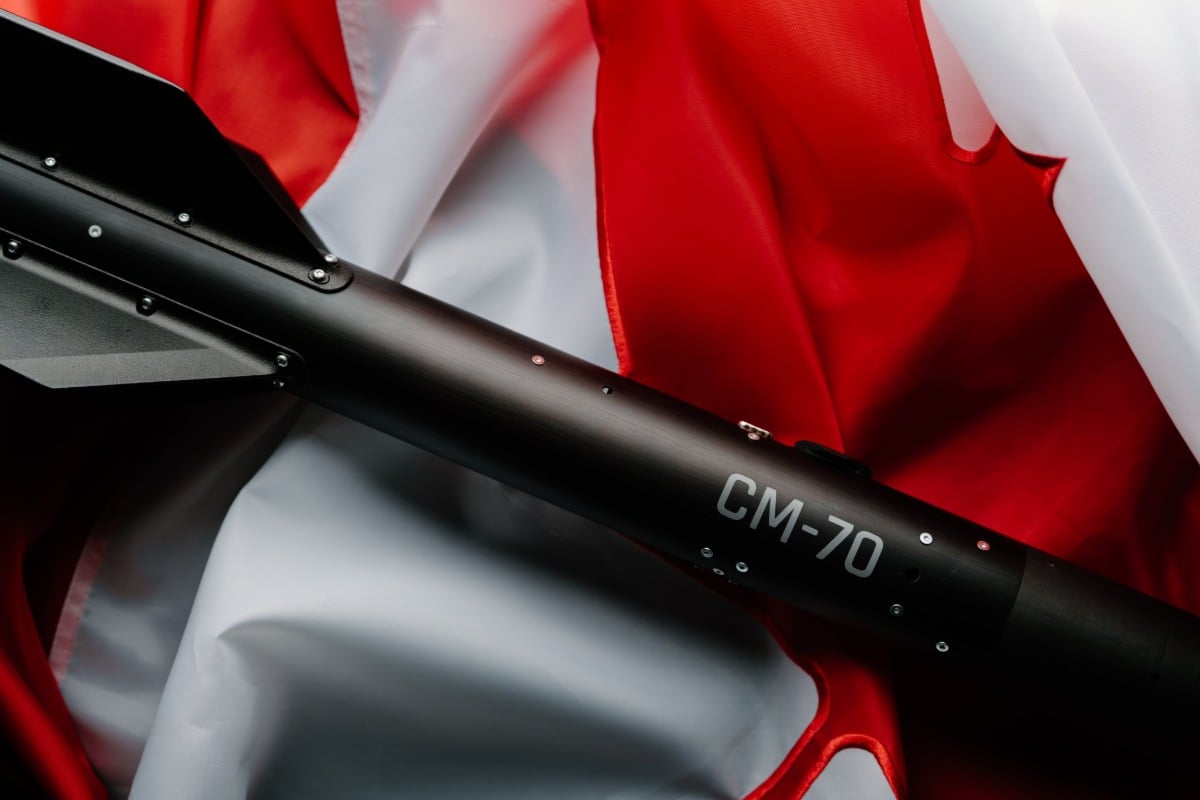
- North Vector Dynamics of Calgary announced the CM-70 counter-UAS interceptor missile on July 27, 2026, weighing 3 kilograms (6.6 lb) with a 3.5-kilometer (2.2-mile) range.
- The Czechoslovak Group invested in North Vector Dynamics in May 2026 through its Tech Horizons fund to support development of the low-cost interceptor.
A Calgary startup has built a missile that weighs about as much as a housecat, and it might end up deciding whether a $100,000 drone attack on a power plant succeeds or fails.
North Vector Dynamics, a Canadian defense technology company based in Calgary, posted on social media on July 27, 2026, introducing the CM-70, a precision-guided missile the company says represents more than an interceptor, describing it instead as a demonstration of sovereign capability, meaning weapons technology Canada can design, build and control entirely on its own soil rather than depending on foreign suppliers.
The company added that the current global security environment presents an opportunity to invest in technologies developed domestically that strengthen the country’s industrial base, a message aimed squarely at a Canadian government increasingly focused on building homegrown defense manufacturing rather than buying everything from allies.
The CM-70 belongs to a category of weapons called counter-UAS interceptors, missiles purpose-built to shoot down unmanned aerial systems, the formal term for drones, rather than aircraft or larger missiles. According to specifications published alongside the July 27 announcement, the CM-70 weighs 3 kilograms (6.6 lb), measures 0.9 meters (35.4 in) in length, and can strike targets out to a range of 3.5 kilometers (2.2 miles) while traveling at speeds up to 900 kilometers per hour (559 mph). Those figures place the CM-70 in the same compact, lightweight class as a small number of emerging low-cost interceptors worldwide, though earlier company materials and independent defense reporting from outlets including Janes have described a somewhat lighter version of the missile, weighing closer to 2.5 kilograms (5.5 lb) and reaching speeds above 1,000 kilometers per hour (621 mph), suggesting the design has been refined or the company is presenting updated figures as development continues.
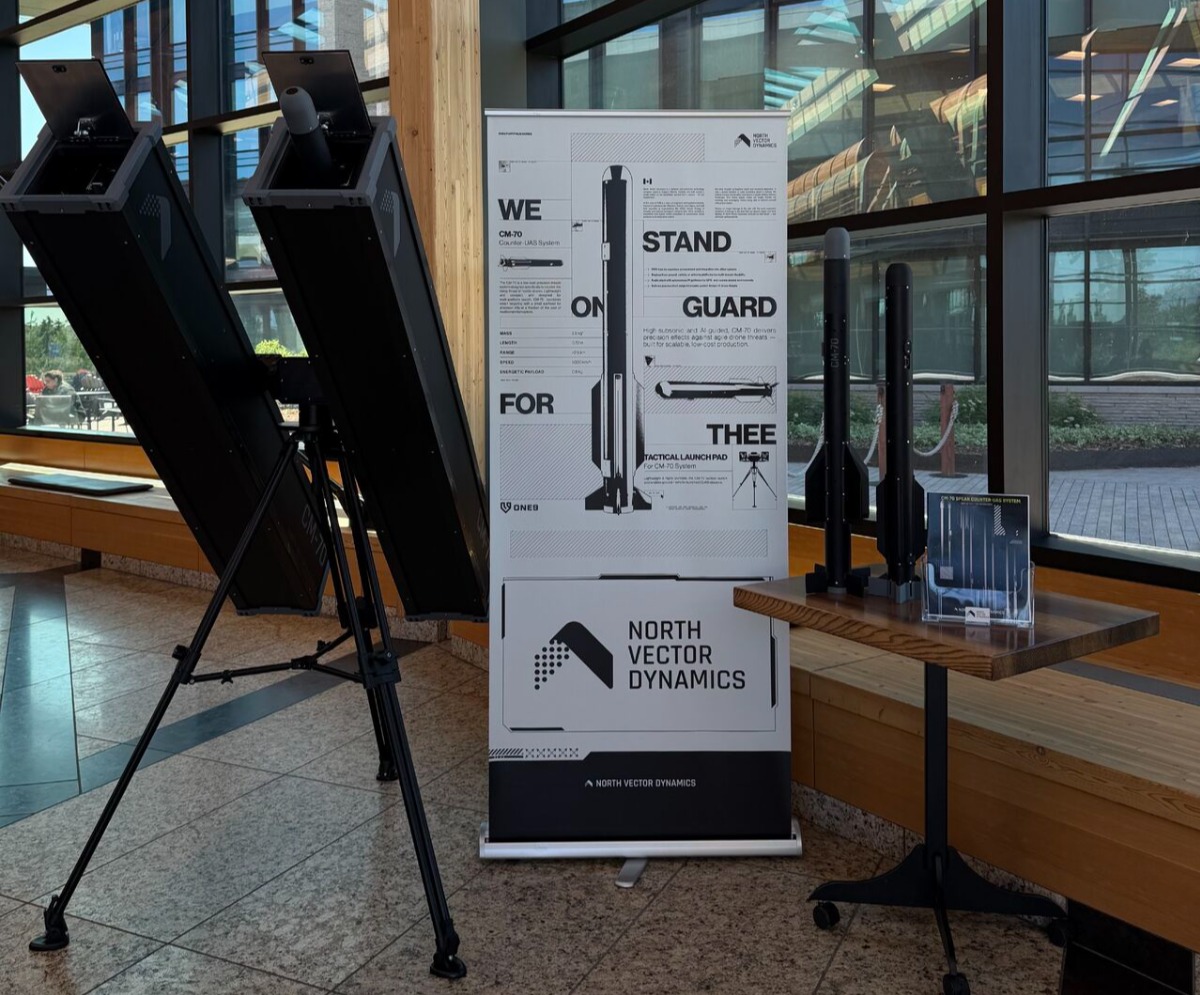
The missile carries a forward-firing fragmentation warhead, a design that concentrates the blast and shrapnel pattern ahead of the missile’s flight path to maximize the chance of destroying a small, fast-moving target on impact, and it guides itself using a technique the company calls semi-active laser guidance, which lets the missile track a target illuminated by a laser designator without relying on GPS signals or radio communication links that an enemy could jam or detect. That radio-silent, GPS-independent design matters enormously in modern conflict zones, where electronic warfare units routinely jam navigation signals and intercept communications, and it allows the CM-70 to keep functioning in what the company describes as GPS-denied and communications-denied environments, conditions that have become the default rather than the exception on battlefields like Ukraine.
Traditional air defense interceptors, the kind used in systems like Patriot, can cost several million dollars per missile, an enormous price tag when the target is often a cheap, mass-produced drone worth a small fraction of that amount. North Vector Dynamics has positioned the CM-70 explicitly as a lower-cost alternative capable of engaging what the military classifies as Group I through III drone threats, a Pentagon classification system that ranges from small hand-launched quadcopters up through larger tactical drones weighing several hundred pounds, without forcing defenders to spend a fortune on every single interception. The company has said the missile can launch from ground positions, vehicles, or airborne platforms, giving military planners flexibility to defend anything from a forward combat position to a fixed piece of critical infrastructure like a power substation or water treatment facility.
That flexibility has already attracted international attention and investment. The Czechoslovak Group, a major Central European defense manufacturer, invested in North Vector Dynamics in May 2026 through its Tech Horizons venture fund, with fund representatives stating that effective, affordable, multi-layered air defense against threats like Iran-designed Shahed-class drones and their Russian-built Geran variants remains an unresolved challenge the CM-70 is designed to help solve, according to reporting from Militarnyi. Those Shahed and Geran drones have become a defining weapon of the Russia-Ukraine war, launched by the hundreds in nightly waves designed to overwhelm Ukrainian air defenses and exhaust the far more expensive interceptors typically used to shoot them down, which is precisely the cost imbalance North Vector Dynamics says its missile is built to correct.
The company’s leadership team draws directly from Canadian academia and aerospace engineering. Chief executive Paul Ziadé holds a doctorate in aerodynamics and previously taught at the University of Calgary’s Schulich School of Engineering before taking a leave of absence to run the company alongside co-founders with backgrounds in hypersonics and rocket propulsion, according to reporting from the University of Calgary.
North Vector Dynamics has received backing from Canada’s Department of National Defence along with private venture capital, and the company has emphasized that the CM-70 is ITAR-free, meaning it falls outside the U.S. International Traffic in Arms Regulations that govern many American-made weapons exports, a designation that could make the missile significantly easier for Canada and allied nations to sell, transfer or integrate into their own defense systems without navigating restrictive American export approval processes.