

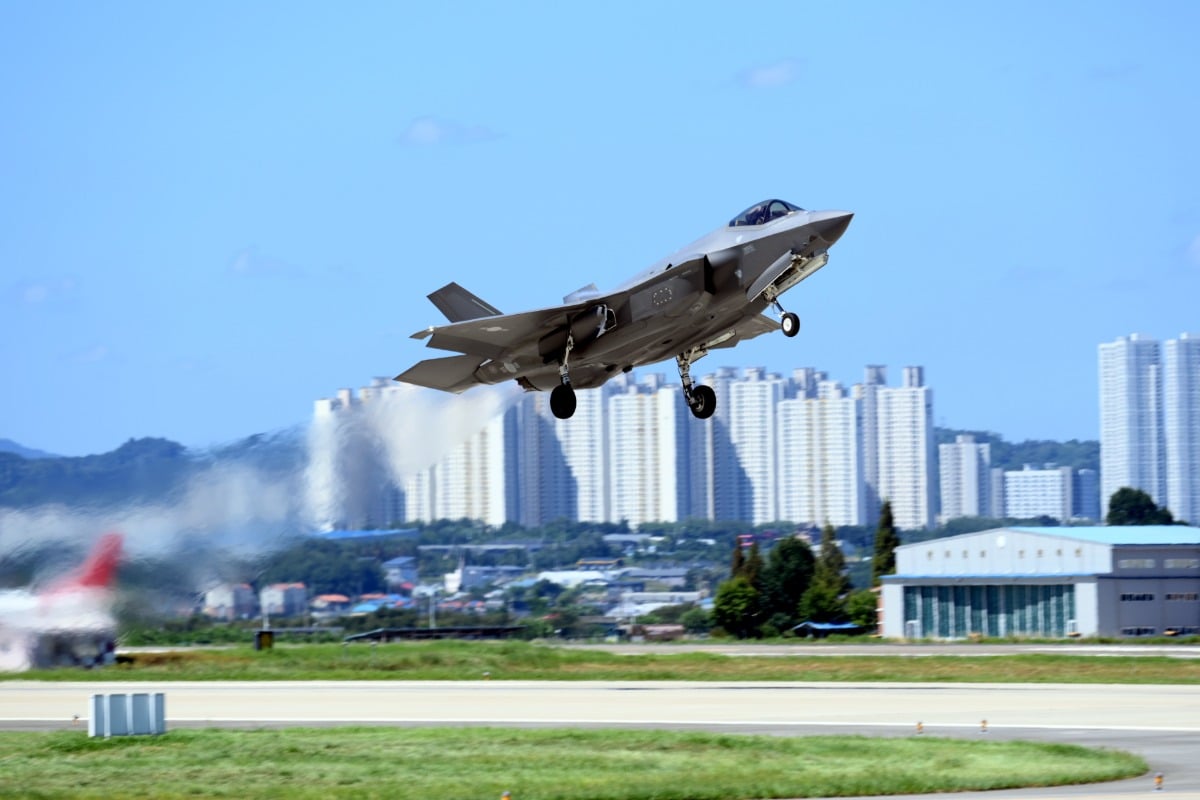
- The U.S. Navy awarded Lockheed Martin $23,082,803 to help Finland, Switzerland and South Korea establish national F-35 maintenance depots.
- Work spans Fort Worth, Texas, Cheongju in South Korea, Emmen in Switzerland and Halli in Finland, with completion expected by December 2028.
Three countries have taken a real step toward keeping their new stealth fighters flying without shipping them back to Texas every time something breaks, and the Pentagon just handed Lockheed Martin $23 million to make it happen.
The U.S. Naval Air Systems Command awarded Lockheed Martin Corporation, the Fort Worth, Texas defense giant that builds the F-35 Lightning II stealth fighter, a cost-plus-fixed-fee order worth $23,082,803 to help Finland, Switzerland and South Korea stand up their own national maintenance depots for the jet.
The F-35 is America’s premier fifth-generation stealth fighter, a radar-evading aircraft now flown by more than 20 allied nations, and keeping one flying requires a global support network almost as complicated as building the plane in the first place. This particular order covers engineering and technical services, help activating each depot, and what the contract calls material lay-in, plain-English shorthand for stocking a facility with the parts and equipment it needs before it can open its doors for business.
The money comes through the Foreign Military Sales program, the U.S. government process that lets allied nations buy American weapons systems and support services, meaning Finland, Switzerland and South Korea are footing this particular bill even though the Navy manages the contract on their behalf. Most of the physical work, 68 percent of it, happens right at Lockheed’s home base in Fort Worth. The rest fans out across three continents: 17 percent in Cheongju, South Korea, 6 percent each in Emmen, Switzerland and Halli, Finland, and smaller slices in Seoul and Helsinki. The Navy expects the work to wrap up by December 2028, and because this order was placed against an existing basic ordering agreement rather than competed fresh, no other companies bid for it.
Finland’s stake in this deal traces back to a 64-aircraft purchase that will make it home to the largest F-35 fleet in northern Europe once deliveries finish out the decade. Lockheed rolled out Finland’s first F-35A, the conventional runway version of the jet, at its Fort Worth plant in December 2025, and that aircraft is expected to reach Finnish soil sometime in 2026 after Finnish pilots and maintainers finish training at Ebbing Air National Guard Base in Arkansas. Halli, the Finnish site named in this contract, sits at the heart of Finland’s plan to service its own jets domestically rather than sending them abroad for every repair, a capability that matters enormously for a NATO member sharing a long border with Russia and a country that wants its air force ready on short notice rather than waiting on a maintenance queue overseas.
The Swiss ordered 36 F-35As, but the government announced in December 2025 that it would trim that planned purchase after cost overruns pushed the program more than $1 billion over its original 2022 price tag, according to a report from FlightGlobal. Emmen, the Swiss air base named in this contract, has long served as the country’s primary military aviation hub, and standing up depot capability there would let the Swiss Air Force maintain its jets without relying entirely on facilities elsewhere in Europe or back in the United States, even as budget pressure continues to shape how many aircraft Bern ultimately fields.
South Korea’s situation looks different again, because the Republic of Korea Air Force already flies the F-35A and has for years. Seoul took delivery of 40 jets starting in 2019, has lost one to a bird strike accident, and signed on for 20 more aircraft with deliveries beginning in 2027, according to the Korea Herald. Until now, U.S. security restrictions have limited South Korea to minor maintenance work on its own jets, forcing major repairs and overhauls to route through a regional facility in Japan. The depot at Cheongju Air Base, the plan South Korea’s Defense Acquisition Program Administration first announced in 2024, is meant to end that arrangement by giving the country its own heavy maintenance capability by 2027, work that this Lockheed Martin contract now helps fund through initial induction material and activation services rather than a competing bid process, per the Korea Herald’s reporting.