

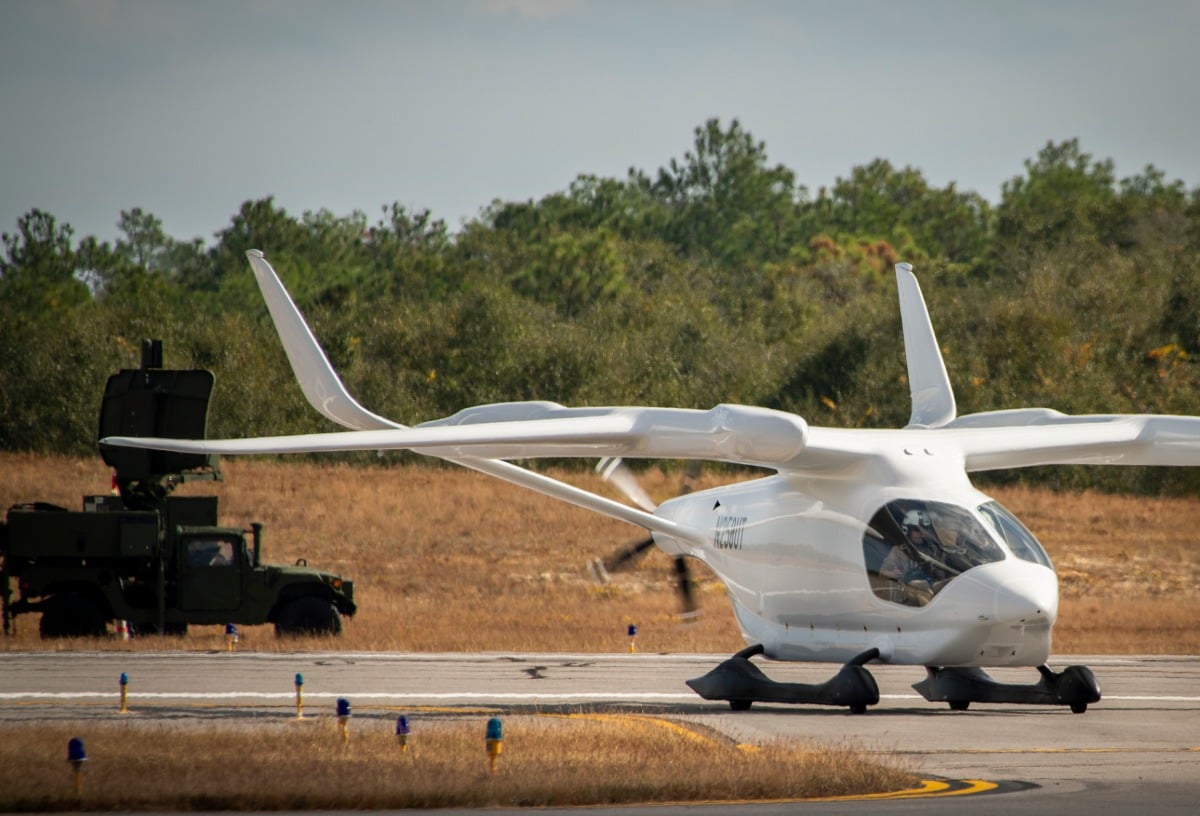
- Sikorsky will integrate its MATRIX autonomy suite into BETA Technologies' ALIA MV250 hybrid VTOL aircraft for contested logistics missions.
- The companies integrated MATRIX autonomy onto BETA's CX300 aircraft within two weeks of formally agreeing to the partnership this month.
A helicopter maker and an electric aircraft startup just proved they can bolt cutting-edge autonomy software onto a brand-new aircraft in under two weeks, a pace that would have sounded absurd for military aviation programs just a few years ago.
Sikorsky, the helicopter manufacturer owned by Lockheed Martin, announced at the Farnborough International Airshow that it will integrate its MATRIX autonomy suite into BETA Technologies’ ALIA MV250, a hybrid vertical takeoff and landing aircraft built specifically to handle military resupply missions in dangerous, contested environments without putting a pilot at risk.
MATRIX is Sikorsky’s flight autonomy software, the computer system that lets an aircraft fly, navigate, and complete a mission with minimal or no human input at the controls, and the company has spent years testing it across a growing lineup of aircraft that now includes the S-70UAS U-Hawk, the Nomad VTOL drone, and an optionally piloted version of the iconic Black Hawk helicopter. The MV250, by contrast, comes from BETA Technologies, a Vermont-based company that built its reputation designing all-electric aircraft for civilian cargo and medical transport before adapting that same underlying architecture into a hybrid-electric military variant. Rather than developing a completely new defense aircraft from scratch, BETA built the MV250 on the flight-proven propulsion, batteries, and manufacturing systems already flying in its civilian ALIA aircraft family, an approach the company says lets it field new military capability far faster than starting a defense program from a blank sheet of paper.
Sikorsky and BETA formally agreed to the integration effort earlier this month, and within two weeks the companies had already gotten MATRIX autonomy successfully integrated and flying aboard BETA’s CX300, a conventional takeoff and landing aircraft the company used as a stepping stone directly into MV250 development. That speed is possible partly because every aircraft in BETA’s ALIA family shares a common flight control architecture, and MATRIX itself was built as an open system specifically designed to plug into different flight control frameworks rather than requiring a proprietary, aircraft-specific version for every new platform it touches.
Rich Benton, vice president and general manager of Sikorsky, framed the MV250 integration as an extension of work the company has been building toward for years.
“Integrating the MATRIX autonomy stack into the MV250 is another step forward in providing a range of solutions for contested logistics missions, which we have demonstrated in autonomous operations since 2021,” Benton said. “All platforms equipped with MATRIX autonomy can be commanded using the same interface, giving operators the ability seamlessly manage various systems with just a few taps. MATRIX technology represents an opportunity to get safe, reliable, certifiable autonomy into a range of platforms as quickly as possible.”
Kyle Clark, founder and chief executive officer of BETA Technologies, described the partnership as combining two separate technology bets into one capable platform.
“Sikorsky has spent years proving that autonomy is safe, reliable, and operationally useful,” Clark said. “The MV250 is low cost, high speed and simple and designed for autonomous integration. Bringing MATRIX autonomy onto the MV250 combines those investments into a platform that can do high-risk missions without putting personnel at risk. Pairing Sikorsky’s proven autonomy with our aircraft gives defense customers a low-cost, fast, credible path to uncrewed logistics in contested environments.”
Contested logistics, the military term for delivering supplies and equipment through areas where an enemy can actively threaten the delivery route, has become an increasingly urgent problem as cheap drones and precision weapons make traditional resupply convoys and low-flying transport aircraft far more vulnerable than they once were. The MV250 is designed to fill what BETA calls a middleweight logistics gap, handling rapid, uncrewed resupply runs that fall between the payload a small drone can realistically carry and the scale a full-size cargo helicopter typically handles, all while combining the ALIA family’s existing commercial pedigree with a hybrid powertrain developed jointly with GE Aerospace under a technology partnership between the two companies. The aircraft’s Modular Open Systems Approach architecture, a design standard that keeps different hardware and software components interchangeable rather than locked into a single proprietary system, is part of what let Sikorsky integrate MATRIX so quickly in the first place.
Sikorsky demonstrated in October 2025 that a single Army operator using a MATRIX-equipped Black Hawk helicopter could plan and execute multiple types of cargo delivery missions, including internal carry, sling load transport, and parachute air drops, along with personnel recovery, during the Northern Strike 25-2 training exercise. Across every platform it has touched, MATRIX has now accumulated more than 1,000 flight hours and 500 successful tests and demonstrations, trained more than 100 operators across the Department of War and firefighting communities, and been integrated onto more than 20 different aircraft platforms, a track record Sikorsky says proves the software’s flexibility across radically different airframes. The system also forms the technical core of DARPA’s Aircrew Labor In-cockpit Automation System program, known as ALIAS, a Defense Advanced Research Projects Agency effort that helped establish the underlying research MATRIX now builds on.