

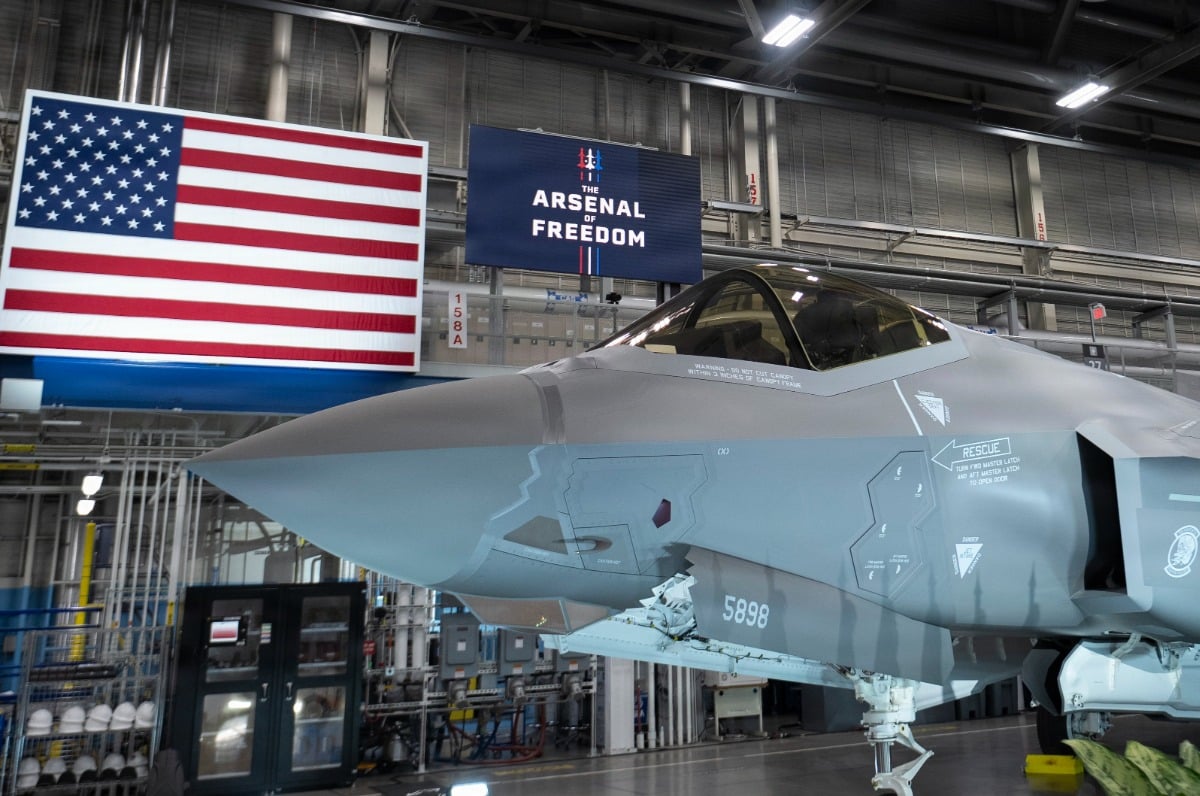
- Lockheed Martin reported second-quarter 2026 net earnings of $1.8 billion on sales of $20.1 billion, up 11% year over year.
- The company's backlog reached a record $230 billion after booking $65 billion in new orders, including a $35.3 billion THAAD interceptor production contract.
Lockheed Martin’s second quarter looked almost nothing like the same three months a year earlier, when the world’s largest defense contractor posted a jarring $1.6 billion in program losses.
The company reported second-quarter 2026 net earnings of $1.8 billion, or $7.94 per share, a swing of more than $1.5 billion compared to the $342 million it earned a year ago, according to its earnings release filed Thursday with the Securities and Exchange Commission. Sales climbed 11% to $20.1 billion, and the company said it booked $65 billion in new orders during the quarter, pushing its total backlog to a record $230 billion.
Lockheed’s second-quarter 2025 results had been dragged down by $1.6 billion in what the company calls reach-forward losses, accounting charges taken when a long-term contract’s actual costs run higher than originally estimated, split between a classified program in its Aeronautics division and cost overruns on Canada’s Maritime Helicopter Program and Turkey’s Utility Helicopter Program within its Rotary and Mission Systems segment. With those one-time charges not repeating this quarter, operating profit in both divisions swung dramatically positive, and the company’s overall consolidated operating profit more than tripled year over year, climbing from $748 million to $2.5 billion.
Jim Taiclet, Lockheed Martin’s chairman, president and CEO, credited the results to a strategy the company has spent recent years building around consolidating military contracts under fewer, larger long-term agreements.
“We delivered strong second-quarter performance, with over $20 billion in sales, a year-over-year increase of 11%, free cash flow of $2.9 billion, and $65 billion of new orders, which takes our backlog to a record $230 billion. This continued performance reflects more than just increased customer demand, it is evidence that our 21st Century Security strategy, and its focus on integration, partnerships and operational excellence is working, resulting in increased business, and advancing the security needs of our nation and allies,” Taiclet said.
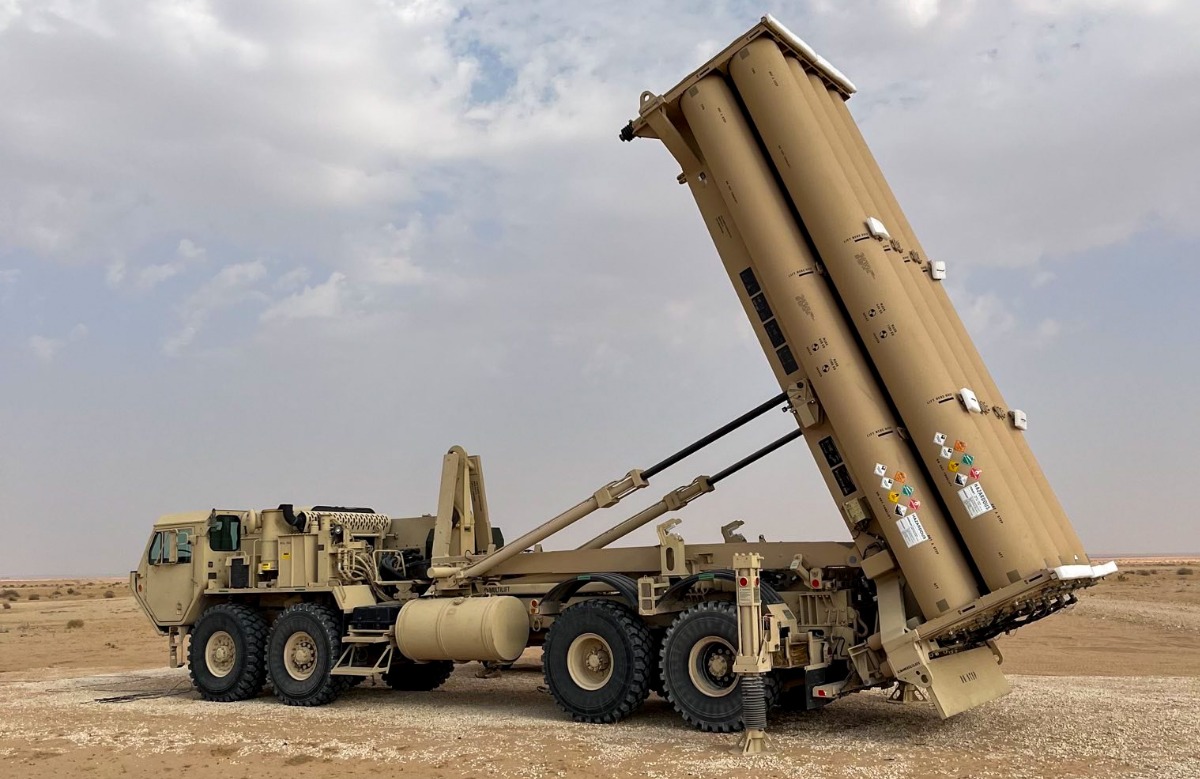
The single biggest driver behind that new order backlog surfaced within the quarter itself, when Lockheed converted a framework agreement into a binding contract with the Missile Defense Agency for THAAD interceptor production. Terminal High Altitude Area Defense is a ground-based missile defense system designed to intercept ballistic missiles just before or during their reentry into the atmosphere, protecting deployed U.S. forces and allied territory from medium- and intermediate-range threats, and the system saw real combat use during this year’s conflict with Iran. The Missile Defense Agency’s $35.3 billion, seven-year contract, formally awarded in late June, commits Lockheed to nearly quadrupling THAAD production, ramping annual output from roughly 96 interceptors to 400, with work spread across facilities in Dallas, Texas, Sunnyvale, California, Troy, Alabama and Camden, Arkansas. That kind of sustained, multiyear production commitment reflects a broader shift the Department of War has pushed across its top suppliers this year, moving away from smaller, individually negotiated orders toward long-term agreements meant to give manufacturers the certainty needed to invest in expanded factory capacity rather than scaling production up and down unpredictably year to year.
“These results are powered by consistent performance on the commitments we’ve made and by our investments to support the missions our customers will face next. Over the quarter, we took a major step forward in transforming munitions production, putting the framework agreements we announced earlier this year into action by signing a $35 billion multi-year contract with the Missile Defense Agency for THAAD,” Taiclet said.
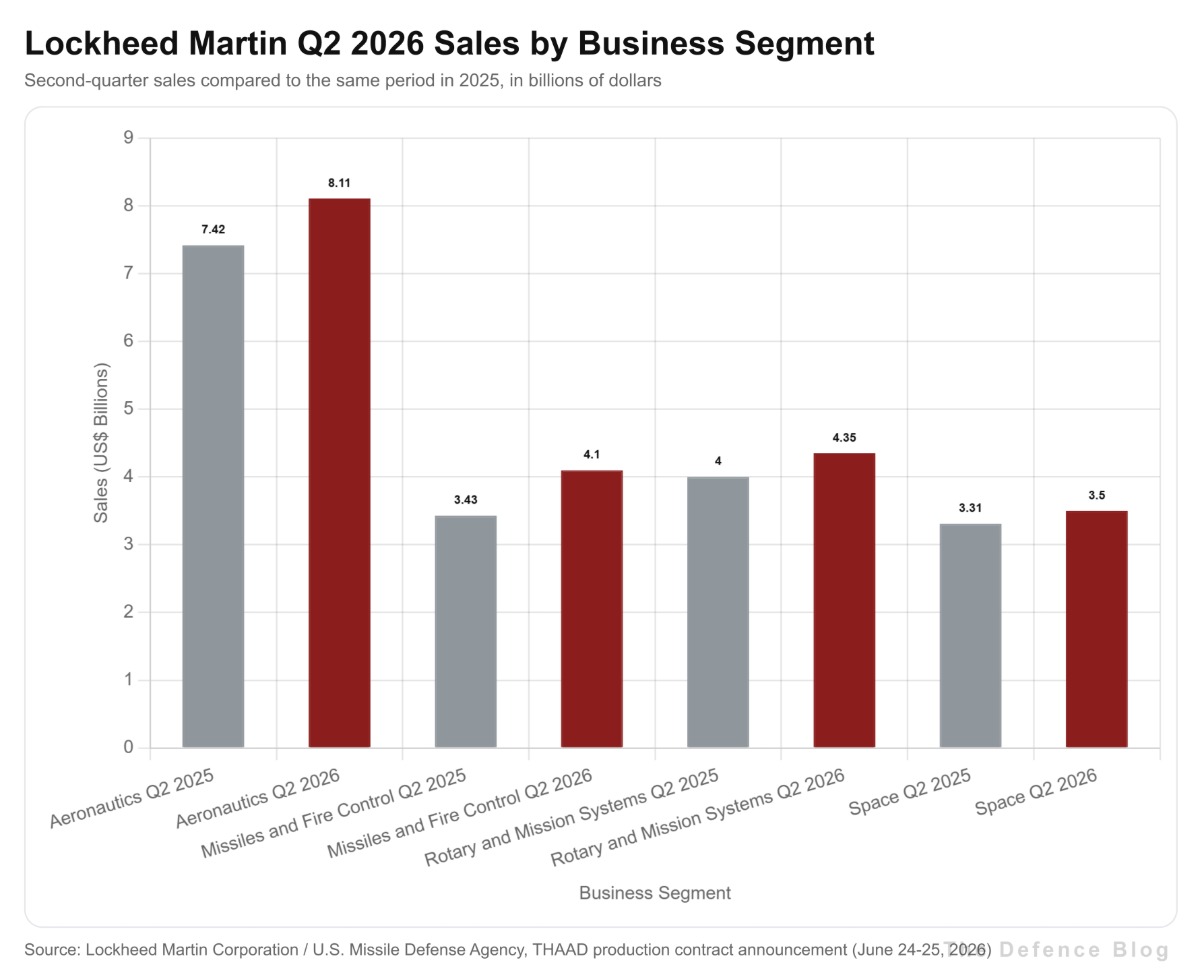
Missiles and Fire Control, the segment housing both THAAD and PAC-3 air defense production, posted the strongest growth of any Lockheed division this quarter, with sales up 19% to $4.1 billion, driven largely by production ramps on THAAD and the Precision Strike Missile program. That segment’s operating margin also improved to 14.5%, the highest of any Lockheed business unit, underscoring how central missile defense production has become to the company’s overall profitability as global demand for interceptors has surged alongside conflicts in Ukraine, the Middle East and heightened tension in the Indo-Pacific.
Taiclet also pointed to Lockheed’s rapid development of a new counter-drone system as evidence the company can move faster than its reputation for slow-moving, multiyear weapons programs might suggest. The company’s Sanctum system, an AI-enabled battle management platform designed to detect, track and engage hostile drones, achieved its first live-fire intercept last month at Yuma Proving Ground in Arizona, where Sanctum’s software fused data from Fortem R-40 radars to guide a Joint Air-to-Ground Missile fired from Lockheed’s GRIZZLY containerized launcher, destroying a Group 3 one-way attack drone, the military’s classification for larger fixed-wing drones roughly the size of a small aircraft. Lockheed said it completed the entire integration process, from combining the radar, software and launcher into one working system through the successful live-fire test, in under 45 days, a timeline the company is holding up as proof its newer, more modular weapons development approach can move at something closer to commercial software speed rather than the years-long cycles that have traditionally defined major defense programs.
“We continue to innovate at the speed our customers’ missions demand, taking our Sanctum counter-drone system from concept to successful live fire testing in just 45 days by combining a battle manager, radar, launcher, and combat-proven missile into one engagement chain,” Taiclet said.
Lockheed also used the earnings call to reaffirm two international manufacturing partnerships it says are central to expanding weapons production capacity beyond its own factory floors. The company is collaborating with General Motors Defense inside the United States and has struck a separate agreement with German defense manufacturer Rheinmetall to co-produce the Army Tactical Missile System, or ATACMS, in Europe, a long-range precision strike missile that has become one of the most requested American weapons among NATO allies rebuilding their own stockpiles. Those partnerships arrive as Lockheed simultaneously pursues its previously announced acquisition of Ultra Maritime, a deal the company’s guidance table notes explicitly has not yet been factored into its full-year financial outlook pending regulatory approval and deal completion.
Buoyed by the quarter’s results, Lockheed raised its full-year 2026 guidance, now projecting sales growth of approximately 8%, segment operating profit up 28%, and free cash flow exceeding $7 billion, up from a prior forecast of $6.5 billion to $6.8 billion issued in April. With a $230 billion backlog now locked in and major production ramps underway across THAAD, PAC-3 and the Precision Strike Missile program, the quarter Lockheed just reported reads less like a single strong stretch and more like a company positioning itself for a sustained run at the center of America’s missile defense buildup.