

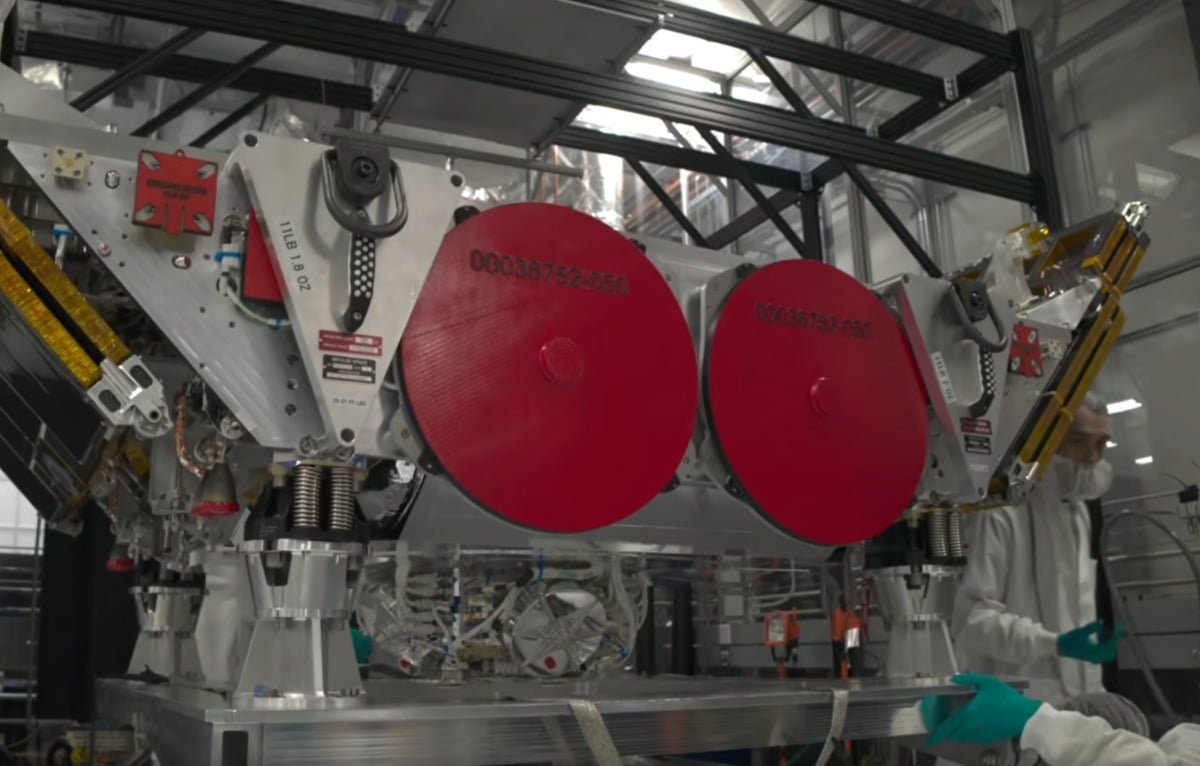
- The U.S. Space Force awarded Impulse Space and Relativity Federal spots on the $5.6 billion NSSL Phase 3 Lane 1 launch contract on July 7, 2026.
- The competitive award drew three offers, with $10 million in fiscal 2026 funding obligated at the time of the award.
The U.S. Space Force just handed two young rocket companies a shot at billions of dollars in Pentagon launch business, expanding the exclusive club of firms trusted to carry America’s most sensitive satellites into orbit.
Impulse Space and Relativity Federal joined a $5.6 billion contract vehicle called National Security Space Launch Phase 3 Lane 1 on July 7, according to the Department of War’s daily contract announcement, giving both companies the chance to compete for individual launch missions as they come up over the life of the program.
Getting onto this contract does not guarantee either company an actual rocket launch. The Lane 1 award works as what the government calls an indefinite-delivery, indefinite-quantity contract, a type of agreement that sets a maximum dollar ceiling and adds companies to a pre-qualified pool rather than committing the government to buy a fixed amount of anything upfront, according to SpaceNews. Once inside that pool, Impulse Space and Relativity Federal can bid against the other companies already on the contract for individual missions, called task orders, as the Space Force identifies specific satellites that need to reach orbit, provided each company can show it meets the program’s flight readiness requirements before any given launch.
That distinction matters because Lane 1 was built specifically as the lower-stakes, more experimental half of a two-track system the Space Force uses to buy launch services. A separate track, called Lane 2, is reserved for the military’s most demanding and sensitive missions, requiring launch systems that have earned full government certification and meet the Pentagon’s most rigorous mission assurance standards, a bar that takes years and multiple successful flights to clear, according to SpaceNews. Lane 1 exists precisely so newer, less proven companies can start winning national security business on lower-risk missions while they build the track record needed to eventually compete for Lane 2 work, giving the Space Force a wider bench of launch providers without gambling its most critical satellites on unproven rockets.
Relativity Space is developing a medium-lift rocket called Terran R, aimed at both commercial and government satellite missions, according to SpaceNews, a company that has built its reputation partly around unconventional, large-scale 3D-printed manufacturing techniques for rocket hardware. Impulse Space, by contrast, has built its business primarily around orbital transfer vehicles, spacecraft that maneuver satellites into their final, precise orbits after a rocket has already delivered them to a lower parking orbit, a capability distinct from the launch vehicles themselves and one that makes Impulse Space’s addition to a launch services contract a notable expansion of what the company is now positioned to offer the government directly.
SpaceX, United Launch Alliance, Blue Origin, Rocket Lab, and Stoke Space had all previously secured spots on the same $5.6 billion Lane 1 ceiling, with SpaceX and ULA holding their positions since 2024, according to reporting from GovConWire. The Space Force has said it intends to reopen the Lane 1 solicitation annually, deliberately keeping the door open for additional launch providers and new rocket systems to compete for future task orders rather than locking the roster in place once a handful of companies win their initial slots, according to SpaceNews.
The scale of what these companies are now competing for is substantial even within a single fiscal year. At least 30 individual missions are expected to be competed under the base ordering period of the Lane 1 contract, according to GovConWire, giving both Impulse Space and Relativity Federal a real, near-term opportunity to convert their new eligibility into actual launch contracts rather than simply holding a symbolic position on a large government vehicle. Space Systems Command, the Space Force’s acquisition arm overseeing the program from Los Angeles Air Force Base, California, confirmed the July 7 award followed a competitive process in which three companies submitted offers, with $10 million in fiscal 2026 space procurement funding obligated at the time of the award to get the contracts underway.
This expansion continues a broader effort within the National Security Space Launch program to reduce the government’s reliance on a small handful of launch providers, a concern that has shaped the program’s structure for years. A Congressional Research Service report on the program noted that a Senate Appropriations Committee report accompanying the fiscal 2025 defense appropriations bill specifically encouraged the Space Force to include a greater diversity of providers and more competition within NSSL Phase 3, reflecting lawmaker concern that overreliance on any single company creates risk if that company faces a launch failure, production delay, or other disruption. That pressure carries real operational weight given how much launch demand the Space Force is now managing. The service expects to support roughly 173 launch operations across its Eastern and Western Range facilities in fiscal 2026 alone, according to the Congressional Research Service, a dramatic jump from just 25 launches a decade earlier and a cadence that has strained the physical and logistical infrastructure supporting America’s launch ranges.
Relativity Space’s Terran R rocket has not yet reached orbit, and Impulse Space’s core launch vehicle ambitions remain less mature than its established orbital transfer vehicle business, meaning both companies still have meaningful technical milestones to clear before Wednesday’s contract eligibility translates into an actual national security payload sitting atop either company’s rocket.