

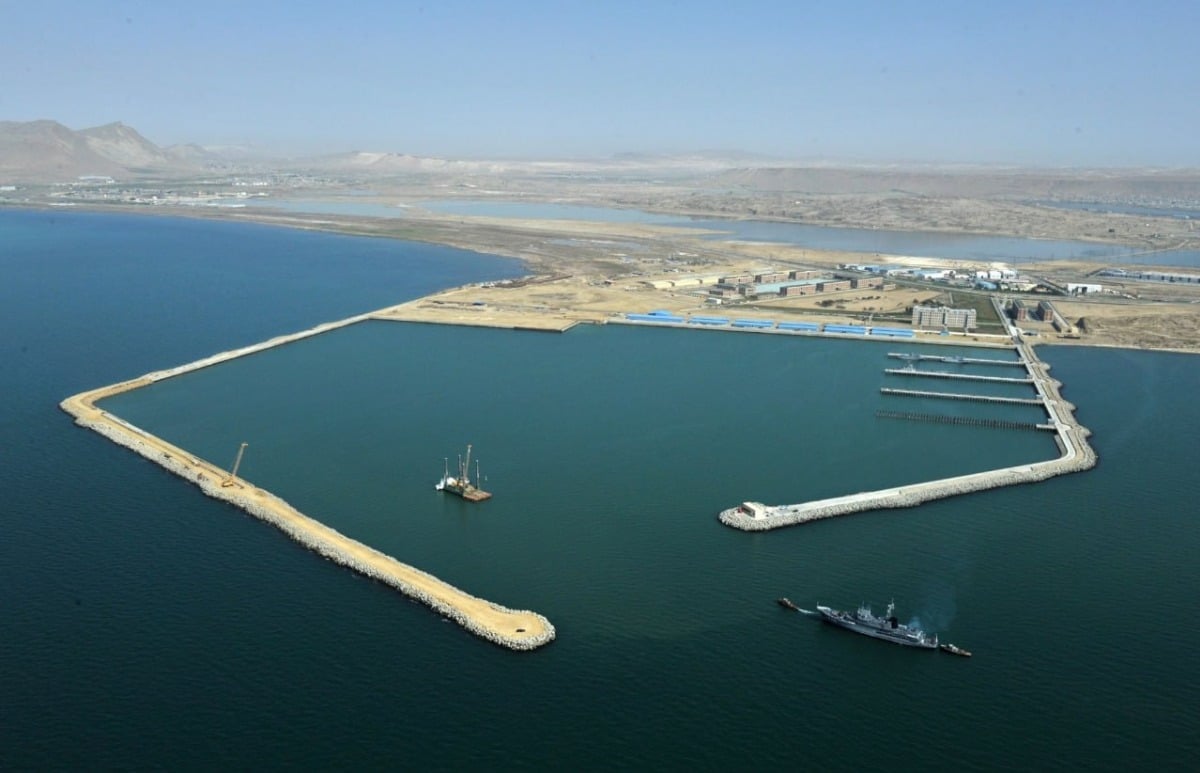
- Russian investigators allege officials stole approximately 500 million rubles from a 2022 contract to build naval infrastructure for the Caspian Flotilla in Kaspiysk, Dagestan.
- The case, reported by Kommersant, reached Moscow's Khamovnichesky District Court in April 2026, with the same defendants also linked to a fraud case spanning 20 regions.
Russian investigators have opened criminal cases alleging officials and contractors stole approximately 500 million rubles ($6.4 million) earmarked for constructing naval infrastructure at the home base of Russia’s Caspian Flotilla, the business daily Kommersant reported.
The cases, filed under Russia’s criminal code for abuse of authority in fulfilling state defense orders, name Alexander Katser and Maxim Skvortsov along with Andrei Ansimov, former founder of the construction firm Uralvoenproekt. Investigators allege the trio fabricated documentation to siphon budget funds from a contract Russia’s Defense Ministry signed with the Military Construction Company in June 2022, then routed roughly 500 million rubles to accounts controlled by two short-lived Dagestani shell companies before the money disappeared from the project entirely.
The contract at the center of the investigation covered construction and installation work in Kaspiysk, a city on Dagestan’s Caspian coastline, where Russia has spent years building piers, hydrotechnical structures, and other coastal infrastructure intended to house the Caspian Flotilla, the naval force responsible for defending Russia’s interests across the Caspian Sea region. The flotilla traces its lineage to 1722, when Peter the Great established it to support Russia’s Persian campaign, making it among the oldest continuously operating formations in the Russian Navy. The decision to relocate the flotilla’s primary base from Astrakhan to Kaspiysk originated with a 2017 Defense Ministry board decision under then-Defense Minister Sergei Shoigu, and the relocation became operational in 2021, with the broader infrastructure project, covering piers, administrative buildings, and military housing, valued at more than 1 billion rubles ($12.7 million) according to Kommersant’s reporting.
Separate but related reporting indicates the alleged fraud scheme operated through a familiar mechanism in Russian state construction graft cases: inflating the price of bulk construction materials. Russia’s Main Military Investigative Directorate determined that between 2020 and 2023, project supervisors and suppliers built their scheme around artificially inflated prices for crushed stone, gravel, and sand, the basic materials needed for any large-scale port and foundation construction project, generating the alleged half-billion-ruble loss through markup fraud on commodities that are notoriously difficult to audit precisely because their market prices fluctuate regionally and seasonally. The case against the alleged scheme’s organizers reached Moscow’s Khamovnichesky District Court in April 2026, with prosecutors arguing the contractors and military enterprise officials enriched themselves through systematically inflated material costs across the multi-year construction effort.
What makes this case notable beyond its dollar value is the apparent recidivism of the named defendants. Alexander Katser and Maxim Skvortsov, the two officials at the center of the Caspian Flotilla case, also appear as defendants in a separate, considerably larger fraud investigation in which similar schemes allegedly spread across 20 Russian regions, including Sevastopol, Moscow Oblast, and Smolensk Oblast, with victims reportedly including Russia’s military intelligence agency, the GRU. The recurrence of the same names across multiple regional defense construction fraud cases suggests Russian investigators have identified what they characterize as a coordinated criminal network operating across state defense procurement, rather than an isolated incident confined to a single naval base project.
The Caspian Flotilla itself carries genuine strategic weight for Russia beyond its historical pedigree. The flotilla serves as Russia’s primary naval presence on the Caspian Sea, supporting counterterrorism operations in the North Caucasus, particularly Dagestan, and protecting Russian interests around the Caspian basin’s substantial oil reserves. Wikipedia’s Russian-language entry notes that the Ukrainian Armed Forces struck Kaspiysk for the first time in 2024, with Ukrainian outlet RBC-Ukraine reporting damage to the missile ships Tatarstan and Dagestan, an attack that demonstrated the flotilla’s exposure even at what Russia had previously treated as a comparatively safe rear-area base far from the front lines in Ukraine.
That strategic significance is exactly what makes the alleged theft consequential beyond its monetary scale. Construction delays and cost overruns driven by fraud directly affect a naval base’s actual readiness, the pier capacity available for ships, the hydrotechnical infrastructure that allows vessels to dock and resupply, and the broader logistics network supporting flotilla operations. A research analysis from the Eurasian Research Institute previously noted that building a fully weatherproofed port infrastructure at Kaspiysk represented an expensive undertaking precisely because of the engineering demands the Caspian Sea’s specific conditions impose, making every ruble diverted through inflated material pricing a direct subtraction from the physical capability the Defense Ministry intended to field.
Russia’s wartime defense procurement system has produced a steady stream of corruption prosecutions since the full-scale invasion of Ukraine began in 2022, a pattern reflecting both the sheer scale of military spending flowing through the system and the opportunities that scale creates for officials willing to exploit weak oversight. The Caspian Flotilla case, with its inflated gravel invoices and shell company transfers, is a relatively small entry in that broader pattern measured purely in rubles. But it sits at a naval base Ukraine has already proven it can strike, funded by contracts meant to harden infrastructure that Russian sailors and officers now depend on, money that, according to investigators, never built the pier it was supposed to build at all.