


U.S. Marines carried out reloading drills with the Navy-Marine Expeditionary Ship Interdiction System (NMESIS) at Camp Hansen, Okinawa, Japan, on September 3, 2025.
The exercise was designed to strengthen their ability to rapidly rearm the system in expeditionary conditions.
According to the Marine Corps, the NMESIS is a ground-based offensive anti-ship missile system intended for sea denial and littoral protection. It provides a highly mobile and deployable island defense capability, particularly suited to the Indo-Pacific’s dispersed geography.
The complete system includes the unmanned Joint Light Tactical Vehicle, known as the Remotely Operated Ground Unit Expeditionary-Fires (ROGUE-Fires), paired with a launcher carrying two Naval Strike Missiles inside self-contained canisters.
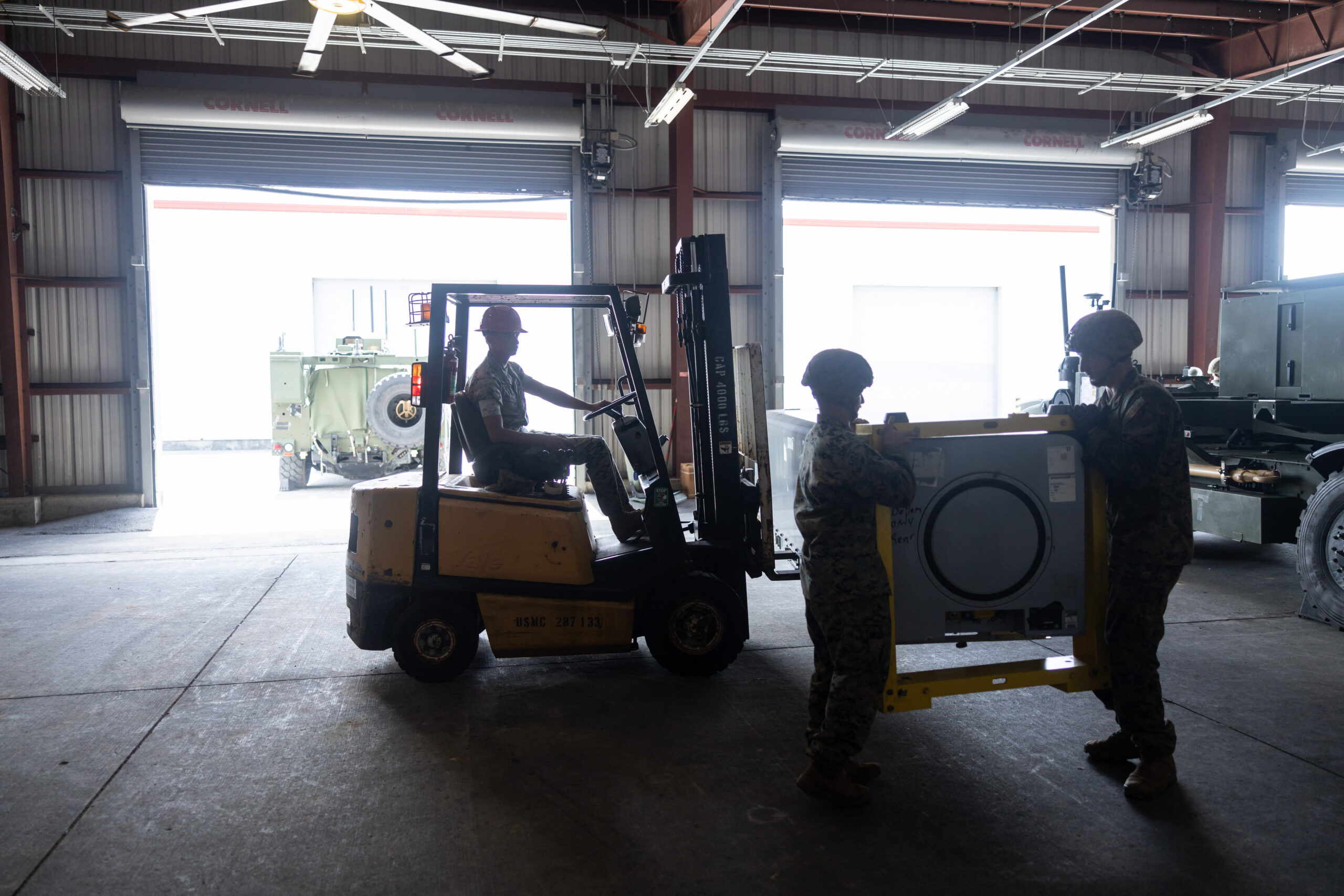
The Marine Corps said the drills were conducted by the 12th Littoral Combat Team of the 12th Marine Littoral Regiment, and the 3rd Littoral Combat Team of the 3rd Marine Littoral Regiment, both elements of the 3rd Marine Division.
The NMESIS concept is built around distributed lethality. By networking unmanned launch vehicles with offboard sensors and assets, small units can project strike capability across a broad area. This structure allows the systems and their operators to disperse, shift rapidly between locations, and reduce their exposure to enemy counterattacks.
In addition to providing firepower, the system reflects the Marine Corps’ ongoing shift toward integrating unmanned platforms into operational doctrine. The reloading drills underscored the logistical dimension of that approach: ensuring that forward-deployed units can keep the system supplied and ready for use in austere environments.
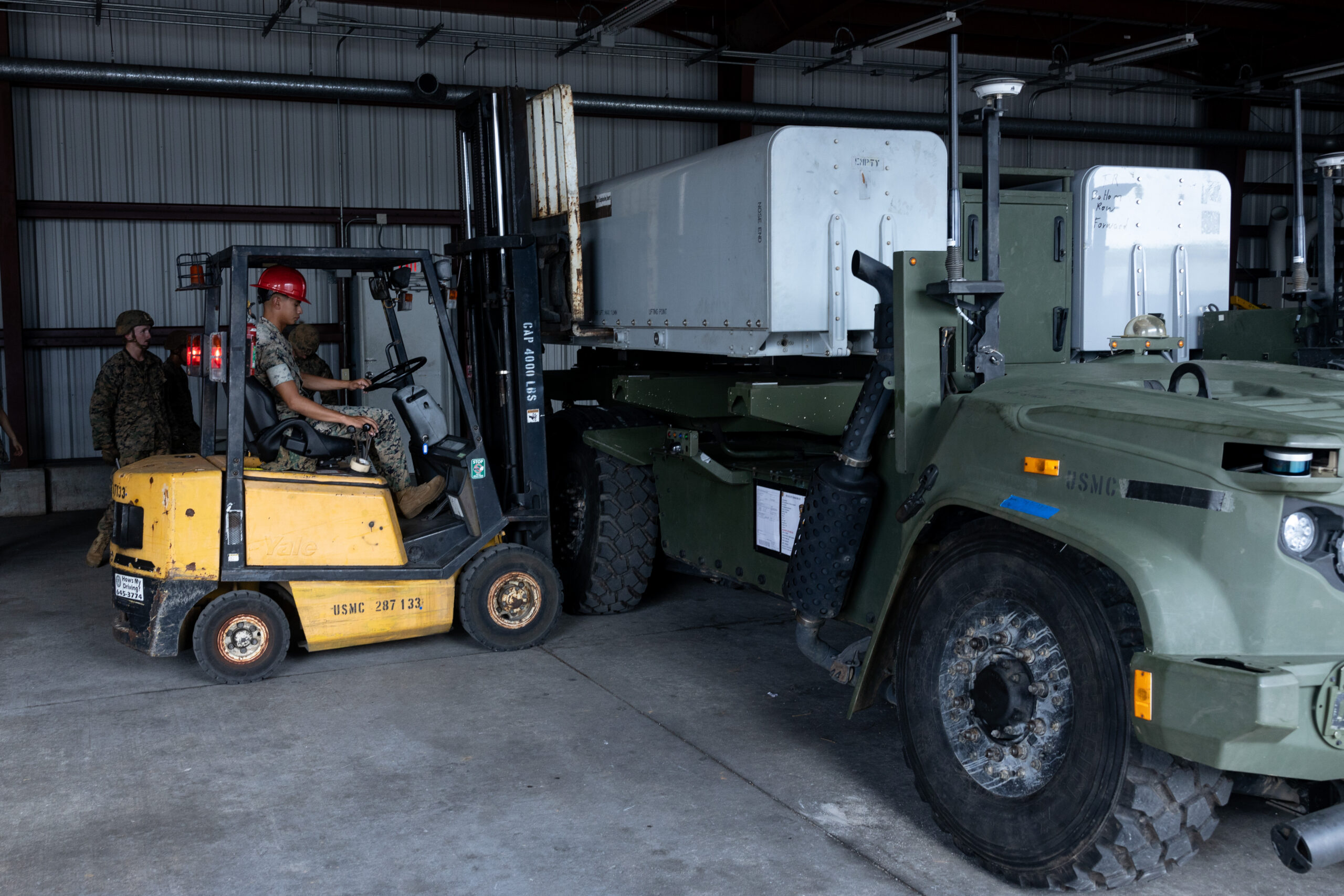
The Naval Strike Missile, co-developed by Kongsberg Defence & Aerospace and Raytheon, gives NMESIS the ability to engage surface threats with precision at extended ranges. Paired with the unmanned JLTV, it offers a mobile, harder-to-target platform that aligns with the U.S. strategy of denying adversaries access to contested waters.
The Marine Corps has emphasized that these capabilities are central to the evolving Marine Littoral Regiments, which are designed to operate across the first island chain and beyond. Training events such as those at Camp Hansen are meant to validate tactics and refine procedures for sustaining distributed anti-ship operations.